How many museums are there in Bucharest, how are they divided into categories and who manages them
By Raluca Ogaru
- Articles
- 20 AUG 26
Bucharest has 66 museums, collections and museum sites included in the National Institute of Heritage guide. However, this figure does not mean that the city has 66 accredited museums open every day. The list includes main buildings, branches, memorial houses, collections accessible by appointment, gardens, observatories and sites that are temporarily closed.
A separate count based on accreditations indicates 20 museum entities registered in Bucharest. The difference exists because a single institution may manage several locations. The Bucharest Municipality Museum, for example, is listed as one accredited institution but comprises 12 museums and memorial houses.
Why 66 does not mean 66 museums open to visitors
At the time this article was documented, the Museums and Collections in Romania guide, managed by the National Institute of Heritage, displayed 66 entries for Bucharest. The database is a visitor guide, not the official legal list of accredited museums. The Institute explains that it also includes private collections, exhibitions and spaces that do not meet all the legal requirements applicable to museums.
The 66 entries include major institutions such as the National Museum of Romanian History, as well as collections that can only be visited by appointment. The Botanical Garden and Bucharest Zoo are also included because museum statistics cover both cultural and natural heritage.
The database also retains sites that are closed or undergoing restoration. The National Philatelic Museum is marked as “closed,” while the National Aviation Museum of Romania is listed as temporarily closed for modernisation. The George Enescu National Museum, housed in Cantacuzino Palace, is closed for restoration, as are the Gheorghe Tattarescu Memorial Museum and Curtea Veche Princely Palace.
The accurate formulation is therefore that Bucharest has 66 museum sites and collections registered in the National Institute of Heritage guide. The number of locations that can actually be visited on a particular day is lower and depends on restoration work, appointments and the exhibitions currently available.
How Bucharest’s museums are divided into categories
The National Institute of Heritage divides Bucharest’s 66 registered sites into 12 fields. Memorial museums form the largest category, followed by art, history, and science and technology museums.
The classification refers to each institution’s main profile, but it does not always reflect the full extent of its collections. A memorial museum may display paintings, furniture, documents and historical objects, while a history museum may hold important archaeological or numismatic collections.
- Memorial museums – 19: Cotroceni National Museum, Theodor Aman Museum, Tudor Arghezi Memorial House.
- Art – 14: National Museum of Art of Romania, National Museum of Contemporary Art, Museum of Recent Art – MARe.
- History – 9: Bucharest Municipality Museum – Suțu Palace, Little Paris Museum, the Parliament Museum.
- Science and technology – 7: Dimitrie Leonida National Technical Museum, CFR Museum, Admiral Vasile Urseanu Astronomical Observatory.
- Natural sciences – 4: Grigore Antipa National Museum of Natural History, National Geological Museum, Dimitrie Brandza Botanical Garden, Băneasa Zoo.
- Ethnography – 4: Dimitrie Gusti National Village Museum, National Museum of the Romanian Peasant, Nicolae Minovici Folk Art Museum.
- Archaeology – 2: the Vasile Pârvan Institute of Archaeology Collection and Curtea Veche Princely Palace.
- Numismatics – 2: National Bank of Romania Museum and the George Severeanu Museum.
- Military history – 2: King Ferdinand I National Military Museum and the National Firefighters Museum – Fire Tower.
- Religious art – 1: the Armenian Archbishopric Museum Collection.
- Old books – 1: National Museum of Romanian Literature.
- Mixed – 1: Bucharest Children’s Museum.
The classification can lead to some surprising situations. The Bucharest Football Museum and the Sports Museum are included in the “memorial museums” category rather than history. The National Museum of Romanian Literature is classified under “old books,” although its heritage includes manuscripts, artworks, documents, photographs and personal belongings.
From a legal perspective, there is a separate classification: museums of national, regional, county or local importance. Their status depends on the significance of their heritage, not on the size of the building or the number of visitors.
Who manages Bucharest’s museums?
There is no single authority responsible for all museums in the Romanian capital. Some are financed from the state budget, others from the local budget, while universities, public companies, religious organisations, foundations or private operators manage a number of other institutions.
Law No. 311/2003 on museums and public collections allows museums to be established as either public-law or private-law institutions. They must operate on a non-profit basis and carry out the core museum functions of preserving, researching and presenting heritage.
- The Ministry of Culture manages a significant number of national museums, including the National Museum of Art of Romania, the National Museum of Romanian History, the Village Museum, the National Museum of the Romanian Peasant, the Antipa Museum, MNAC, the National Museum of Maps and Old Books and the George Enescu National Museum.
- Bucharest City Hall and the General Council of Bucharest finance institutions such as the Bucharest Municipality Museum and the National Museum of Romanian Literature. The municipal network also includes the Children’s Museum, Bucharest Zoo and the museum established by the Bucharest Transport Company.
- Other central public authorities operate their own museums. The National Military Museum and the Aviation Museum belong to the Ministry of National Defence’s network, the Firefighters Museum operates within the General Inspectorate for Emergency Situations, while Cotroceni National Museum is managed by the Presidential Administration.
- Education and research institutions manage the Polytechnic University Museum, the University of Bucharest Museum, the Ion Mincu University of Architecture and Urban Planning Exhibition and Documentation Centre, the Bucharest University of Economic Studies Museum and the Vasile Pârvan Institute of Archaeology Collection.
- Private or community organisations manage MARe, the Bucharest Football Museum, the Little Paris Museum, the Museum of Masonic History and Art, the Armenian Archbishopric collection and the Museum of Romanian Jewish History.
Public museums are financed through their own revenues and subsidies from the state or local budgets. Ticket sales are not usually their only source of income. These institutions must cover conservation, restoration, research, security and the maintenance of buildings that are often listed as historic monuments.
Private museums may be financed through ticket sales, sponsorships, donations, cultural projects and contributions from their founders. Private status does not exclude accreditation: the Museum of Recent Art – MARe appears on the official list of accredited museums.
One institution can manage several museums
The Bucharest Municipality Museum states that it comprises 12 museums and memorial houses. Its locations include Suțu Palace, the Theodor Aman Museum, Filipescu-Cesianu House, the George Severeanu Museum, the Frederic and Cecilia Cuțescu-Storck Art Museum and the Dr Victor Babeș Memorial Museum.
The same institution also manages the Astronomical Observatory, the Nicolae Minovici Museum and the Ligia and Pompiliu Macovei Art Collection. Other components, such as the Gheorghe Tattarescu Museum, Nottara House and Curtea Veche, have been affected by closures or restoration work. This creates another difference between the number of locations included in the institution’s organisational structure and the number of sites currently able to receive visitors.
The National Museum of Romanian Literature has two main locations and five memorial houses: Anton Pann Memorial House, George and Agatha Bacovia Memorial House, Liviu and Fanny Rebreanu Memorial House, Ion Minulescu and Claudia Millian Memorial House and Tudor Arghezi – Mărțișor Memorial House. The Margareta Sterian Artist’s Studio also operates at the museum’s Calea Griviței location.
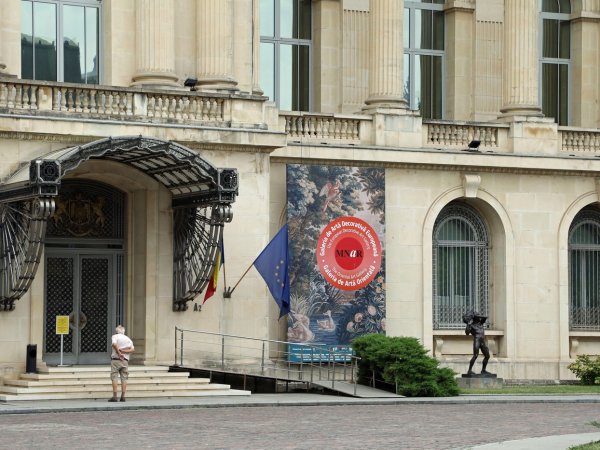
The National Museum of Art of Romania also operates several sites. Besides its main location in the former Royal Palace, the institution manages the Museum of Art Collections, the K.H. Zambaccian Museum and the Theodor Pallady Museum.
These examples explain why the number of accredited institutions cannot be compared directly with the number of buildings or exhibitions that visitors can access.
What falls outside the official count
Bucharest also has venues that use the word “museum” but do not appear as separate entries in the National Institute of Heritage guide. These include the Museum of Senses, the Romanian Record Museum, the Perfume Museum and MINA – Museum of Immersive New Art.
The fact that such a venue does not appear in the guide does not prove that it operates illegally or lacks cultural value. It only means that it should not automatically be added to the official figure of 66 without checking its status, accreditation and operating model.