Bucharest Stories: Romania’s First Major General Strike Took Place in the Capital in the Autumn of 1920
- Articles
- 17 NOV 26
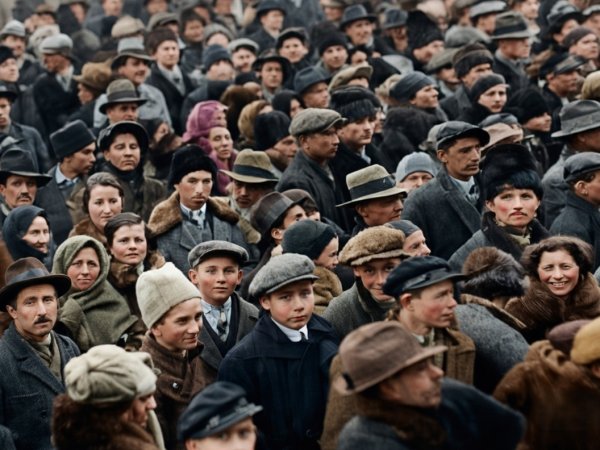
On the morning of October 20, 1920, Bucharest entered an unprecedented situation. Factories, workshops, depots, and numerous businesses across the capital began to suspend their activities, as workers turned the grievances accumulated during the months and years following the First World War into a large-scale collective action. It was the beginning of the first general political strike of the Romanian proletariat, a movement that lasted from October 20 to October 28 and involved approximately 400,000 employees in industry and transportation across the country. The capital was one of the main centers of this social confrontation. Bucharest was home to numerous industrial enterprises, CFR railway workshops, factories, and strategic facilities, while workers’ organizations already had a significant tradition of mobilization. However, the strike did not remain a Bucharest-based action. It soon spread to important industrial and railway centers throughout the country, becoming one of the largest expressions of workers’ solidarity in interwar Romania. The event must be understood within the difficult context of 1920. Greater Romania was still recovering from the war, the economy was affected by major imbalances, inflation was eroding purchasing power, and relations between workers, employers, and the authorities had become increasingly tense. At the same time, socialist and revolutionary ideas were spreading throughout Europe, while the impact of the 1917 Bolshevik Revolution was strongly felt in Romanian society as well.
Bucharest’s working class before the great strike
Before 1920, Bucharest workers had already been involved in numerous conflicts with employers and the authorities. Strikes were not a new phenomenon, but most of them were local or professional actions aimed at specific objectives, such as higher wages, shorter working hours, or improved working conditions.
One of the most important actions of the preceding years had been the 1919 railway workers’ strike, which began at the CFR workshops in Bucharest and spread to other railway centers. The workers’ movement was thus entering a new stage of organization, in which trade unions were beginning to coordinate their actions on a national level.
The capital played a special role in this development. Bucharest was the country’s main administrative and political center, but it was also one of its most important industrial centers. The city was home to the CFR workshops, metalworking plants, food factories, water, gas, and electricity facilities, printing houses, and numerous other enterprises.
By 1920, labor disputes had become so frequent that the authorities were attempting to restrict the possibility of strikes. The law regulating collective labor disputes, adopted in August 1920, also restricted the possibility of political strikes. The measure fueled dissatisfaction among trade unions and socialists, who believed that workers’ rights were being curtailed precisely at a time when they were demanding recognition as social partners.
Why the workers went on strike
The general strike was driven by both economic and political demands. Workers called for better working conditions, recognition of the right to organize and to be represented by trade unions, as well as respect for democratic freedoms.
On October 10 and 11, 1920, the General Council of the Socialist Party and the General Commission of Trade Unions discussed the launch of a general strike. A memorandum addressed to the government was drafted and became known in the socialist press as the “Ultimatum of the Workers to the Government.” The document brought together demands that went beyond purely economic issues, which also explains why the strike was subsequently characterized as political.
Among the demands were respect for the right of association, recognition of workers’ delegates and organizations, and the removal of certain censorship measures. Workers were also seeking guarantees concerning working conditions and the protection of trade union organizations.
The government led by General Alexandru Averescu did not accept the demands in the form requested by the labor movement. Under these circumstances, socialist and trade union leaders decided to launch the strike on October 20. In the days leading up to it, the political and social tension in the capital had already become increasingly visible.
October 20, 1920, the day the capital came to a standstill
On October 20, the strike began in Bucharest and rapidly spread. Approximately 400,000 employees in industry and transportation took part across the country, according to figures recorded by the Romanian Senate and other historical sources. The action was regarded as the first general political strike of the Romanian proletariat.
In the capital, the work stoppage affected numerous enterprises. Among the key sites involved were CFR workshops and depots, the Army Arsenal, water, gas, and electricity plants, the state monopoly administration, mills, and major factories. Metallurgical enterprises such as Vulcan, Lemaître, and Wolff were also involved.
The importance of the railway infrastructure made the CFR workshops one of the central points of the conflict. Railway workers already had considerable experience in organizing collective action, and their participation affected one of the country’s main transportation networks.
At the same time, the strike spread beyond Bucharest. Industrial and railway centers such as Ploiești, Galați, Iași, Brașov, Cluj, Timișoara, Oradea, and other cities were affected. What had begun in major working-class centers thus quickly acquired the dimensions of a national action.
The Averescu government and the authorities’ response
For the government, the scale of the strike represented a serious political and public-order problem. The cabinet led by General Averescu viewed the radicalization of the socialist movement with suspicion, at a time when the influence of the Russian Revolution and the activity of communist groups had become major issues in political debate.
The Minister of the Interior, Constantin Argetoianu, acknowledged the existence of workers’ grievances but rejected the form of protest that had been chosen. On October 21, arrests were ordered among the strike leaders, weakening the movement’s ability to coordinate its actions. Leadership was subsequently taken over by organizations within the Socialist Party and the trade unions.
The authorities resorted to severe measures. Military forces were mobilized, while measures were taken in certain strategic areas to ensure the functioning of essential infrastructure. Workers’ organizations were placed under surveillance, and the socialist press was subjected to restrictions.
For the government, the issue was no longer simply a dispute between workers and employers. The strike had an obvious political dimension and was taking place in an atmosphere in which the authorities feared the spread of revolutionary radicalism. This perception decisively influenced the way the strike was suppressed and subsequently interpreted.
Gheorghe Cristescu and the leaders of the workers’ movement
Among the figures associated with the socialist movement of the period was Gheorghe Cristescu, known by the nickname “Plăpumarul,” meaning “the Quilt Maker.” He belonged to the radical wing of the Socialist Party and would become, in 1921, the first general secretary of the Communist Party of Romania.
Alongside Cristescu, figures such as Constantin Popovici, Ilie Moscovici, Alexandru Dobrogeanu-Gherea, Eugen Rozvan, and numerous other activists were active within the socialist and trade union movement. The movement, however, was far from homogeneous. Romanian socialism included reformist, centrist, and communist currents, and the differences between them would become increasingly pronounced after the October strike.
Cristescu and Popovici would later play important roles in the development of relations between Romanian socialism and the Communist International. During the summer and autumn of 1920, a Romanian socialist delegation traveled to Russia to discuss relations with the Comintern. Among its members were Cristescu and Popovici, together with Alexandru Dobrogeanu-Gherea, Eugen Rozvan, Ion Flueraș, and David Fabian.
The general strike and the radicalization of the socialist movement must therefore be considered alongside the political transformations that would lead, the following year, to the communist breakaway from the Socialist Party and the establishment of the Communist Party of Romania.
Eight days that changed the workers’ movement
The general strike ended on October 28, 1920. In the immediate sense, the workers did not achieve all of their objectives. The government did not give in to the political demands, while repression and arrests weakened the organizations that had coordinated the action.
Nevertheless, the scale of the mobilization demonstrated that Romania’s working class was capable of organizing coordinated action across the country. Approximately 400,000 employees taking part in a single strike represented a social force that the authorities could no longer ignore.
At the same time, the event intensified debates about the future of the socialist movement. For moderate social democrats, the experience demonstrated the need for trade union and parliamentary strategies. For the communist faction, the failure of the strike was interpreted as evidence of the need for a more disciplined revolutionary organization.
This division became increasingly evident in the months that followed. In December 1920, some of the socialist delegates who had traveled to Russia accepted the conditions for affiliation with the Comintern, and in May 1921 the Socialist Party would be transformed into the Communist Party following a decisive internal confrontation.
The legacy of the 1920 general strike
The October 1920 strike was not the first major labor protest in Romania. In previous years, important strikes had been organized by railway workers, oil workers, printers, and other professional groups. What distinguished the 1920 action was its national scale and political character.
For Bucharest, the event remained one of the most important social confrontations of the early period of Greater Romania. The capital, with its factories, workshops, and strategic infrastructure, became one of the principal stages of the strike and the authorities’ response.
Viewed more than a century later, the general strike of October 20–28, 1920, can be regarded as a turning point in the history of Romanian trade unionism. It demonstrated the strength of a working class capable of mobilizing beyond the boundaries of a single profession or city and showed that social demands could become a matter of national political importance.
At the same time, the events revealed the fragility of social democracy in Romania at the beginning of the decade. Workers were demanding recognition of their rights and organizations, while the state responded with restrictions, arrests, and security measures.
In Bucharest in the autumn of 1920, the shutdown of factories and workshops was therefore more than an interruption of economic activity. It was the moment when an important part of Romania’s working class attempted to make its voice heard at the national level. The eight days of the strike became one of the essential milestones in Romania’s social history during the interwar period and profoundly influenced the development of trade unionism and the Romanian left in the years that followed.
We also recommend: The December 1918 Printers’ Strike in Bucharest. How the Protest Turned into the Massacre at the National Theatre