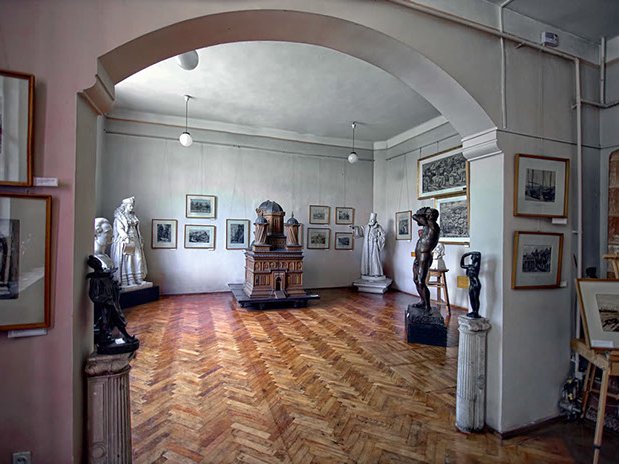
On Strada Vasile Alecsandri nr. 16, in a quiet neighbourhood in the northern part of Bucharest, sits one of the most personal art collections in the city. The Frederic and Cecilia Cuțescu-Storck Art Museum was not built around institutional acquisitions or incidental donations — it is the actual house in which the two artists lived and worked, transformed after their deaths into a space that preserves both the work and the atmosphere of a remarkable family.
A house built by artists, for artists
The building was constructed between 1911 and 1913 by Frederic and Cecilia Cuțescu-Storck, with the help of architect Alexandru Clavel. It is an architectural monument in its own right — with stained glass windows, wood carvings and decorative details that reflect the taste and personality of those who commissioned it. Cecilia Cuțescu-Storck was directly involved in the design of the house, placing her among the first women in Romania with an active role in architecture.
In October 1951, Cecilia Cuțescu-Storck and her daughters — Gabriela Florica Storck and Cecilia Frederica Storck Botez — donated the collection to the People's Town Council of Bucharest. The museum opened in the same year. Today, the building belongs to brothers Alvaro and Alexandru Botez, who have made it available to the Bucharest Municipality Museum through a usage agreement, for the conservation and display of the collection.
An artistic dynasty across three generations
The collection presents the work of a family of artists whose output spanned almost a century of Romanian art history.
Karl Storck (1826–1887) was the first sculpture professor at the Bucharest School of Fine Arts, founded by Theodor Aman. He is the author of the first monumental sculpture in Bucharest to have survived to the present day — a portrait of Mihail Cantacuzino.
Carol Storck (1854–1926), Karl's son, created three of the allegories decorating the Bucharest Palace of Justice and the monument to "General Dr. Carol Davila", located in front of the University of Medicine.
Frederic Storck (1872–1942), Karl's other son, followed the same vocation and taught sculpture at the Bucharest School of Fine Arts. His works in the museum include portraits, nudes, expressive heads in bronze and marble, medals and plaques.
Cecilia Cuțescu-Storck (1879–1969), Frederic's wife, was a painter and the first female professor at a state art academy in Europe — a title that belongs to her uncontested. She taught painting and decorative arts at the Bucharest School of Fine Arts and is represented in the collection through drawings, oil paintings and panels for mural decoration.
What the collection holds
The museum's heritage brings together sculpture, painting, graphic art and decorative art. Alongside the works of the four Storck family members, the collection includes medieval religious sculptures, watercolours, gouaches, pastels, charcoal and ink drawings, bronze plates and medals, ancient coins and icons.
Each room retains something of the logic of both a studio and a home — objects coexist with artworks, and the space conveys the impression that the artists have just stepped out and are about to return.
Practical information
Opening hours: Wednesday – Sunday, 10:00 – 18:00 (ticket office closes at 17:30)
Admission:
- 20 lei — adults
- 10 lei — students, retirees, military personnel, organised groups
- Free — children under 7
- 20 lei per person — guided tour
Free admission: on the first Saturday of every month
Bus lines: 1, 19, 23, 27, 123, 124