3 important things that have changed in Bucharest from 1990 to 2026
By Raluca Ogaru
- Articles
- 27 MAR 26
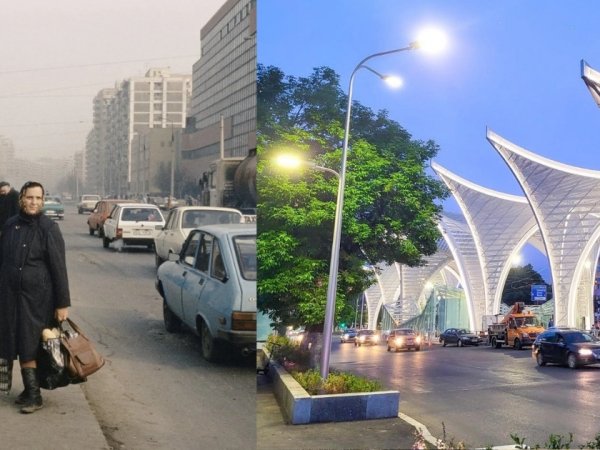
Bucharest, the capital of Romania, has undergone profound transformations over the past three decades, reshaping its social, economic, and urban dynamics. After 1990, the city moved away from a rigid, centralized model and gradually adapted to a market economy, European integration, and the needs of a modern metropolis. By 2026, these changes have had visible effects on the daily lives of residents, infrastructure, and the city’s perception both nationally and internationally.
Economic diversification and attracting investments
One of the most visible changes in Bucharest after 1990 concerns the city’s economic evolution. In the early post-revolutionary years, many large industries that had operated under the centralized system either closed or significantly reduced their activity, initially leading to a decline in industrial jobs. The transition to a market economy required a deep restructuring of the local economic environment.
As the market opened up and legislation encouraged private initiatives, Bucharest became Romania’s economic center. Multinational companies and businesses from various sectors—IT, financial services, commerce, consulting, and more—settled in the city, bringing investments and new job opportunities. The emergence of modern office parks in areas like Pipera, Victoriei, or the Civic Center illustrated the gradual transformation of the capital’s economic profile.
Access to European funds after Romania joined the European Union in 2007 supported urban rehabilitation projects, economic restructuring, and the development of new public services. These resources were used both to modernize infrastructure and to support local entrepreneurial programs. The result is Bucharest’s growing contribution to the national GDP and its consolidation as a regional hub for business and innovation.
The changing urban landscape and living patterns
Urban changes in Bucharest between 1990 and 2026 are visible throughout the cityscape. After the fall of the communist regime, the surge in private property led to a wave of new constructions, especially in the city’s peripheral areas. Land that was once green spaces or urban agriculture was transformed into residential neighborhoods and modern housing complexes.
Districts such as Berceni, Militari, Colentina, or Pipera experienced intensive residential development, attracting population from across the city and rural areas. This expansion was sometimes criticized for lacking coherent planning but also reflected residents’ desire to access modern housing in a rapidly changing city.
The reconfiguration of urban space also included projects to revitalize the city center, restore historic buildings, and modernize public areas. Parks, public squares, and key streets were renovated to create a more attractive and functional urban environment. The appearance of office buildings, shopping centers, and mixed-use spaces reflects the shift from an industrial urban model to one based on services, culture, and an active urban life.
Modern transportation and urban mobility
Transportation has been a key area of change in Bucharest between 1990 and 2026. In the first decades after the revolution, the public transport network was often underfunded and overburdened, lacking major investments to keep pace with population growth and urban expansion. Over time, however, modernization and expansion projects were initiated to meet these challenges.
The subway network, a crucial part of urban mobility, was significantly expanded. New lines and stations were built to serve peripheral areas and reduce congestion in road traffic. These expansions improved rapid transport access for residents of less central sectors and provided efficient alternatives to private cars.
In addition to the subway, local and central authorities invested in modernizing the tram and bus systems, acquiring new vehicles, and developing dedicated infrastructure. In recent years, global trends in urban mobility have also reached Bucharest, with the promotion of alternative transport: bike lanes, networks of electric scooters, and expanded pedestrian areas in the city center. These initiatives aimed not only to improve traffic flow but also to enhance quality of life by reducing pollution and encouraging healthy travel habits.
Bucharest, an european city
The changes in Bucharest from 1990 to 2026 are multiple and profound, reflecting Romania’s deep societal transition from a centralized system to an open economy and a dynamic European city. Economic diversification, transformation of the urban landscape, and modernization of urban transportation are three of the most important developments that define the capital today. These changes have shaped not only the city’s physical infrastructure but also the daily experience of residents and its development potential for the future.
WE ALSO RECOMMEND YOU:
Unirea Shopping Center – a mirror of a changing Bucharest
How a well-managed city center looks in Europe — and what Bucharest could learn from it