Crângași Park, Lake Morii and the Legends of One of Bucharest’s Most Popular Green Spaces
- Articles
- 11 MAY 26
In the western part of the Capital, where the Crângași neighborhood meets the waters of the largest lake in Bucharest, lies one of the most beloved relaxation areas for residents of Sector 6. Crângași Park is today a modern space, animated by children, athletes, families, and tourists who come to enjoy nature, sports fields, and promenades arranged along the shore of Lake Morii. Beyond its current appearance, however, the place hides a complex history marked by demolitions, forced relocations, and legends that continue to fascinate generations of Bucharest residents. Crângași Park and Lake Morii represent, at the same time, two faces of the same space. On one hand, they are symbols of urban transformation and modern investment in green infrastructure. On the other hand, they preserve the memory of an area filled with stories about epidemics, vanished cemeteries, and unexplained phenomena. This combination of contemporary landscape and mysterious past makes the area one of the most interesting in Bucharest.
Crângași Park, one of the most appreciated green oases in Sector 6
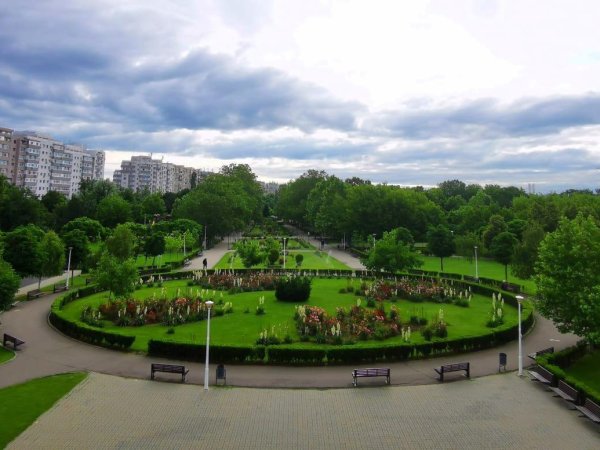
With an area of 86,872 square meters, Crângași Park is the main recreational space of the neighborhood with the same name and one of the most attractive parks in western Bucharest. Residents of Crângași and Militari use it daily for walks, sports, and outdoor activities, and the relaxed atmosphere on the lakeshore makes it an ideal place for all ages.
The park features modern playgrounds for children, wide alleys, and numerous rest areas. One of the most appreciated facilities is the 48-meter pump track, where young people can ride bicycles, scooters, rollerblades, or skateboards. The track is designed for dynamic movement and offers an engaging experience for both beginners and experienced users.
Sports fields, concerts, and community life
Crângași Park is also an important center for sports activities. Inside it there are five synthetic turf football fields, each about 300 square meters in size and available for rent for a fee. These facilities are heavily used by amateurs and local teams that organize competitions and training sessions.
In the center of the park there is an open-air stage where concerts, performances, and community events are held, especially during the warm season. The presence of a terrace with a restaurant, very popular among local residents, completes the leisure offer and turns the park into a true meeting point for the community.
Park redevelopment and major investments around Lake Morii
In March 2023, modernization works at Crângași Park were resumed, and approximately 50,000 square meters of green space were redeveloped. The project included new plantings, alley rehabilitation, and infrastructure upgrades, giving the area a more modern and visitor-friendly appearance.
At the same time, the authorities of Sector 6 are developing Lake Morii Park, an extensive project estimated at 30 million euros, funded through European funds. The plan includes playgrounds, basketball courts, beach volleyball fields, ping-pong tables, and numerous relaxation areas, extending the development toward Chiajna.
On June 1, 2024, the dam promenade at Lake Morii was reopened, equipped with benches and pergolas, quickly becoming one of the most frequented walking routes for jogging, cycling, and sunset strolls.
Lake Morii, the largest lake in Bucharest
Lake Morii is the largest lake in the Capital, with an area of approximately 246 hectares and a water volume of 14.7 million cubic meters. It was created in the 1980s, during the final years of the communist regime, as part of a large flood-control project for the Dâmbovița river.
The project was based on the decision of Nicolae Ceaușescu to build Ciurel Dam and a reservoir lake designed to protect the city during periods of high water flow. On August 21, 1986, the Ciurel sluice gate was closed, and the waters of the Dâmbovița began to accumulate, giving birth to one of the most impressive hydraulic projects in Bucharest.
The neighborhood that disappeared under water
For Lake Morii to be created, an entire neighborhood had to be sacrificed. Approximately 400 houses were demolished, along with two schools and St. Nicholas Church. Demolition works began in July 1985, and hundreds of families were forced to leave their homes.
Many residents were moved into apartment blocks in Crângași and Giulești, while others were relocated to various parts of Bucharest. For many families, this relocation represented a profound trauma, and the memory of lost homes continues to be evoked today.
The plague cemetery and the dramatic past of the area
The history of the place is much older than Lake Morii. Archaeological discoveries, including coins from the time of Emperor Flavius Valentinian I and an ancient ceramic kiln, show that the area has been inhabited for over two millennia.
In the 19th century, during the reign of Ioan Vodă Caragea, victims of a major plague epidemic were buried here. This led to the formation of a vast cemetery that remained active for a long time and carried a strong emotional significance for the community.
Exhumations and the legends that followed
Before the construction of the lake, authorities asked families to exhume their relatives and move them to other burial places. In just two months, over 11,000 remains were relocated, many of them reburied near Chiajna Monastery.
However, not all graves were moved. Witnesses reported that some remains were left underground and covered by layers of concrete, while bulldozers continued the works. These dramatic episodes fueled numerous legends and made many locals believe that the place carries a special energy.
Mysterious coffins and unexplained phenomena
After the lake was filled, stories of strange appearances began to circulate. One of the most well-known legends claims that two coffins were seen near the leisure island, bearing the photographs of Nicolae and Elena Ceaușescu. No one could explain who placed them there or whether it was a prank or a symbolic gesture.
Over the years, fishermen and local residents have reported seeing unusual lights above the water and hearing sounds at night resembling human cries. These accounts, although impossible to verify, have reinforced Lake Morii’s reputation as one of the most mysterious places in Bucharest.
A modern place with a forgotten past
Today, Crângași Park and Lake Morii are among the most popular recreational spaces in the Capital. People come here to run, cycle, practice sports, or simply admire the spectacular sunsets reflected in the water.
Yet beneath this modern and peaceful landscape lies a history marked by sacrifices, relocations, and stories that continue to fuel collective imagination. Crângași Park and Lake Morii demonstrate that some of the most beautiful places in Bucharest also carry the memory of dramatic events and legends that still add mystery and charm to the city.
We also recommend: The Story of the Crângași Neighborhood: Inhabitants of the Vlăsia Forest, Bucharest’s “Black Sector,” and the Dâmbovița Floods