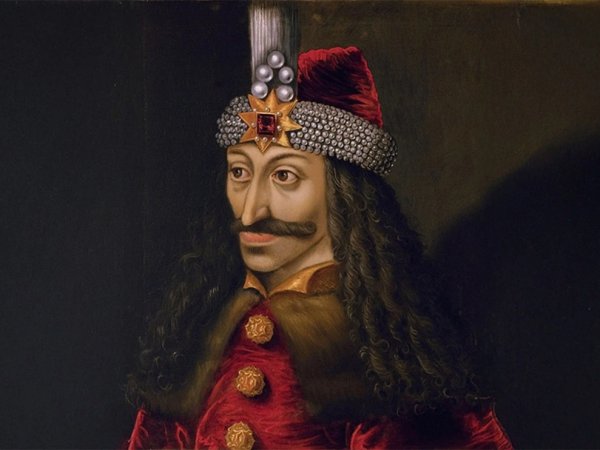
Vlad Țepeș, between history and legend. The ruthless ruler of Wallachia has a street named after him in Sector 2 of Bucharest
- Articles
- 12 MAY 26
Vlad Țepeș remains one of the most fascinating figures in Romanian history, positioned on the fragile boundary between documented reality and legend built over centuries. Ruler of Wallachia in the fifteenth century, he entered both chronicles and the European collective imagination, becoming a complex character, often controversial, but impossible to ignore. Bucharest preserves his memory through various urban landmarks, including a street that bears his name in Sector 2, a sign that his figure continues to inspire interest today.
A character between historical record and legend
Vlad Țepeș is one of those historical personalities whose biography cannot be separated from legend. Historical information is incomplete, and numerous episodes from his life have been amplified or reinterpreted over time. For this reason, modern researchers emphasize the need for a critical analysis of sources in order to separate reality from literary constructions.
An important moment in his mythologization is represented by the novel Dracula by Irish writer Bram Stoker, which does not respect historical truth and transforms Vlad Țepeș into a malevolent figure associated with vampirism and dark forces. This image had a huge impact on international perception, long overshadowing the historical reality of his rule.
Only at the end of the nineteenth century does the first serious scholarly attempt appear to reconstruct the biography of the ruler, through the work of historian Ioan Bogdan, who tried to provide a documented image of his life.
The political context of Wallachia in the fifteenth century
To understand the rise of Vlad Țepeș, it is essential to look at the unstable political context of Wallachia during that period. After the death of Mircea the Elder in 1418, the throne was disputed by several claimants, which generated a period of strong political instability.
Unlike Western Europe, where the principle of primogeniture functioned, in the Romanian Principalities the elective-hereditary system was applied. This principle allowed any descendant of the ruling family to claim the throne, which led to numerous internal conflicts between rival dynastic branches.
In this context, the struggle between two major families takes shape: the Dănești and the Drăculești, from which Vlad Țepeș also descended. The rivalry between these two branches dominated the internal politics of Wallachia for decades.
The rise of Vlad Țepeș and his first reigns
Vlad Țepeș’s first important appearance in historical documents dates from 1448. At that time, the external context was strongly influenced by the interventions of John Hunyadi, who supported the Dănești faction and backed Vladislav II.
Vlad’s father, Vlad Dracul, had been killed in 1447 in a tense political context, which profoundly marked the young prince’s destiny. His first reign began in September 1448, in a favorable moment, in the absence of his main political opponents.
However, this first reign was extremely short. Vladislav II quickly returned to the country and recaptured the throne, and Vlad Țepeș was forced to retreat. Thus ended his first experience as ruler of Wallachia in November 1448.
Return to the throne and consolidation of power
Vlad Țepeș’s second reign begins in the first half of 1456, with the support of John Hunyadi, who decides to replace Vladislav II. The context is influenced by political developments in Transylvania and the need for regional stability.
This period is much longer and more significant, lasting until 1462. Vlad Țepeș consolidates his power and enters into conflict with the cities of Brașov and Sibiu, for economic and political reasons. Both urban centers supported rival claimants to the throne, which increased tensions.
In 1457, the ruler also intervenes in Moldavia, supporting Stephen the Great in his rise to power. His political relations become increasingly complex, oscillating between alliances and confrontations.
Relations with the Ottoman Empire and the Church
An essential aspect of Vlad Țepeș’s rule is his relationship with the Ottoman Empire. In his youth, he had been held hostage at the Ottoman court, an experience that deeply influenced his formation. His brother, Radu the Handsome, had a similar fate, later becoming an ally of the Ottomans.
After the death of John Hunyadi, Vlad Țepeș’s foreign policy temporarily changes, as he is forced to adopt a position of balance toward the Ottomans. However, with Matthias Corvinus ascending to the throne, the ruler reorients his policy and resumes confrontation with the Ottoman Empire.
His relationship with the Church also evolves depending on political context, fluctuating between tension and rapprochement, especially during periods when he presented himself as a defender of the Christian world.
Military campaigns and confrontation with the Ottomans
The year 1462 represents the peak of military confrontations between Vlad Țepeș and the Ottoman Empire. The ruler manages to recapture Giurgiu and organizes incursions south of the Danube, prompting a reaction from Sultan Mehmed II.
The Ottoman army, led by the vizier Mahmud, enters Wallachia but suffers significant losses following rapid and effective Romanian attacks. The most famous confrontation remains the “Night Attack” in June 1462, a surprise action against the sultan’s camp.
Although the short-term military result was favorable to Vlad Țepeș, Ottoman pressure and the international political context ultimately led to his withdrawal.
The end of the reign and his final years
In November 1462, Vlad Țepeș is arrested by the forces of Matthias Corvinus under unclear circumstances. After approximately 12 years of captivity, he is released and reintegrated into political life, even receiving military functions within the Hungarian army.
He returns briefly to the throne in 1474, but his rule is once again short-lived. He dies under unclear conditions, possibly killed accidentally by his own men during a confrontation.
The Dracula legend and the Western image
The nickname “Dracul” comes from his father’s membership in the Order of the Dragon, a chivalric organization dedicated to fighting unbelievers. From this derives the name “Dracula,” later taken and transformed in literature.
The Western legend, especially through Bram Stoker’s novel, amplified the ruler’s dark side, creating the image of a vampiric character. In contrast, medieval Byzantine and Ottoman sources offer a more nuanced image, in which Vlad appears as a harsh but effective ruler.
Vlad Țepeș in history and urban memory
Modern historians consider Vlad Țepeș a ruler of an extremely unstable era, situated between the fall of the Byzantine Empire and the expansion of the Ottoman Empire. In this context, his actions must be understood within the logic of political survival.
Today, his name is present in the urban space of Bucharest, including through street names that preserve his memory in the city’s consciousness.
Țepeș Vodă Street in Sector 2, near Calea Dudești
In Sector 2 of Bucharest, near Calea Dudești, there is Țepeș Vodă Street, an urban landmark that recalls the medieval ruler. The area is one with a mix of old buildings and new constructions, reflecting the continuous evolution of the Capital.
The street bears the voivode’s name as a form of homage to a major historical figure and is integrated into Bucharest’s network of toponyms dedicated to the great rulers of Wallachia. Although it is not one of the central arteries of the city, it symbolically preserves the connection between the medieval past and the urban present of Bucharest.
We also recommend: Famous boulevard names: Mircea Vodă — the Elder, the brave, the grandfather of Vlad the Impaler, ruler of Wallachia