How to Get from Bucharest to Romania's Most Beautiful Destinations by Train. Timeline, Prices and What to Avoid
- Articles
- 11 MAY 26
Train travel is gaining ground again among Romanians, especially on short and medium routes where road traffic has become a weekly ordeal. The new 2025–2026 Train Timetable, which came into force in December 2025, brought a 10% ticket price increase, but also some genuine time improvements on certain routes, new Alstom Coradia units on the main lines and a richer offer from private operators. If you want to know exactly what to expect on each route — how long it takes, what it costs and where to be careful — this guide puts everything in one place.
One important detail upfront: exact times and prices can be checked and booked at mersultrenurilor.infofer.ro and bilete.cfrcalatori.ro, where data is updated in real time. The prices mentioned in this guide are approximate and may vary depending on the operator, train type and travel date.
Bucharest – Brașov: the perfect route
This is, without question, the best train experience in Romania in 2026. The offer is rich, with a direct train on average every less than an hour when private operators are included. The fastest InterCity trains come in under 2 hours and 14 minutes, while Regio trains, which stop at around 30 stations, exceed three and a half hours.
InterRegional Călători operates InterRegio services throughout the day, with journey times between 2 hours 30 minutes and 2 hours 46 minutes, and a full second-class ticket priced at 68.5 lei. On the Bucharest Nord–Brașov direction, departures run at virtually every hour of the day, from the early hours of the morning to after midnight, making the route extremely flexible.
What to avoid: Regio trains are significantly slower and stop at dozens of stations — if time matters, choose InterRegio or InterCity. Weekends and public holidays fill carriages quickly, so booking a few days ahead is a smart move.
Bonus stop along the way: Sinaia. Sinaia station sits on the same Bucharest–Brașov line, around 1h30 from Bucharest on an InterRegio, at a price of roughly 40–57 lei. If you want just a day in the mountains and plan to return in the evening, the train is comfortably superior to driving on any sunny weekend.
Bucharest – Constanța: Romania's fastest train
The Bucharest–Constanța link remains the highest-performing route in the country, with trains frequently reaching average speeds of around 100 km/h and some units hitting 160 km/h on certain sections. The route takes around 2h15–2h30 by InterCity or InterRegio, covering 225 kilometres. In summer, frequency increases significantly, with additional trains running toward Mangalia and the Black Sea resorts.
What to avoid: in July and August, trains to the coast sell out days in advance, especially on Fridays and Sundays. If you travel on a summer weekend without a reservation, standing for the entire journey is a real possibility. Book early and, where possible, choose morning departures or Thursday evening.
Bucharest – Cluj-Napoca: beautiful, but long
An InterCity train connects Bucharest to Cluj in approximately nine hours, passing through Brașov, Sighișoara, Blaj and Teiuș — a route that crosses some of Transylvania's most beautiful landscapes, but one that requires a genuine appetite for long-distance travel. If you enjoy reading, working or watching the countryside roll past for hours on end, the route becomes almost pleasant. If not, flying or driving are faster alternatives.
What to avoid: between Brașov and Sighișoara, active construction sites continue to seriously affect train speeds, with even InterCity trains averaging under 35 km/h on this section. Delays here are frequent and can accumulate 30–60 minutes beyond the scheduled arrival.
Bucharest – Sibiu: connected, but complicated
Sibiu remains one of the destinations with the weakest rail connectivity relative to its tourist appeal. In 2026, only three trains run per day in each direction to Bucharest, with the fastest taking approximately five and a half hours — though some journeys can stretch toward six hours depending on the connections required at Brașov or Copșa Mică. Not all services are direct, so check the specific route on Infofer before planning your trip.
Tickets start at roughly 90–110 lei one way, depending on the operator and train type.
What to avoid: if you're leaving Sibiu on a Sunday evening toward Bucharest, train options are minimal — check the timetable carefully and book in advance. In summer, a few seasonal trains appear that can offer a useful additional option.
Bucharest – Iași: a day's journey through Moldova
The Bucharest–Iași route takes generally between 4h30 and 5h30 by InterRegio or InterCity, depending on the train and the route taken. Some services run via Buzău and Bacău, with faster sections between Bucharest and Ploiești and between Buzău and Brăila. Prices start at roughly 80–120 lei one way — check the current offer on bilete.cfrcalatori.ro or the private operators' apps, as fares vary considerably depending on the train.
Avoid Regio trains on this route — they can exceed seven hours, stopping at almost every station along the way. Choosing InterRegio or InterCity saves at least two hours compared to the slower option.
Bucharest – Timișoara: an honest route about distance
Between Bucharest and Timișoara, across 533 kilometres, no train manages to come in under 10 hours and 40 minutes — and some services exceed 11 hours, due to slow sections on the Bucharest–Craiova and Caransebeș–Timișoara stretches. This is one of the routes where ageing infrastructure makes itself felt most sharply. Tickets start at roughly 130–160 lei one way.
What to avoid: do not plan this route if you have a flight to catch or a fixed appointment at your destination. Delays on the Caransebeș–Timișoara section are frequent and difficult to recover.
What changed in 2026 compared to previous years
Rail infrastructure investments are beginning to show up clearly in journey times on certain sections. A notable example is the Sighișoara–Arad route, where some trains cover the 327 kilometres in around four hours, averaging roughly 80 km/h — a level rarely seen on the Romanian rail network until recently.
A significant change has appeared at the Hungarian border, where train waiting times have dropped considerably following Romania's entry into the Schengen Area. Where combined stops at the Curtici and Lokoshaza border stations previously reached 75–80 minutes, the new timetable brings them down to under half an hour — good news for anyone taking the train toward Budapest or Vienna.
Several new Alstom Coradia units have entered service alongside dozens of carriages modernised through PNRR funds, allocated primarily to InterCity trains. On the other hand, Regio Călători has introduced mandatory seat reservations across all its trains, adding 5.5 lei to the ticket price compared to before.
Between Cluj and Oradea there are no direct trains in 2026, due to extensive electrification and modernisation works — operators are running replacement buses with journey times of 3h50 to 4h25, with tickets available through the CFR Călători and TFC apps.
Practical tips for any route
Book online. Tickets are available at bilete.cfrcalatori.ro, interregional.ro and private operators' apps. Prices rise as the departure date approaches, especially on popular routes.
Choose your train type carefully. The time difference between an InterCity and a Regio on the same route can be two to three hours. The price difference is usually 20–40 lei — almost always worth it.
Check Infofer.ro. The platform shows real-time delays and route changes — particularly useful on routes with active construction sites, such as Brașov–Sighișoara or the section toward Sibiu.
Build in buffer time. On routes with construction works or ageing infrastructure, mentally add 30–45 minutes to the scheduled arrival when planning onward connections or fixed activities at your destination.
First class is sometimes worth it. On journeys over four hours, the first-class supplement — usually 30–50% above second class — brings more space and less noise, which on a long trip matters more than it sounds.
Romania's trains in 2026 sit somewhere between what they once were and what they could become — better on some routes than we tend to acknowledge, slower on others than they should be. If you know how to choose the right route, the right train and the right moment, you can reach some of the most beautiful corners of the country for a 70-lei ticket, a coffee on board and the landscapes of Transylvania drifting past the window. That's not nothing.
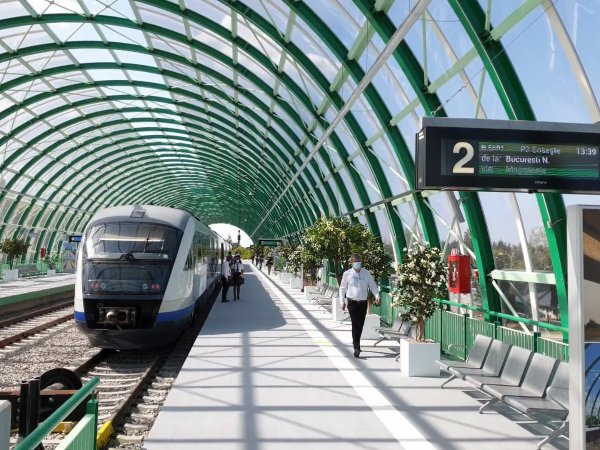
Photo: CFR Calatori