The Victor Babeș Museum in Bucharest, built by the son of the great bacteriologist out of love for the work of his illustrious father
- Articles
- 03 MAR 26
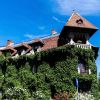
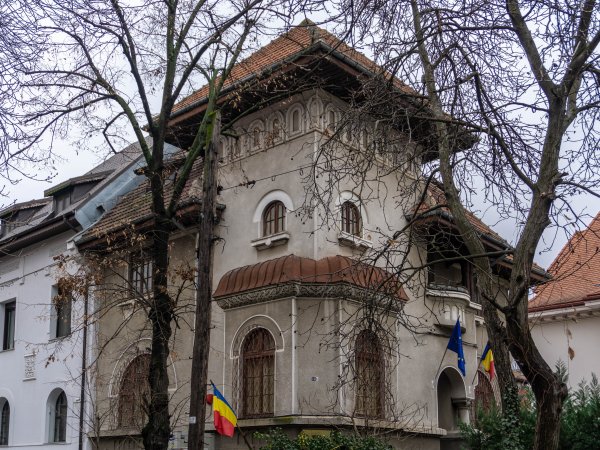
In the northern part of Bucharest, in a quiet neighborhood with tree-lined streets and houses built in the eclectic style of the interwar period, there stands a building that houses one of the most valuable memorial collections dedicated to a Romanian scholar. It is the Victor Babeș Museum, located on Andrei Mureșanu Street, in Sector 1 of the Capital, near the residential neighborhoods developed in the first decades of the 20th century.
A tribute raised from filial admiration
The museum is not only an exhibition space, but also a testimony to the deep love and respect that Mircea Babeș bore for his father, the great physician and scholar Victor Babeș (1854–1926). The building was constructed in 1928–1929 by his son, initially intended to serve as a private residence. Over time, however, the house became a sanctuary of the illustrious doctor’s memory, a place where his personal belongings, manuscripts, and scientific works were carefully gathered and displayed.
The museum was reintroduced into the tourist circuit in November 2018, with the inauguration of the new permanent exhibition entitled “Victor Babeș (1854–1926). Principles, values, legacies.” This modernized exhibition offers the public the opportunity to discover not only the scholar’s scientific work, but also his human, ethical, and civic dimension.
From private residence to memorial museum
The building on Andrei Mureșanu Street was erected in an eclectic style characteristic of the 1920s, marked by the harmonious blending of decorative elements and balanced volumes. Initially, the property was designed as a family home, in a secluded and select area of the Capital. However, Mircea Babeș, deeply attached to his father’s intellectual legacy, decided to transform the ground floor of the residence into a space dedicated exclusively to his memory.
In 1956, Mircea Babeș donated the ground floor of the house to the Romanian state, in order to be arranged as a memorial museum. He did not limit himself to this symbolic gesture, but was actively involved in organizing and managing the institution, which he personally directed until his death in 1968. He gathered the objects left in the apartment that Victor Babeș had used at the National Institute of Pathology, inventoried them, and carefully displayed them, creating a coherent and valuable ensemble.
In July 1986, Sofia Babeș, Mircea Babeș’s wife, decided by testament to leave the upper floor of the house as well to the City Hall of the Capital. Thus, the entire building was integrated into the museum circuit, expanding the space dedicated to presenting the scholar’s life and work.
The scientific work of a pioneer of microbiology
The museum’s collection is dominated by the scientific works of Victor Babeș, one of the fundamental figures of modern microbiology. Among the exhibits are copies from the first editions of volumes that had a major impact on the international medical community.
The work “Les bactéries et leur rôle dans l’étiologie, l’anatomie et l’histologie pathologiques des maladies infectieuses,” published in 1885, represents one of his most important contributions to the study of bacteria and infectious diseases.
Other titles on display include “Études sur la pellagre,” “Recherches sur les associations bactériennes du bacilli de la tuberculose” (1888), “Despre transmiterea proprietăților imunisante prin sângele animalelor imunisante” (1895), “Raport despre turbare” (1912), and “Anatomie patologică generală” (1921).
These works reflect the scholar’s constant concern for the research of infectious diseases, for the study of tuberculosis, pellagra, and rabies, as well as for the development of modern immunology concepts. Victor Babeș was among the first researchers to lay the foundations of bacteriology in Eastern Europe, contributing decisively to the modernization of Romanian medicine and to its integration into the international scientific circuit.
In addition to books and manuscripts, the museum preserves laboratory instruments, personal documents, correspondence, and photographs that illustrate his professional activity and his relationships with other great scholars of the time.
International recognition and honorary distinctions
The prestige that Victor Babeș enjoyed during his lifetime is reflected in the numerous orders and decorations he received from several European states. The museum’s collection includes an impressive series of distinctions, demonstrating the international recognition of his merits.
Among them are the National Order of Civil Merit in the rank of Commander, granted by the Bulgarian state in 1891, the Civil Sanitary Order in the rank of Commander (Bulgaria), as well as the Order of the Iron Crown of Austria. From France, he was decorated with the Legion of Honour, both in the rank of Officer and in the rank of Commander.
He also received prestigious Romanian orders, such as the Order “Star of Romania,” the Order “Crown of Romania,” and the distinction “Bene Merenti.” These decorations represent not only symbols of official recognition, but also testimonies of his essential contribution to the progress of medicine and to strengthening the prestige of Romanian science.
The presence of these orders in the museum offers visitors a perspective on the international dimension of his activity and on the impact he had on the medical world of his time.
A space of memory and values
The reintroduction of the museum into the tourist circuit in November 2018 marked an important moment for Bucharest’s cultural heritage. The new permanent exhibition, “Victor Babeș (1854–1926). Principles, values, legacies,” emphasizes not only scientific achievements, but also the moral values that guided his activity: rigor, responsibility, devotion to patients, and civic commitment.
The museum on Andrei Mureșanu Street, Sector 1, is today a place where the history of medicine comes to life. Its location in a quiet residential neighborhood contributes to an atmosphere of recollection and reflection. Visitors have the opportunity to enter an intellectual universe that shaped the destiny of Romanian public health.
Through his generous gesture, Mircea Babeș succeeded in transforming the family home into a space of collective memory. Beyond objects and documents, the museum conveys a profound message about respect for knowledge and about the responsibility to keep alive the legacy of great personalities.
The Victor Babeș Memorial Museum thus remains not only a place of the past, but also a landmark for future generations, called to carry forward the principles and values of a scholar who decisively marked the history of medicine.
We also recommend: Who was Matei Balș, the blue-blooded doctor after whom Romania’s most famous infectious disease institute was named