10 streets in Sector 5 of Bucharest that have interesting stories
- Articles
- 02 APR 26
Sector 5 of Bucharest is, without a doubt, one of the most complex and least explored urban spaces of the Capital. Far from the standard image of central boulevards or modernized neighborhoods, this area preserves a distinct authenticity, where past and present coexist in a sometimes surprising way. Its streets hide stories about boyars, revolutionaries, artists, and ordinary people, each contributing to shaping the identity of the place.
A district of contrasts and urban memory
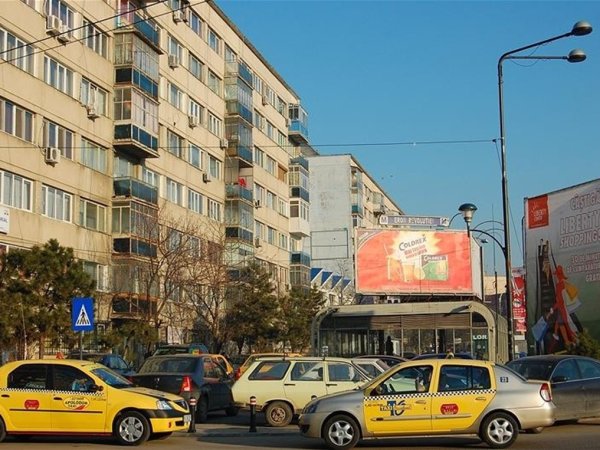
Beyond the sometimes controversial reputation of the district, the reality is much more nuanced. Here are found some of the oldest arteries of the city, streets that have witnessed major transformations – from slums and boyar gardens to the accelerated urbanization of the communist period. Every street corner tells a story, and these stories deserve to be discovered.
Uranus Street – disappeared, but never forgotten
One of the best-known and, at the same time, most dramatic streets in Sector 5 is Uranus Street. It was once an important artery, full of life, with elegant houses and cultural institutions. Here stood boyar residences, but also modest homes, in a mixture typical of old Bucharest.
The fate of the street changed radically during the communist regime, when, under the leadership of Nicolae Ceaușescu, the area was demolished to make way for the Civic Center project and the construction of the Palace of the Parliament. Thousands of people were evacuated, and an important part of the city’s memory was erased. Today, Uranus Street remains more a symbol of loss than a physical space.
Rahova Road – an artery with commercial roots
Rahova Road is one of the oldest and most important arteries in Sector 5. Its name comes from the Battle of Rahova during the War of Independence, but the history of the street is much older, as it was initially a commercial road connecting Bucharest to the south of the country.
Over time, Rahova Road was a place of trade, small workshops, and inns. Its atmosphere has remained, to a certain extent, authentic, even if modernization has changed the appearance of the area. It is one of those streets where the past can still be felt, if you look carefully.
Răzoare Street – an urban node with history
Răzoare Street is more than just a street – it is a meeting point of several important arteries and a place that has undergone numerous transformations over time. The Răzoare area was, in the past, a peripheral one, marked by gardens and agricultural land, before being fully integrated into the urban structure of the Capital.
With the expansion of Bucharest, Răzoare became an essential traffic node, and the road gained strategic importance. Today, it is a busy area, but if you look beyond the traffic, you can discover traces of its rural past and the way the city gradually expanded.
13 September Road – a witness of change
13 September Road is one of the arteries that underwent major transformations during the communist period. Its name recalls an important moment in Romania’s history, but the identity of the street was redefined with the systematization of the city.
Today, the street is dominated by massive buildings and institutions, but if you look beyond them, you will discover traces of the old neighborhoods that once existed here. It is a clear example of how urban policy can radically change the face of a city.
Sabinelor Street – quietness among blocks
Sabinelor Street is a lesser-known street, but one that offers an interesting perspective on everyday life in Sector 5. Located in a mixed area, between apartment blocks and old houses, the street preserves a quiet atmosphere.
It is the kind of place where time seems to flow more slowly. Here you can notice details often missed by the hurried eye: inner courtyards, small gardens, people living their daily lives away from the bustle of major boulevards.
Unirii Boulevard – the grandeur of the communist era
Unirii Boulevard is one of the most imposing arteries of the Capital and directly reflects the urban vision of the communist regime. Built in the 1980s, the boulevard was designed as a symbol of power and monumentality, inspired by major Western urban axes.
Its construction involved massive demolitions, including the disappearance of entire neighborhoods such as the Uranus area. Today, Unirii Boulevard impresses through its scale and symmetry, but it also remains a witness to the sacrifices made in the name of a political vision.
Pieptănari Boulevard – an area with tradition
Pieptănari Boulevard is known especially due to its proximity to Bellu Cemetery, one of the most important places of memory in Romania. The street was, in the past, connected to various crafts, and its name reflects this tradition.
Today, the area carries a special symbolic weight. It is a place where the past is present not only in architecture but also in the general atmosphere. Pieptănari Street is, in its own way, a bridge between life and memory.
Plevnei Road – an artery of urban history
Plevnei Road is one of the oldest arteries of the Capital and has a history closely tied to the development of the modern city. Its name evokes the victory at Plevna during the War of Independence, but its importance goes beyond symbolism.
Over time, Plevnei Road has been a space of change and modernization, lined with historic buildings, institutions, and homes that reflect the architectural evolution of Bucharest. It is an artery that connects past and present and offers a complex image of the city.
Fabrica de Chibrituri Street – industrialization and change
Fabrica de Chibrituri Street is another example of a street that reflects the industrial past of the area. Here, at one point, an important factory operated, contributing to the economic development of the neighborhood.
At present, the area is undergoing transformation, and the old industrial buildings are gradually being replaced or reconfigured. It is a space where past and future meet in a visible way.
Năsăud Street – neighborhood life
Năsăud Street is representative of neighborhood life in Sector 5. It is not a spectacular street in the classical sense, but precisely this normality makes it interesting.
Here one can best observe how people live, how they interact, and how they build their community. It is a street that does not impress through monuments, but through authenticity.
A district full of stories worth discovering
The streets of Sector 5 are not just simple routes of circulation, but true fragments of urban history. Each of them reflects a stage in the evolution of Bucharest, from the boyar period to industrialization and up to recent transformations.
Discovering these streets actually means rediscovering the city. Beyond prejudices and appearances, Sector 5 offers an authentic perspective on Bucharest, one in which past and present intertwine in a fascinating way.
We also recommend: 10 streets in Sector 4 of Bucharest that have interesting stories