10 streets in Sector 4 of Bucharest that have interesting stories
- Articles
- 01 APR 26
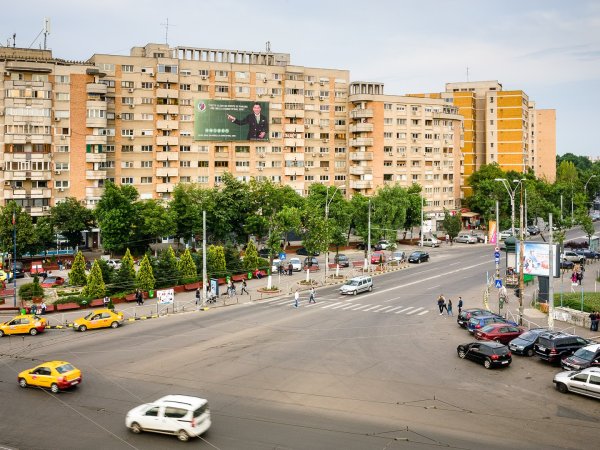
Sector 4 of Bucharest is often perceived as a predominantly residential area, dominated by apartment blocks built during the communist period and by crowded arteries. However, beyond the modern and sometimes hurried image of the neighborhoods, there exists a network of streets that preserve fascinating stories, some forgotten, others insufficiently known.
The hidden charm of the streets in the south of the Capital
These streets reflect the evolution of the city, from the old suburbs to the accelerated urbanization of the 20th century. Each of them bears a name that says something about the past: whether it evokes personalities, recalls old occupations, or preserves traces of a disappeared geography. In the following lines, we will discover ten such streets in Sector 4, each with its own identity and story.
Tineretului Boulevard – the symbol of a modern era
Tineretului Boulevard is one of the representative arteries of Sector 4, directly connected to the major transformations of Bucharest during the communist period. Its name reflects the ideals of the era, when youth was associated with progress, energy, and the future.
Built near Tineretului Park, the boulevard was designed as part of a modern urban ensemble, intended for housing and recreation. The area was massively systematized, and the apartment blocks built here quickly became homes for thousands of families.
Today, Tineretului Boulevard is a heavily trafficked artery, but also a space that retains a certain vitality. Its proximity to the park, the lake, and leisure areas turns it into a place where the recent past and the present meet in a harmonious way.
Cuțitul de Argint Street – a mysterious name
Cuțitul de Argint Street draws attention from the very first hearing through its unusual name. The origin of the name is not entirely clear, but there are several theories that attempt to explain it.
One of them suggests the existence of an inn or tavern with this name, frequented by travelers and merchants. Another version evokes a legendary event, possibly a dispute or a duel, in which a precious object – a silver knife – played a central role.
Regardless of the truth, the street is today known especially for its proximity to Carol Park, one of the oldest and most beautiful green spaces of the city. The atmosphere of the area preserves a bohemian note, which perfectly matches the mystery of the name.
Dimitrie Cantemir Boulevard – between history and urbanization
Dimitrie Cantemir Boulevard is one of the most important arteries connecting the center of the Capital to the southern area. Its name evokes the remarkable figure of Dimitrie Cantemir, a complex personality of Romanian and European culture.
The boulevard was arranged in its current form during the communist period, when Bucharest went through an extensive process of systematization. During that time, many old buildings were demolished to make room for wide arteries and modern apartment blocks, meant to reflect the new urban vision.
Today, Dimitrie Cantemir Boulevard is a heavily trafficked area, but also a space that preserves traces of the past. Nearby there are important institutions, as well as areas with historical value, which makes this artery a meeting point between old and new.
Șerban Vodă Street – an artery with historical resonance
Șerban Vodă Road is one of the best-known and oldest arteries in Sector 4. Its name comes from Șerban Cantacuzino, an important figure in Romanian history.
This road was, for centuries, one of the main access routes toward the south of the city and toward the surrounding rural areas. Along it, churches, cemeteries, and homes were built, transforming it into an important axis of urban life.
Today, Șerban Vodă Road is a busy artery, but it still preserves numerous old buildings and historical landmarks, which recall its rich past.
Pridvorului Street – the quietness of an old suburb
Pridvorului Street evokes through its name the image of traditional Romanian houses, with shaded porches and a family atmosphere.
This street was part of a suburban area, where life unfolded at a slow pace, and relationships between neighbors were close. The houses were low, with large yards and gardens full of flowers.
Even though urbanization has greatly changed the appearance of the area, Pridvorului Street still preserves part of this charm, being one of those streets where the past still seems present.
Secerei Street – echoes of a rural world
Secerei Street recalls through its name agricultural tools and a world in which agriculture was an integral part of daily life.
In the past, the areas that today are part of Sector 4 were on the outskirts of the city and had a semi-rural character. The inhabitants cultivated the land and raised animals, and the names of the streets reflected these occupations.
Secerei Street is thus a symbolic bridge between the rural past and the urban present of Bucharest.
Nițu Vasile Street – the memory of a man
Nițu Vasile Street bears the name of a person, most likely a landowner or an important local figure.
Such names are frequent in Bucharest and reflect the way in which individual memory intertwines with collective memory. Although information about the person in question is limited, his name continues to be spoken daily by the residents of the area.
Today, the street is a lively one, with apartment blocks and commercial spaces, but its name remains a discreet link to the past.
Turnu Măgurele Street – the connection with the south of the country
Turnu Măgurele Street is part of a category of streets that bear the names of cities in Romania. In this case, the name refers to the town of Turnu Măgurele, located on the banks of the Danube.
This naming practice reflects the desire to create symbolic connections between the capital and the rest of the country. The street thus becomes not just an urban space, but also a geographical and cultural reference point.
At present, the street is an important one for the residents of the area, offering access to various points of interest.
Izvorul Rece Street – a memory of vanished nature
Izvorul Rece Street evokes the existence of a spring that most likely existed in the area in the past.
Such names are common in Bucharest and indicate the presence of natural elements that disappeared with urbanization. Springs, streams, and lakes were often covered or integrated into the city’s infrastructure.
The street name, however, remains a testimony of a time when nature was much more present in daily life.
Viorele Street – the poetry of flower names
Viorele Street is an example of a name inspired by nature, more precisely from the world of flowers.
Such names were often chosen to create a pleasant atmosphere and to suggest beauty and delicacy. In the past, the area may have been covered with vegetation or gardens where such flowers grew.
Even if today the landscape is dominated by modern constructions, the name preserves a poetic note, recalling a greener and quieter Bucharest.
Streets as a living archive of the city
The streets of Sector 4 are not just traffic routes, but true pages of urban history. Each name tells a story, whether it is about a disappeared occupation, a forgotten character, or a natural element that no longer exists.
Exploring these streets helps us better understand the evolution of Bucharest and the transformations it has undergone over time. In a city in continuous change, these names remain stable landmarks, links between past and present.
Thus, a simple walk through Sector 4 can become a true history lesson, if we know how to look beyond appearances and discover the stories hidden behind each street.
We also recommend: 10 streets in Bucharest’s Sector 3 that have interesting stories