10 streets in Bucharest’s Sector 3 that have interesting stories
- Articles
- 30 MAR 26
Sector 3 of Bucharest is, at first glance, an area dominated by blocks built during the communist period and by wide, heavily trafficked boulevards. However, beyond this uniform appearance, there are numerous streets that preserve fascinating stories, connected to the history of the city, to social transformations and to the destinies of the people who lived on them. Whether we are talking about old commercial arteries, about streets that survived the great systematizations or about some that hide traces of the old neighborhoods, every corner of this sector has something to say.
An urban territory with layers of memory
Sector 3 includes important historical areas, such as the Dudești and Vitan neighborhoods or parts of the old city center, and these spaces have witnessed radical changes, from the Phanariot era and the modernization of the 19th century to the demolitions of the 1980s and the accelerated development after 1990. In the following, we will discover ten streets which, beyond their functional role, are true fragments of urban history.
Streets with identity and distinct stories
Hristo Botev Boulevard is one of the important arteries that marks the boundary between the old center and the areas developed later in the city. Its name evokes the figure of the Bulgarian revolutionary Hristo Botev, a symbol of the struggle for freedom in the Balkans. In the past, this artery was part of a lively area, with shops, workshops and modest dwellings.
Over time, the boulevard underwent numerous transformations, especially during the communist period, when it was widened and adapted to the new urban vision. Today, it preserves an interesting combination of old buildings and modern constructions, reflecting the evolution of Bucharest.
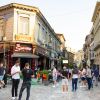
Smârdan Street bears the name of an important battle from the War of Independence of 1877. In the past, it was a lively commercial street, and today it is one of the most frequented pedestrian arteries in the historic center. The period buildings, some restored, others still waiting, tell the story of a Bucharest always caught between decay and rebirth.
Calea Dudești is one of the oldest and most important arteries in this part of the city, directly linked to the evolution of the Dudești neighborhood. Over time, it was an area with strong commercial and craft influences, but also a space of ethnic diversity, being inhabited by Romanians, Jews and Bulgarians. Here there were workshops, small shops and modest homes, but also wealthier houses, a sign of a dynamic community.
During the communist period, the area underwent major transformations, many of the old buildings being demolished or modified. Nevertheless, Calea Dudești still preserves fragments of its former atmosphere, being an eloquent example of how tradition and modernity intertwine in Bucharest.
Sfânta Vineri Street has a special significance, being connected to the old church with the same name, demolished in the 1980s. This artery was an important point in the life of the community, and the disappearance of the place of worship left a void not only urban, but also spiritual. However, the name of the street keeps the memory of the place alive.
Matei Basarab Street is one of the arteries that survived the great transformations of the city. Its name evokes the figure of ruler Matei Basarab, and the area in which it is located still preserves traces of 19th-century Bucharest, with old houses and hidden inner courtyards.
Traian Street is an important artery that crosses an area with a rich history. Along it there are interwar buildings, former workshops and commercial spaces. In the past, the street connected different neighborhoods, being an essential route for the daily life of the city.
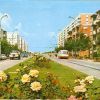
Nerva Traian Street is an example of urban transformation during the communist period. Its name combines historical references, but its current appearance reflects the modernist planning of the 1970s–1980s. Here, the old houses were replaced with blocks, and the identity of the place changed radically.
Vulturilor Street has become known in recent years due to a dramatic story related to evictions in the post-communist period. In the past, it was a quiet street, with modest houses, inhabited by ordinary families. Today, it is a symbol of social problems and of the struggle for housing in Bucharest.
Foișorului Street preserves the atmosphere of an old neighborhood, with diverse influences. Its name suggests the existence of gazebo-type constructions, specific to traditional architecture. The area was inhabited by craftsmen and small traders, and some of the old houses can still be admired.
Laborator Street reflects another stage of urban development, related to the industrialization of the city. Its name indicates the presence of production or research units, and the area was for a long time a transition zone between residential and industrial.
Between past and present – identity in transformation
These ten streets in Sector 3 are not just simple urban routes, but true chapters in the history of Bucharest. Each of them reflects a certain era, a certain mentality and a certain way of life. From the historical atmosphere of the old center to the quietness of the neighborhoods in Dudești or to the radical transformations during the communist period, all these places contribute to the complex identity of the city.
At present, many of these streets are in a continuous process of change. Some are restored and integrated into the tourist circuit, others are still marked by degradation or by questionable urban interventions. Nevertheless, they remain carriers of memory, and their stories deserve to be known and passed on.
In a city in permanent transformation, rediscovering these streets means, in fact, rediscovering one’s own identity. Bucharest is not only the sum of its buildings, but also of the histories that give them meaning, and Sector 3 offers numerous such examples, ready to be explored by the curious.
We also recommend: 10 streets in Sector 2 of Bucharest that have interesting stories