The Titan Toma Caragiu, Lost in the ’77 Earthquake: “Someone Told Me I Would Die in a Collapse!”
- Articles
- 04 MAR 26
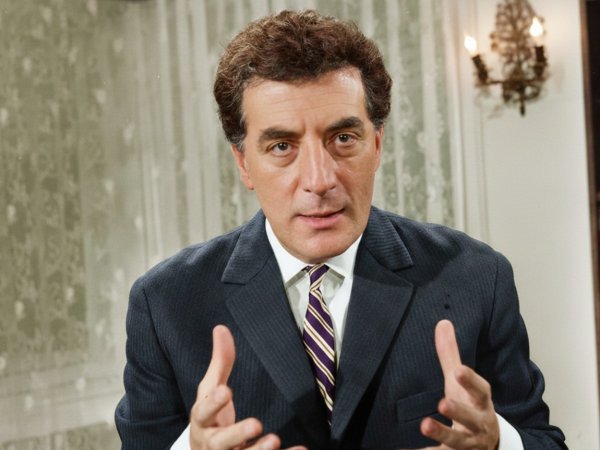
On March 4, 1977, Romania experienced one of the greatest disasters in its history, burying nearly 1,600 people under rubble, including the great actor Toma Caragiu, the titan who made history in Romanian theater and film. It is said that Toma Caragiu had a premonition about his death in a “collapse,” if one considers the devastating 7.2-magnitude earthquake in the context of an event that occurred shortly before the tragedy.
A Tragic Night in Romanian History
The late Florian Pittiş recounted a conversation between the actor and the deputy director of the “Bulandra” Theater: “His last performance took place on March 2, 1977. It was the play Long Day’s Journey Into Night. During the intermission, he spoke on the phone with Maxim Crișan, the deputy director of Bulandra, who mentioned a tour in America.
‘Me, by plane? No, I’ll arrange it by ship. Someone told me I would die in a collapse.’ In Act IV, I realized he was very, very tired. He tried to light a cigarette, although the role did not require it. I stopped him by pulling his hand, saying, ‘Father, don’t do that!’ After the show, he chased me through the theater, saying, ‘Why did you do this to me? Do you want me to die now?’”
The Earthquake Strikes
At 21:22, when the 56 seconds of terror began with the 7.2-magnitude earthquake on March 4, 1977, Toma Caragiu was together with actor and director Alexandru Bocăneț in the Colonadelor building.
The two had celebrated the completion of the film Gloria nu cântă, in which Caragiu starred. Bocăneț was about to leave, and Caragiu was escorting him. When the building began to shake, the two tried to flee via the stairs—the first part to collapse. The building then crumbled down to the third floor. They had no chance.
The magazine Teatrul, in March 1977, reported days after the disaster that people refused to believe that the actor who had played in 39 films and dozens of immortal roles on the stage of Bulandra Theater in Bucharest had died.
“For almost seven days, the population of Bucharest, wounded and insulted, yet more alive than ever, stubbornly refused to believe that their favorite artist had died under the rubble. For a week, Toma Caragiu continued to live in the imagination of his numerous audience, in a constant state of revival, on the steps of hope fed by millions of optimistic human wishes: he lives, he is in the basement, he was called on the phone, he was taken to the hospital, but he lives, he lives, he lives!”
Final Hours and Last Day
Toma Caragiu was only 51 years old. His body was found on the sixth day after the earthquake. He was buried the following day, on March 11, 1977, at the Bellu Cemetery, where his remains still rest today.
Among the 1,570 people who died in the 1977 earthquake were other artistic and literary figures: Alexandru Bocăneț, who was with Caragiu on the evening of March 4; Alexandru Ivasiuc, a prominent novelist; Mihai Gafița, singer Doina Badea, nicknamed Romania’s Édith Piaf due to her unique voice, and poet, literary theorist, essayist, and translator Anatol Baconsky, known for Panorama poeziei universale contemporane, a compendium of European modernist poetry, father of politician Teodor Baconsky.
Also lost were actress Eliza Petrăchescu, and several other cultural figures: Savin Bratu, Daniela Caurea, Mihail Petroveanu, Veronica Porumbacu, and Aurel Lambrino, as well as historians Corina Nicolescu and Nicolae Vătămanu.
In total, around 1,600 people died, 1,391 of them in Bucharest alone. Nationwide, approximately 11,300 were injured, and about 35,000 homes collapsed. The capital was severely affected, with 33 buildings completely destroyed.
Archival footage from TVR shows the devastation: people trapped under rubble, screams of pain and despair, and widespread helplessness. Experts noted that the earthquake released destructive energy equivalent to ten Hiroshima-type bombs on August 6, 1945.
Out of 40 counties, 23 were severely affected. A 1978 World Bank report estimated total economic damage at $2 billion, 70% of which was in Bucharest. In Bulgaria, material damage and over 120 deaths were recorded.
The Last Morning of Toma Caragiu
The scenario of the final hours of Toma Caragiu’s life begins on the morning of Friday, March 4, 1977. As Molière would say, it was the most unpleasant day—the eve of All Souls’ Day, a day that should not have appeared on our planet.
· 9:30 AM: Caragiu leaves Bucharest in his personal car with his wife, heading to Periș.
· 12:00 PM: He decides to visit his friend Chiriță in Titu, at his poultry farm. There, he laughs, sings, plays billiards, and entertains the good mood. He plans to attend a party with the film crew shooting the first take of Iarba verde de acasă.
· 3:00 PM: His wife gets bored and announces she intends to take a walk in the Prahova Valley. Caragiu looks at her strangely and silently. She asks, “Why do you look at me like that, as if you are saying goodbye?”
· 6:30 PM: One of Chiriță’s guests offers to drive Caragiu back to Bucharest. Arriving at the building, they linger at the elevator door. Caragiu lives on the second floor.
· 7:15 PM: Calls his sister Geta to ask her to send Dragoș for a package of fresh liver from Titu.
· 7:22 PM: Cristian Popișteanu calls. He recalls after Caragiu’s death: “How could I imagine that his phone call would be a farewell? His voice was lively, tender, full of care.”
· 7:30 PM: Calls Alexandru Bocăneț, inviting him over to discuss projects.
· 7:35 PM: Calls Nicolae Susan to be godfather at his upcoming wedding. Caragiu invites him in.
· 7:50 PM: Someone rings the doorbell. Caragiu, in a bathrobe, goes out. It is his nephew Dragoș, whom he asks to walk the dog, Puși, for a few minutes.
· 8:00 PM: Dragoș returns with Puși. Caragiu, now in a red shirt, jeans with a wide belt, and suede boots, gives the boy the package.
· 8:10 PM: Goes to the Continental Bar to buy mineral water and cigarettes. He is served immediately, being a local favorite.
· 8:25 PM: Receives a call from Sergiu Verona, inviting him to dinner at Capșa.
· 8:30 PM: Alexandru Bocăneț arrives to announce that Caragiu’s first film, Gloria nu cântă, is ready. They toast with whiskey.
· 8:40 PM: Verona calls again from Capșa, waiting for him.
· 8:55 PM: Doorbell rings. Nicolae Susan and his fiancée, poet Doina Caurea, arrive. Caragiu offers chairs and whiskey.
· 9:00 PM: Sends his nephew home firmly.
· 9:10 PM: Receives a call from Mariana Calotescu, proposing the lead role in the film Un autobuz pentru moarte on behalf of her husband, director Virgil Calotescu.
· 9:15 PM: His phone rings again. Dragoș’s mother asks if he left. Caragiu replies he still has work to do at the theater.
The Collapse
· 9:22 PM: Bucharest is struck apocalyptically. Major Dinu, on guard outside the Czechoslovak Embassy across from Caragiu’s building, sees Colonadelor 3 crumble in slow motion, floor by floor. Caragiu’s apartment on the second floor remains almost intact. At that moment, Caragiu and Bocăneț had three options: stay inside, exit via the service stairs, or descend the main stairs.
On the sixth day after the earthquake, from the ruins where the stairs had been, Caragiu’s curly, graying hair appeared. His cousin, Nelu Adam, took him in his arms. He was buried the next day, on March 11, 1977, at Bellu Cemetery, not far from the tomb of Constantin Tănase.
We also recommend: Doina Badea Was Recognized by Her Wedding Ring. "Romania's Edith Piaf" Died Along with Her Entire Family in the ’77 Earthquake