Doina Badea Was Recognized by Her Wedding Ring. "Romania's Edith Piaf" Died Along with Her Entire Family in the ’77 Earthquake
- Articles
- 04 MAR 26
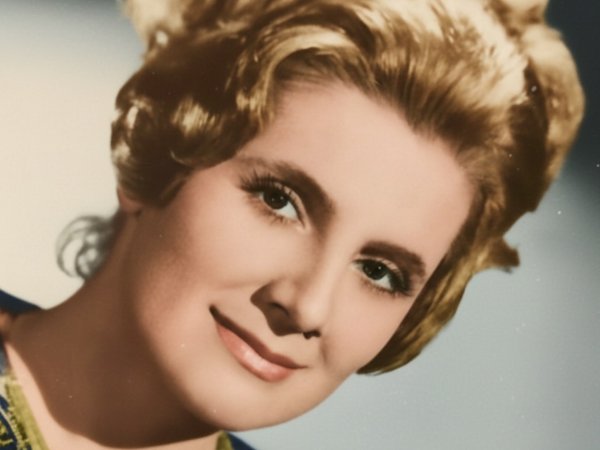
Doina Badea was nicknamed, during her short career, Édith Piaf of Romania. Her deep and unmistakable voice had the gift of moving even the hardest hearts. Her talent and stage presence made her beloved by the public and recognized as one of the greatest light music singers of her era. Unfortunately, her career and life ended tragically in the 1977 earthquake, which claimed more than 1,500 lives. Doina Badea was born on January 6, 1940, in Craiova and quickly became a respected name in Romanian light music, admired both for her vocal talent and imposing stage presence.
Doina Badea, the voice that conquered Romania
She graduated from the Popular School of Art in Craiova, and immediately afterward began collaborating with the State Philharmonic Choir of Oltenia. This experience gave her the opportunity to participate in numerous tours and performances, consolidating her vocal and stage abilities.
Throughout her career, Doina worked with musical and revue theaters across Romania, managing to stand out due to her deep voice and strong ambitus, which could not be confused with any other performer.
Her official debut took place in 1960, on the stage of the theater in Deva, where her talent was immediately noticed. Her distinct voice and profound interpretation drew the attention of both the public and critics, establishing her reputation as a truly remarkable artist.
Success at Music Festivals
Doina Badea conquered Romania definitively at the Mamaia Festival in 1963 with the song "Spre soare zburăm" (“We Fly Toward the Sun”). Later, the song "Din totdeauna pe acest pământ" (“Forever on This Earth”) earned her the grand prize at the same festival in 1967. These achievements cemented her position in Romanian music and reinforced her status as a reference artist in light music.
Musicologist George Sbârcea remarked on her uniqueness: “She resembled no one, and no one will be able to imitate her, because Doina Badea was a singular appearance, whose uniqueness even the indifferent recognized as unrepeatable.”
Memories from Her Personal Life
Sida Spătaru, the wife of Dan Spătaru, recalled: “I met her at the Măgura Restaurant in Eforie. Her son was born in the same month as our Dana. She was a very pleasant woman. On stage, she often appeared sober, even cold, but in daily life she was very sweet and I can even say she was quite funny. In everyday life, she had an incredible human warmth.
I remember she was on a diet and had to eat chicken. And I said to her: What kind of diet is this when you eat fried chicken? She was a gourmand, yet always careful about her figure and dressed according to the rules for stage and television appearances.”
Doina Badea was married to Traian Zmeu, with whom she had two children. Her entire family lost their lives in the 1977 earthquake under the ruins of the Continental building, where they lived. The building collapsed over the one in front, and the people inside had no chance of survival.
The Tragedy of the 1977 Earthquake
Doina Badea’s end occurred on the fateful night of March 4, 1977, in Bucharest. The earthquake ended the lives of many Romanians, and the artist was recognized only by her wedding ring. “Only a hand remained of her,” authorities at the time reported. This loss shocked the entire country, and her image as an exceptional artist and loving mother remained vivid in the public memory.
Artistic Legacy
Octavian Ursulescu, presenter and music critic, stated about Doina Badea: “It is as if she returned from the grave, and I would have the chance to present this absolutely remarkable singer who marked Romanian light music before I began this presenter activity.
I would primarily refer to her exceptional voice, remarkable professionalism, meticulousness in preparing each song. She was a very serious performer, disciplined, with Transylvanian seriousness, trained in the school of Deva.
She was at the peak of her career until the misfortune intervened. She would have continued to win prizes and captivate audiences, being at the summit of her ascent.”
Doina Badea was not what one would call a touring or show singer, because her voice was, inevitably, for aesthetes, for people who appreciate voice, but she could not attract a very large audience. She had a certain style, and her songs, mostly serious, were suited for competitions. Any contest song entrusted to her, such as grand, festival-style pieces, she led to prizes, as in San Remo.
Other National Figures Lost in the Earthquake
Among nationally known personalities who died under the ruins in 1977 were Toma Caragiu, Alexandru Bocăneț, Filofteia Lăcătușu, Alexandru Ivasiuc, Mihai Gafița, Mihail Petroveanu, Veronica Porumbacu, Eliza Petrăchescu, A.E. Baconsky, and Mihaela Mărăcineanu. These individuals remain silent witnesses of the tragedy that profoundly marked Romania’s history.
We also recommend: They Pulled Sorin Crainic Out After 11 Days from the Rubble of the Continental Block. Stories of the March 4, ’77 Earthquake