Who Was Constantin Buzdugan and Why Does a Street in Bucharest Bear His Name
- Articles
- 20 MAY 26
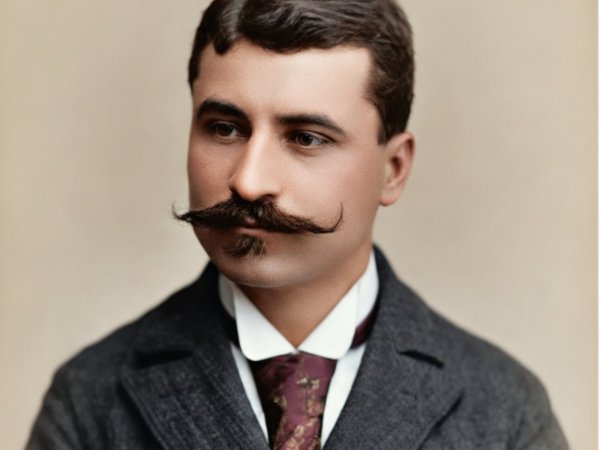
Few residents of Bucharest know who the man was whose name appears on a discreet street in the northern part of the Capital. Constantin Z. Buzdugan was not a politician, a military leader, or a great industrialist, but one of the most complex and cultivated personalities of Romanian intellectual life at the end of the nineteenth century and the beginning of the twentieth century. A poet, translator, journalist, lawyer, and cultural promoter, he dedicated his life to literature, the press, and public education. Although his name is less well known to the general public today, Constantin Buzdugan played an important role in the development of cultural life in Romania, especially in Galați, where he spent most of his adult life. Through his journalistic activity, his involvement in socialist and liberal movements, and his efforts to bring culture closer to ordinary people, he left behind a legacy that, over time, justified the inclusion of his name in the street nomenclature of Bucharest.
Childhood and the studies of a remarkable intellectual
Constantin Z. Buzdugan was born on July 3, 1870, in the village of Coasta Lupii, Nicorești commune, Galați County, into a family descended from the old class of Moldavian yeoman farmers. From an early age, he showed a special inclination toward reading and the study of language and literature.
He attended primary school in Babadag, then the Real Gymnasium in Tulcea. His educational journey continued at some of the most prestigious institutions in the country, including Cantemir-Vodă High School and Saint Sava National College in Bucharest, as well as A. T. Laurian High School in Botoșani.
In 1901, he graduated from the University of Bucharest, Faculty of Law, with the thesis “Paternal Power over the Person of Children in Roman and Romanian Law.” His legal education provided him with intellectual rigor, but his true vocation remained literature and journalism.
Literary debut and activity in the press
Constantin Buzdugan entered the world of journalism at a very young age. At only twenty years old, he became editor-in-chief of the literary magazine Tinerimea unită, published in Bucharest in 1890. He later collaborated with numerous newspapers and magazines, including Lucrătorul, Evenimentul literar, Revista pentru toți, and Munca.
In 1902, together with I. C. Frimu, Alexandru Ionescu, and Dumitru Theodor Neculuță, he founded the newspaper România muncitoare, one of the most important socialist-oriented publications of the era. At the same time, he also led liberal-oriented newspapers such as Tribuna liberală and Votul universal, demonstrating remarkable intellectual flexibility and a constant concern for public debate.
Buzdugan published in dozens of important newspapers and magazines, from Adevărul and Convorbiri literare to Sămănătorul and Ramuri, being present in almost all of the major cultural and political publications of his time.
Lawyer and leader of cultural life in Galați
Beginning in 1901, Constantin Buzdugan settled in Galați, on Eliade Rădulescu Street, known today as Gării Street. The following year, he was admitted to the Covurlui Bar Association and began practicing law, a profession that, according to the writer Felix Aderca, he exercised “with knowledge and conscience.”
Although his legal work occupied an important part of his time, he never abandoned literature and journalism. On the contrary, he became one of the central figures of Galați’s cultural life for more than twenty-five years.
In 1913, together with G. Arămescu, Dr. Carnabel, and I. Tohăneanu, he founded the Popular University of Galați, one of the first institutions of this kind in Romania. Its purpose was to offer the general public access to lectures and educational activities, at a time when culture was regarded as an essential instrument of social emancipation.
Magazines, literary salons, and a passion for literature
Driven by the belief that even modest publications can prepare the public for great literary works, Constantin Buzdugan founded and edited magazines such as Dunărea, Dunărea de Jos, Votul universal, and România muncitoare.
Together with his wife, Eliza Rosiade-Buzdugan, he organized a genuine “Artistic-Literary Salon” in their home. Numerous intellectuals and artists from Galați gathered there, including Emil Maur, Alexandrina Scurtu, Nicolae Mantu, and G. M. Vlădescu.
Buzdugan was also one of the enthusiastic supporters of the initiative to erect a statue of Mihai Eminescu in Galați, a sign of his profound admiration for Romanian culture.
Poet and translator of great refinement
In addition to his journalistic and legal activity, Constantin Buzdugan distinguished himself as a talented poet and translator. From the very beginning of his publishing career, he translated important authors of French literature, including Charles Baudelaire, Victor Hugo, Paul Verlaine, Alfred de Musset, and Sully Prudhomme.
These translations contributed to the popularization of French Symbolism and Romanticism in Romania and demonstrated Buzdugan’s artistic sensitivity and vast culture.
Final years and tragic end
Constantin Buzdugan’s life was marked by personal suffering. The death of his wife in 1921 affected him deeply. In the following years, his health problems worsened, and the loss of his eyesight intensified his feeling of isolation.
On December 21, 1930, in Galați, shortly before the winter holidays, Constantin Buzdugan tragically ended his own life. His friend Ion Argintescu regarded this act as a painful reaction to society’s indifference toward one of the most devoted servants of Romanian culture.
Why a street in Bucharest bears his name
The naming of a street in Bucharest after Constantin Buzdugan represents a form of recognition for his contribution to Romanian literature, journalism, and education. He was a complete intellectual who combined his legal career with a passion for culture and a sincere desire to make society more educated and more equitable.
Through the newspapers he founded, the literary salons he organized, and his efforts to promote literature and art, Constantin Buzdugan influenced Romanian cultural life during a period of major transformations.
Where Constantin Buzdugan Street is located in Bucharest
Constantin Buzdugan Street is located in Sector 1 of the Capital, in the Primăverii neighborhood, one of the most elegant and exclusive areas of Bucharest. The street is situated near King Michael I Park (formerly Herăstrău Park) and Charles de Gaulle Square, in a district known for its prestigious residences and its association with numerous personalities from Romania’s political and cultural life.
We also recommend: Who Was Mircea Vulcănescu and Why Does a Street in Sector 1 of Bucharest Bear His Name