Who Was Mircea Vulcănescu and Why Does a Street in Sector 1 of Bucharest Bear His Name
- Articles
- 14 MAY 26
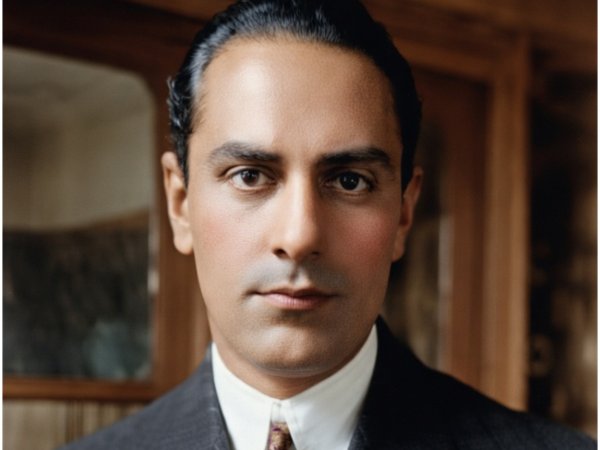
In the street nomenclature of Bucharest, numerous thoroughfares bear the names of personalities who marked the history, culture, and public life of Romania. One of these is Mircea Vulcănescu Street, located in Sector 1, a central area of the capital city. The choice of this name is not accidental. Mircea Vulcănescu was one of the most complex and controversial figures of interwar Romania: a philosopher, economist, sociologist, professor, essayist, and senior state official. For some, Mircea Vulcănescu is an exceptional intellectual, an encyclopedic mind, and a martyr of the communist prisons. For others, his name remains linked to his participation in the government led by Ion Antonescu, a regime responsible for antisemitic policies and for collaboration with Nazi Germany. It is precisely this duality that makes Mircea Vulcănescu a figure still intensely debated today in the Romanian public sphere.
The Formation of an Exceptional Intellectual
Mircea Vulcănescu was born on March 3, 1904, in Bucharest, into a family that went through difficult moments during World War I. During the years of the German occupation, the family took refuge in Iași, the country's wartime capital. After the end of the conflict, they returned to the capital, where young Mircea continued his studies.
From an early age, Vulcănescu demonstrated remarkable intellectual ability. In 1925, he earned two degrees simultaneously: one in Law and another in Philosophy, an achievement rarely encountered even in the academic world of the time. He then left for Paris to prepare his doctorate, but did not complete his dissertation and returned to Romania.
During the academic year 1929–1930, he served as honorary assistant to the great sociologist Dimitrie Gusti, one of the most influential personalities in Romanian sociology. The experience gained within the Bucharest School of Sociology strengthened his profile as a thinker concerned with the identity and spiritual structure of the Romanian people.
Administrative Career and Rise Within the Ministry of Finance
In addition to his intellectual activity, Mircea Vulcănescu had an impressive administrative career. At only 31 years old, he became Director General of Customs, one of the most important positions in the state's financial apparatus. Later, he held several leadership positions within the Ministry of Finance, where he stood out for his competence and rigor.
At the same time, he published works in philosophy, sociology, and economics, becoming a landmark figure of the interwar generation that included some of the most important names in Romanian culture. His contemporaries regarded him as a spirit of vast erudition, capable of combining metaphysical reflection with concrete analysis of economic and social issues.
About Mircea Vulcănescu, Nichifor Crainic stated that he represented “the most accomplished exemplar produced by the Romanian nation between the two wars” and that, through his intellectual breadth, he could have overshadowed everything that had shone in Romanian culture until then, from Dimitrie Cantemir to Nicolae Iorga.
Entry into Ion Antonescu's Government
In January 1941, after the suppression of the Legionary Rebellion, Ion Antonescu proposed that Mircea Vulcănescu join the government as Undersecretary of State at the Ministry of Finance. Vulcănescu accepted and remained in this position until August 23, 1944, when King Michael I removed the Antonescu regime and changed the political course of the country.
In this capacity, Mircea Vulcănescu was involved in managing the state's finances during an extremely difficult period marked by war and by the alliance with Adolf Hitler's Germany. His supporters argue that he tried to defend Romania's economic interests and contributed to recovering significant financial claims from Germany. Critics emphasize, however, that he was part of an executive responsible for adopting and implementing discriminatory measures and for Romania's involvement in the tragedies of the Second World War.
The Trial and Conviction
After the establishment of the new political regime following the war, Mircea Vulcănescu was arrested in 1946. He was tried and sentenced to eight years in prison, accused of having placed Romania's economy in the service of Nazi Germany.
His daughter, Măriuca Vulcănescu, later recounted the dramatic moments of the arrest and trial. She remembered how agents came on the night of Saint Alexander and took him from home, and how the family was allowed to see him only under restrictive conditions, first on Uranus Street and later at Văcărești Prison. During his detention, his health deteriorated rapidly.
At the retrial, Mircea Vulcănescu delivered his own defense in a plea lasting several hours, which, according to his family, deeply impressed the panel of judges. Nevertheless, the verdict was not changed.
The Suffering in Aiud Prison
After his conviction, Mircea Vulcănescu was transferred to Aiud Prison, one of the harshest places of political detention in communist Romania. There, he continued to give lectures and hold discussions for fellow prisoners, trying to maintain their morale and hope.
The authorities considered this activity dangerous and punished him. Together with other inmates, he was thrown into the cold underground cells of Section 1, where the men were stripped naked and left without beds, exposed to cold and dampness.
On one such night, one of his cellmates collapsed from exhaustion. According to witnesses, Mircea Vulcănescu sat down on the cement floor so that the younger prisoner could lie on his body and be protected from direct contact with the freezing ground. The gesture saved the man's life but decisively worsened Vulcănescu's own health.
Death and Spiritual Testament
Mircea Vulcănescu died on October 28, 1952, at the age of only 48, in Aiud Prison, as a result of lung disease and the inhuman treatment to which he had been subjected.
His last words, which became a true moral testament, were: “Do not avenge us!”
This message, simple and profound, is interpreted by many as the expression of an authentic Christian faith and a refusal to answer suffering with hatred.
His death in detention transformed Mircea Vulcănescu's image into a symbol of intellectual and spiritual resistance in the face of communist repression.
Why a Street in Sector 1 Bears His Name
The fact that a street in Sector 1 of Bucharest bears his name represents recognition of his contribution to Romanian culture and public administration. Mircea Vulcănescu was one of the most brilliant intellectuals of the interwar generation, with notable achievements in philosophy, economics, and sociology.
At the same time, the street name also evokes his tragic destiny. For many Romanians, he is a martyr who died in communist prisons and a model of moral dignity. His act of sacrifice at Aiud and his call for forgiveness strengthened this perception.
At the same time, his presence in the public space continues to provoke debate. His supporters emphasize his intellectual work and the suffering he endured in prison, while his critics believe that his participation in Ion Antonescu's government cannot be overlooked.
A Personality Who Continues to Spark Debate
More than seven decades after his death, Mircea Vulcănescu remains one of the most fascinating and controversial personalities in Romanian history. He was, at the same time, a profound thinker, an elite civil servant, a member of a government compromised by the wartime context, and a victim of communist repression.
The street that bears his name in Sector 1 of Bucharest is not merely a simple urban designation, but a symbol of the complexity of Romanian history. It recalls Mircea Vulcănescu's intellectual value, his sacrifice in prison, and the moral and historical disputes that accompany any attempt to evaluate the past.
Understanding Mircea Vulcănescu therefore requires a nuanced perspective. Neither complete idealization nor summary condemnation can fully capture the destiny of a man who left a profound mark on Romanian culture and on collective memory.
We also recommend: The eccentric Gheorghe Petrașcu, one of the greatest Romanian painters, has a street bearing his name in Bucharest