The History of Henri Coandă Airport in Otopeni: From a German Military Base to Romania’s Main Airport
By Eddie Țone
- Articles
- 02 AUG 26
Some places tell the story of a country without uttering a single solemn phrase. Henri Coandă International Airport in Otopeni belongs to this category. You hurry through it, boarding pass clutched between your fingers and your mind already on your holiday, business trip or return home, while the buildings, runways and control tower seem like mere functional scenery. In reality, the area between the DN1 road and the fields north of Bucharest brings together almost a century of history, with military episodes, communist ambitions, post-revolutionary enthusiasm and the low-cost fever of the past two decades.
Otopeni Airport grew alongside modern Romania, sometimes at a brisk pace, at other times with the brakes firmly applied. It witnessed official visits, moments of crisis, departures and emotional homecomings. Its story begins in the middle of a world war and reaches the present day, an era in which millions of passengers pass through its gates every year with an ease that, back in the 1960s, would have seemed almost like science fiction.
From Military Base to Civilian Airport
The history of Henri Coandă Airport begins during the Second World War. Between 1940 and 1944, a Third Reich military base operated on the site occupied by the airport today. Its location north of Bucharest provided enough space for the development of aviation infrastructure. After 1944, the 1,200-metre runway and its associated buildings were used by the Romanian military aviation service.
The 1960s brought a major change. Civilian air traffic was beginning to grow, while Băneasa Airport, which had handled Bucharest’s commercial air traffic until then, needed a larger partner. In 1965, the conversion of the Otopeni military base into an international civilian airport was given the green light. The work included upgrading and extending the runway to 3,500 metres, modernising the power plant and building a passenger terminal.
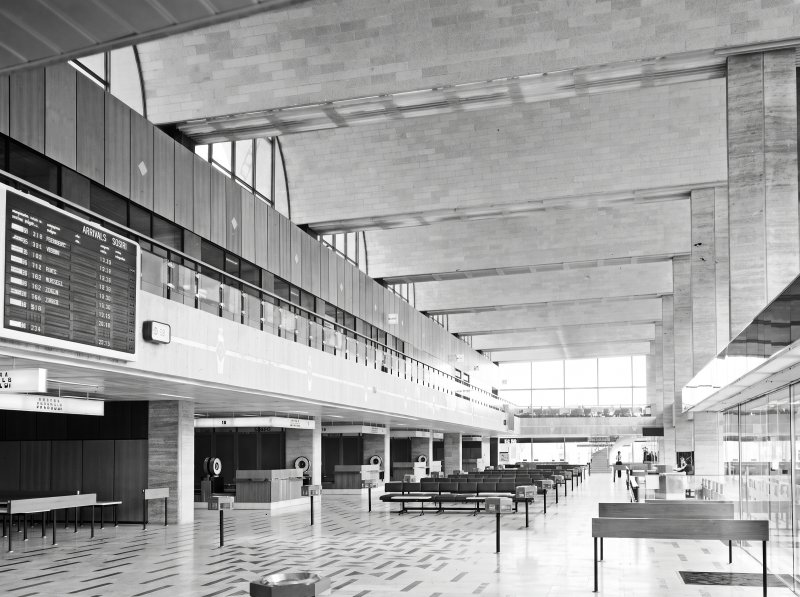
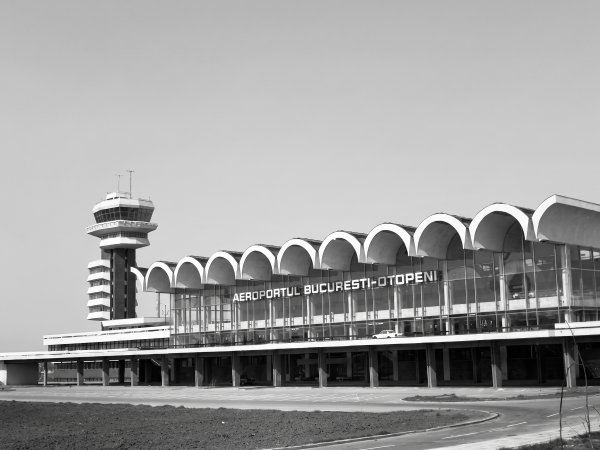
Photo: Otopeni Airport at inauguration / Credit: Arhiva de fotografii și diapozitive a UAR
In 1969, passengers were temporarily processed through the Cargo Terminal. The Official Lounge was inaugurated on 2 August, on the occasion of US President Richard Nixon’s visit, while the passenger terminal opened on 13 April 1970, with an annual capacity of 1.2 million travellers.
The moment also carried political significance, of course. The airport’s development took place during a period when Romania was asserting greater diplomatic autonomy from Moscow and strengthening its relations with Western countries. TAROM, the national airline founded in 1954, was already operating international routes, and Otopeni was becoming the country’s main international air gateway.
The Communist Years: Ambition, Control and Official Visits
During the communist period, Otopeni Airport hosted important episodes in the political history of the era. US President Richard Nixon passed through Otopeni during his 1969 visit. Nixon was the first American president to visit Romania and the first to visit a communist country in 24 years. His presence gave the airport significant diplomatic visibility.
The terminal, designed by a team coordinated by architect Cezar Lăzărescu, belonged to the modernist architecture of the period. International travel had a solemn air, while leaving the country was subject to a restrictive system of passports and official approvals. Otopeni operated within the limits of the infrastructure available at the time, in an environment dominated by strict rules and the distinctive atmosphere of the era.
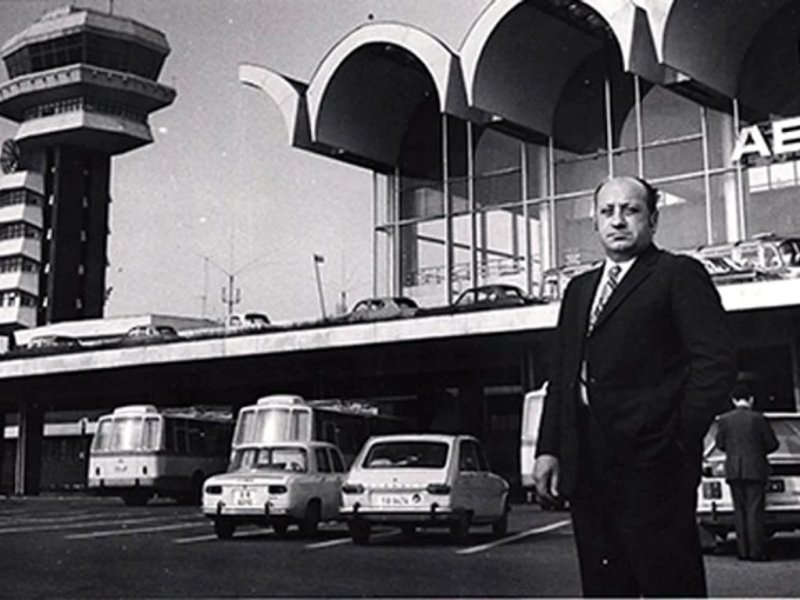
Photo: Cezar Lăzărescu, the architect who projected the Otopeni Airport
The airport’s technical infrastructure was developed gradually. In 1986, a second runway, also 3,500 metres long, was built together with its associated taxiway system, increasing operational capacity to 35 aircraft movements per hour. The airport could accommodate large aircraft, including long-haul planes, at a time when such operations represented a symbol of technological modernity.
The Dramatic Days of December 1989
During the Romanian Revolution of December 1989, Otopeni briefly became the scene of a tragedy. On the morning of 23 December, troops sent from Câmpina to reinforce airport security were mistaken for terrorists and attacked by soldiers already deployed in defensive positions.
The exchange of fire killed 40 soldiers and eight civilians. The confusion, false information and lack of coordination that characterised those days left deep scars, and the episode remains one of the most painful chapters in the history of the Revolution.
After the fall of the communist regime, the airport entered a new phase, accompanied by equally substantial promises and challenges.
The Post-Revolutionary Transformation
The 1990s brought a general rise in air traffic. Romanians were travelling more, foreign airlines were expanding their networks into Eastern Europe, and the airport needed extensive modernisation.
The “Development and Modernisation of Bucharest–Otopeni International Airport” programme began in 1991. This was followed by the opening of the International Departures Terminal in 1993, the reorganisation of the International Arrivals flow in 2000 and the inauguration of the domestic flights terminal in 2003.
Bucharest Airports National Company began operating in 2010, created through the merger of the companies that managed Henri Coandă Airport and Aurel Vlaicu Băneasa Airport.
An important moment had come earlier, in September 2004, when the airport was named after Henri Coandă, the Romanian engineer and inventor. Coandă, an aviation pioneer and a researcher of the phenomenon that bears his name, holds an important place in the history of aeronautics.
Expansion, Air Schengen and the Low-Cost Era
Passenger traffic grew rapidly during the 2000s and 2010s. Romania’s accession to the European Union in 2007 encouraged mobility, labour migration and demand for flights to the large Romanian communities in Italy, Spain, Germany and the United Kingdom. The expansion of low-cost airlines reduced the price barrier for many passengers.
The terminals were expanded in several stages. Boarding gates, retail areas and security screening facilities were added. The runways and taxiways underwent rehabilitation work, while navigation and airfield lighting systems were upgraded.
The airport operates two parallel runways, 08R–26L and 08L–26R, each measuring 3,500 metres in length and 45 metres in width.
In March 2012, low-cost flights operating from Băneasa Airport were transferred to Otopeni. Băneasa remained primarily dedicated to business aviation and special flights, although several low-cost services have resumed there in recent years, while the pressure on Henri Coandă’s infrastructure increased.
Passenger traffic exceeded the threshold of 10 million before 2020, while the airports managed by Bucharest Airports National Company recorded more than 14.7 million passengers in 2019. The COVID-19 pandemic caused a sharp decline, followed by a recovery. Henri Coandă Airport handled 14.63 million passengers in 2023 and 15.95 million in 2024, surpassing its pre-pandemic level.
As of 31 March 2024, checks on individuals at internal air borders between Romania and the other Schengen states were abolished. For passengers travelling on flights within the Schengen Area, the change separated passenger flows and simplified border formalities.
The Name Henri Coandă and His Legacy
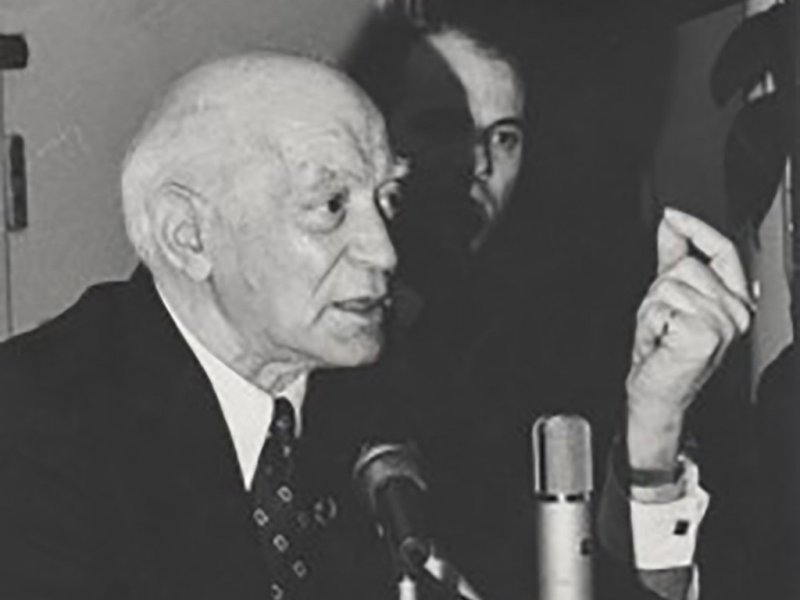
Photo: Henri Coandă
The decision to name the airport after Henri Coandă deserves a brief explanation. Born in Bucharest in 1886, Coandă was an engineer and inventor known for the experimental aircraft he presented at the 1910 International Aeronautical Exhibition in Paris.
Some authors consider the aircraft a precursor to the jet plane, although the nature of its propulsion system and its alleged 1910 flight remain disputed by aviation historians. For this reason, describing it as a “precursor” is more accurate than categorically calling it the “first jet aircraft.”
The Coandă effect describes the tendency of a fluid jet to remain attached to a nearby curved surface. The phenomenon was subsequently studied and used in aerodynamics and other technical applications.
The presence of his name on the airport façade creates a symbolic link between technological pioneering and contemporary infrastructure. Travellers in a hurry may pass the sign without reflecting on the story behind it, but the association between Coandă and aviation has a solid historical foundation.
Everyday Life at the Airport
Otopeni Airport operates like a small town. It has its own rhythms, with busy mornings when flights to major European airports depart at short intervals and lively evenings filled with charter flights during the summer season. The control tower coordinates aircraft movements according to strict procedures and standards, while ground crews orchestrate refuelling, boarding and baggage handling in a technical ballet that rarely attracts public attention.
The airport houses essential services, including fire brigades specialised in aviation emergencies, medical services and the Border Police. Behind the perfume displays and hastily purchased coffees lies a complex infrastructure regulated at both national and international level.
Henri Coandă is the country’s leading airport by passenger traffic and one of Bucharest’s main air gateways. A visitor’s first impression of the city often begins here, somewhere between the baggage carousel and the exit leading to the taxis or the direct train to Bucharest North railway station, a connection opened on 13 December 2020.
Details That Add Colour
The airport lies 16.5 kilometres north of central Bucharest, in the town of Otopeni, Ilfov County. The aerodrome sits at an elevation of approximately 96 metres above sea level.
Its IATA code is OTP, an easily recognisable reference to the name Otopeni. For aviation enthusiasts, OTP has become a familiar sight on departure boards at major European airports.
Over the years, Otopeni’s runways have welcomed a wide variety of aircraft, from Soviet models operated during the communist period to modern long-haul aircraft such as the Boeing 787. Official visits continue to feature on the airport’s agenda, while presidential aircraft from different countries occasionally add a ceremonial note to the apron.
Challenges and Plans for the Future
Growing passenger traffic also brings challenges. The existing terminals are feeling the pressure of current passenger volumes, while the technical capacity declared by Bucharest Airports National Company is lower than the actual number of passengers processed annually.
In June 2026, Bucharest Airports National Company announced the signing of the contract for the design of the new terminal. The project envisages a building covering approximately 176,000 square metres, designed for a projected annual traffic volume of 30 million passengers by 2040. It also includes 48 new aircraft parking stands, 20 passenger boarding bridges and multimodal road and rail connections.
Within the regional context, expanding the infrastructure could eventually support the development of the airport’s route network and strengthen its regional role. For the time being, the design process, runway modernisation and adaptation of the existing terminals remain the concrete stages of development.
A Place That Reflects a Country in Motion
Henri Coandă Airport in Otopeni has travelled a long road from 1940 to the present day. It has served as a military base, a diplomatic showcase, a tightly controlled gateway and, eventually, an intensely active hub of international mobility. Every stage in its history reflects a period in Romanian society, with its ambitions, tensions and moments of profound transformation.
Today’s passengers experience air travel as an ordinary part of life. Behind this seemingly simple act, however, lies a rich history marked by dramatic episodes, ambitious projects and successive adaptations to the standards of an extremely dynamic industry. Otopeni remains the place from which Romania takes flight and one of the country’s main gateways for travellers setting foot on Romanian soil for the first time.
You may also like: The story of the Aviației neighborhood in Bucharest, the area built for the Băneasa Airport pilots