Famous houses in Bucharest: Casa Celibidache, from the legendary conductor’s home to a luxury Italian restaurant
- Articles
- 28 OCT 26
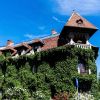
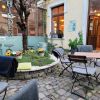
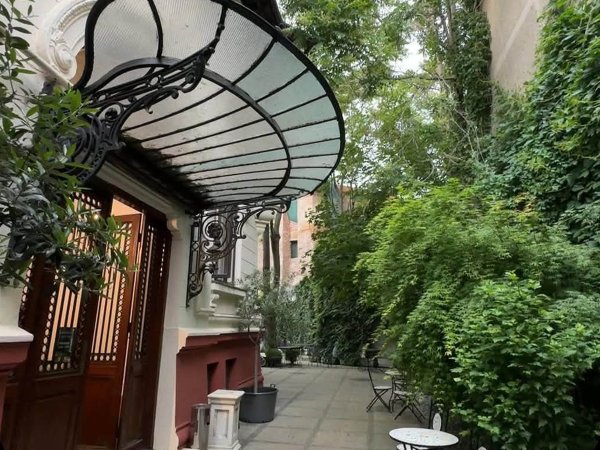
In a discreet part of Bucharest, not far from the Armenian Church, Bocșa Street still preserves the atmosphere of a neighborhood where late 19th- and early 20th-century villas and houses recall the capital of another era. At number 4 stands a historic building that has become known because of its connection with one of the most important figures in Romanian music: Sergiu Celibidache. The house on Bocșa Street should not be confused with the historic building in Roman officially known as Casa Celibidache, where the conductor was born on June 28, 1912. The Bucharest property is, however, associated with his family and was presented in the business and culinary press as the former home of the famous conductor. Beginning in 2019, the building became home to Ciao Niki, an Italian restaurant. The property has retained much of its architectural charm, while its restoration and new use have transformed the former residence into a destination dedicated to Italian cuisine. Today, at 4 Bocșa Street, visitors find a period house surrounded by an interior garden, with stained-glass windows, decorative details and rooms where historic features coexist with contemporary design. Ciao Niki itself presents the venue as a period house with an interior garden and terrace, located in one of the central areas of the capital.
The house on Bocșa Street and its connection with the Celibidache family
The story of the Bucharest property came to public attention when the house on Bocșa Street was converted into a restaurant. In 2019, the press reported that the property belonged to the heirs of conductor Sergiu Celibidache and that the new restaurant was being created inside a period house distinguished by its impressive fence and stained-glass windows.
This is an important clarification because the name “Casa Celibidache” can easily lead to confusion. The house where the musician was actually born is located in Roman, at 2 Veronica Micle Street, and is a historic monument known as the House of Vornic Done or Casa Sergiu Celibidache. Official documents from the city of Roman confirm that the conductor was born there in 1912.
The Bucharest property on Bocșa Street, meanwhile, became associated with the Celibidache family at a later stage. Business publications reported in 2019 that the period house belonged to the heirs of the celebrated conductor. In 2024, however, the property changed ownership. Entrepreneur Nicuța Enache later explained that the building had been put up for sale and that, following the change of ownership, the restaurant’s contractual relationship with the new owner was renewed.
Therefore, the history of the Bucharest house should be regarded as part of the real-estate heritage associated with the Celibidache family rather than as the place where the great musician was born. It is precisely this connection, combined with the elegant architecture of the building and its transformation into a restaurant, that gives the property its distinctive character today.
Sergiu Celibidache, the child who chose music over a conventional career
Sergiu Celibidache was born in Roman on June 28, 1912, into a family in which his father, Demostene Celibidache, was a cavalry officer, while his mother, Maria, was born Brăteanu. The family moved to Iași when Sergiu was still very young, and it was there that his path toward music began. He started playing the piano at the age of four, while his interests later expanded far beyond music.
During his youth, he studied mathematics and philosophy in Romania, while also receiving musical training. In 1936, he left for Berlin, where he continued his education. At the Berlin Academy of Music, he studied with important teachers including Heinz Tiessen and Walter Gmeindl, while also pursuing philosophy and musicology. His broad intellectual education would later have a decisive influence on the way he understood music and musical performance.
After the end of the Second World War, his career took a spectacular turn. In 1945, he began conducting the Berlin Philharmonic during a complicated period in the orchestra’s history, after Wilhelm Furtwängler had been suspended. Between 1945 and 1952, Celibidache conducted hundreds of concerts and established himself as a conductor of exceptional individuality and artistic discipline.
He subsequently worked with numerous European orchestras and, in 1979, became chief conductor of the Munich Philharmonic and General Music Director of the city of Munich. His collaboration with the Bavarian orchestra became one of the most important chapters of his artistic career.
A conductor who rejected the rules of the recording industry
Sergiu Celibidache was far from an ordinary conductor. His philosophy of music was deeply connected to the idea that a performance should be born in the precise moment of the concert, through the direct relationship between conductor, orchestra and audience. This explains his famous opposition to commercial studio recordings, which he believed could not reproduce the unique experience of live performance.
For Celibidache, rehearsal was essential. He needed time to shape the orchestra’s sound, and his approach often resulted in unusually broad tempos and extraordinary attention to the balance between instruments. He became particularly associated with late Romantic and Impressionist repertoire, especially the works of Anton Bruckner, Claude Debussy and Maurice Ravel.
At the same time, Celibidache was also a composer and teacher. His surviving works include a Requiem, four symphonies and a Piano Concerto, among other compositions. His teaching career extended over several decades, and his artistic activity earned him numerous international distinctions.
In 1992, he became an honorary member of the Romanian Academy. Among the distinctions he received were the Grand Cross of the Order of Merit of the Federal Republic of Germany, the Bavarian Maximilian Order for Science and Art and the rank of Commander of the Order of Arts and Letters awarded by France.
The conductor died on August 14, 1996, at his home in La Neuville-sur-Essonne, in France, at the age of 84. His final concert with the Munich Philharmonic had taken place only a few weeks earlier, in June 1996.
How the historic house became a gastronomic destination
A new chapter in the history of the Bocșa Street property began at the end of the 2010s, when entrepreneur Nicuța Enache decided to transform the building into a restaurant. After spending 12 years working in Italy, she returned to Romania and opened Osteria Ciao Niki in 2014. Five years later, the business expanded into a much larger venue housed in the historic building on Bocșa Street.
According to Ziarul Financiar, the initial investment in the restaurant on Bocșa Street amounted to approximately 400,000 euros. Later reports indicated that the total investment eventually exceeded 500,000 euros, amid the difficulties faced by the hospitality industry and the impact of the pandemic.
Renovation work began in January 2019, with the aim of preserving the spectacular character of the building while adapting it to its new function. The carved wooden paneling and decorative elements with golden accents were incorporated into an interior designed for a modern restaurant. Contemporary furniture was combined with historic details, creating an elegant environment without turning the building into a museum-like space.
The result is a place where the historic architecture is not merely a backdrop for the restaurant, but an essential part of the experience. The stained glass, the imposing fence, the spacious rooms and the interior garden all contribute to the atmosphere of an urban villa that has changed its function without completely losing its identity.
Ciao Niki, a new life for a house with history
Ciao Niki is officially presented as an Italian restaurant located inside a historic house in central Bucharest. Its address is 4 Bocșa Street, and the venue includes indoor spaces as well as a terrace and garden. Its menu focuses on Italian cuisine, with particular attention also given to desserts prepared in-house.
The atmosphere is one of the elements that distinguishes the restaurant. Instead of a standardized modern interior, visitors enter a historic house whose architecture preserves traces of a period when urban villas were conceived not only as residences, but also as spaces of representation. The interior garden adds another dimension to the experience, especially during the warmer months, when the terrace becomes one of the venue’s main attractions.
Ciao Niki also went through difficult times. The restaurant on Bocșa Street opened shortly before the COVID-19 pandemic, and the restrictions introduced in 2020 had a major impact on the business. Nicuța Enache later spoke publicly about the financial difficulties and the efforts required to keep the project running.
In 2024, the restaurant faced another challenge after the property changed ownership. Enache said that she had learned through friends that the house had been put up for sale. A new owner eventually took over the property, but the parties reached an agreement and the restaurant’s contract was renewed.
From the memory of a great musician to a discreet Bucharest landmark
The story of the house on Bocșa Street is fascinating precisely because it brings together two seemingly different worlds. On one side stands the memory of a conductor who profoundly influenced the art of musical interpretation in the 20th century. On the other is a contemporary restaurant that chose to transform an old villa into a living space dedicated to dining, meetings and social occasions.
Sergiu Celibidache’s son, Serge Ioan Celibidachi, contributed significantly to preserving his father’s memory. In 1998, he directed and produced the documentary film “Grădina lui Celibidache”, devoted to the conductor and his tours with the Munich Philharmonic. In 2012, the centenary of Celibidache’s birth was marked by numerous cultural events, and the year was designated a UNESCO anniversary year dedicated to the Romanian musician.
Today, for those walking through the area around the Armenian Church, 4 Bocșa Street may appear to be simply another discreet address in central Bucharest. Behind its fence and stained-glass windows, however, stands a house that became associated with one of the most original personalities in Romanian musical culture and that, after several decades, found an unexpected way to remain part of the city’s contemporary life.
The building is not the historic house in Roman where Sergiu Celibidache was born, and this distinction is essential for an accurate account of his story. It is, however, a Bucharest property associated with the family of the celebrated conductor, a house that survived the transformations of the city and eventually found a new purpose within its urban landscape.
Today, amid historic wood paneling, stained glass and tables arranged in the garden, the memory of one of Romania’s greatest conductors coexists with the aromas of Italian cuisine. It is one of those places where Bucharest’s past and present meet naturally, allowing a historic building to continue its story in a completely different form.
We also recommend: Famous houses in Bucharest: Athanasovici Palace, the home of the family of Romania’s first forensic medicine professor