He Entered Bucharest in Disguise and Greeted People with a Single Finger. 5 Things You Didn’t Know About King Carol I of Romania
- Articles
- 27 OCT 26
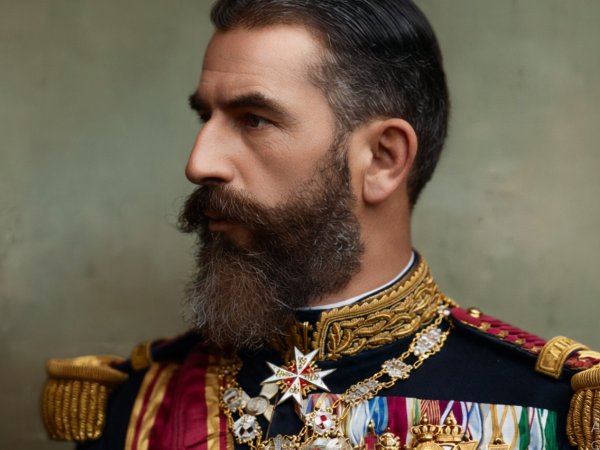
For almost half a century, Carol I was one of the central figures in Romania’s history. He came to the throne at a time of profound political instability, following the removal of Alexandru Ioan Cuza, and remained at the head of the country until 1914. During his 48-year reign, the United Principalities became the Kingdom of Romania, while the Romanian state gained its independence from the Ottoman Empire. Carol I’s personality, however, was far more complex than the official image of a solemn sovereign, permanently dressed in uniform and constantly concerned with order. His contemporaries described him as meticulous, cold, punctual and extremely reserved, but also as a persistent and disciplined monarch who was deeply aware of the responsibility entrusted to him. Some of his gestures remained in the memory of his contemporaries and eventually became genuine historical anecdotes. From the journey he made incognito in order to reach Romania to his famous habit of greeting people with a single finger, there are numerous details that help complete the portrait of the first king of Romania.
1. He arrived in Romania incognito, at a time when the journey was risky
In the spring of 1866, the political situation in Europe was complicated. Following the abdication of Alexandru Ioan Cuza, Romania’s political elite chose to bring a foreign prince to the throne, believing that he could provide stability and international prestige to the newly established state. Their choice fell on Carol of Hohenzollern-Sigmaringen, a young Prussian officer who was only 27 years old.
His journey to Romania was anything but ordinary. Carol traveled incognito, against the backdrop of a tense European political situation, and historical accounts record that he used a discreet identity in order to avoid possible problems connected with the circumstances of the time. Some later accounts even identify him as Karl Hettingen, a merchant allegedly interested in commercial activities in Romania. The National Museum of Romanian History, however, clearly confirms the clandestine nature of his journey.
On May 8, 1866, Carol reached Turnu-Severin after crossing the Iron Gates. From there, his journey continued toward Bucharest, and on the morning of May 10, the prince entered the capital. He crossed Podul Mogoșoaiei, today’s Calea Victoriei, amid an enormous crowd that had gathered to welcome him. On the same day, Carol took his oath before the Constituent Assembly and was proclaimed Domnitor of the United Principalities of Romania.
His arrival represented much more than a change of the person at the head of the state. For the political leaders of the time, bringing a prince from an important European dynasty was a solution for consolidating the Union and increasing Romania’s international prestige. Carol himself would state on the day of his arrival that, after setting foot on Romanian soil, he had become Romanian.
2. His one-finger salute became one of his most famous personal traits
If there is one gesture that has remained almost instantly associated with Carol I, it is his one-finger salute. It was not simply an unusual mannerism but, according to accounts from people who knew him, part of an entire personal style dominated by distance, solemnity and self-control.
Ion Gheorghe Duca, one of the politicians who knew him closely, described in his memoirs the way Carol treated the people around him. In general, the king would extend a single finger when greeting someone, while offering two fingers or his entire hand was considered an exception and could represent a sign of appreciation.
According to the same account, the index finger of his right hand had almost become a communication tool for the monarch. He sometimes used it to emphasize his ideas, respond to the cheers of the crowd, salute troops or make brief gestures toward those approaching him. In a style of behavior in which gestures were generally kept to a minimum, this detail became particularly recognizable.
It is important to note that the account of the one-finger salute comes primarily from memoirs and recollections, particularly those of I.G. Duca. It should therefore not be regarded as an official protocol rule that Carol followed in every single situation, but rather as a well-known characteristic of the way he interacted with people. Other historical accounts nevertheless confirm his reputation for being extremely reserved and the fact that he would generally offer ministers a single finger, while giving two fingers or, more rarely, his entire hand to people he held in higher regard.
3. He learned Romanian and could speak four languages
Carol I was born into a German family and came to Romania without knowing the language of the country he was about to rule. Nevertheless, one of the things that impressed his contemporaries was the effort he made to learn Romanian.
Historical and biographical sources describe him as a speaker of German, French and English, in addition to Romanian. According to accounts that have become part of his traditional biography, Carol managed to learn Romanian in a relatively short period of time, approximately one year. At first, his foreign accent was obvious, but he knew the language well enough to use it in official activities.
I.G. Duca noted the differences in the way Carol expressed himself in the languages he spoke before arriving in Romania. In French, he had a foreign accent, while in Romanian his German pronunciation was very noticeable. In German, however, the difficulties of expression disappeared, and his speeches could become much more natural and fluent.
For a prince who came from a German family and was installed on the throne of a country with a different political and social culture, learning Romanian also had an important symbolic significance. Carol had to transform a political decision into a legitimate and lasting reign, and establishing a connection with Romanian society was essential to that process.
In 1866, he was still a foreigner brought to the throne. In 1881, when Romania became a kingdom and Carol became its first king, the situation was radically different. During the 15 years between the two moments, the prince had already established a strong position in Romanian political life.
4. Punctuality and discipline became almost a matter of state
Carol I was not a sovereign known for spontaneity. On the contrary, one of the most persistent images of him is that of a man who organized his life according to strict rules and regarded punctuality as a matter of seriousness.
His contemporaries quickly noticed this characteristic. The king was extremely meticulous, respected his schedule and had an almost obsessive concern for exact timing. Some accounts describe the way he coordinated his official appearances, refusing to allow his schedule to slip even by a few minutes.
This attitude must also be viewed in the context of his personal background. Carol had been trained as a Prussian officer, and discipline, order and respect for hierarchy were fundamental values in his education. Once he arrived in Romania, he attempted to transfer some of this rigor to the institutions of the state as well.
For some of his contemporaries, this discipline represented precisely what Romania needed during a period of rapid modernization. For others, Carol was too rigid and too distant. Queen Elisabeth, his wife, captured this permanent preoccupation with his royal role in a memorable expression: Carol was said to be a man who wore his crown even in his sleep. The image remains one of the most evocative descriptions of his relationship with his position as sovereign.
Carol’s rigor was not limited to his personal behavior. During his reign, state institutions, the army and the administration were strengthened, while Romania underwent a broad process of modernization. Railway infrastructure, educational and economic institutions were developed, and Bucharest increasingly began to take on the appearance of a European capital.
5. “This is the kind of music I like!” became the symbolic phrase of the War of Independence
Carol I was not merely a spectator during the Romanian War of Independence of 1877–1878. His military training and experience as an officer made his involvement in military operations one of the important dimensions of his activity as ruler.
One of the best-known episodes took place at Calafat, during the bombardment of the Ottoman positions at Vidin. When the Romanian guns opened fire, Carol is said to have uttered the phrase that later became famous: “This is the kind of music I like!” The National Office for the Cult of Heroes, part of Romania’s Ministry of National Defence, continues to preserve this tradition in its presentation of the episode, linking the exclamation to the moment when the prince heard the Romanian artillery firing on the Ottoman positions.
The phrase quickly became part of collective memory because it captures very well Carol’s public image: the solemn soldier, accustomed to discipline and to the reality of war, who regarded the military confrontation not as a spectacle but as the moment when Romania was concretely asserting its will to achieve independence.
In 1877, Parliament proclaimed Romania’s independence, while the Romanian-Russian-Ottoman conflict gave the country the opportunity to assert its sovereignty on the battlefield. The Romanian army took part in decisive operations south of the Danube, including the battles around Plevna, and Carol I played an important role in military leadership. Independence was subsequently recognized internationally through the treaties that followed the war, including the Congress of Berlin.
Carol I, between rigidity and the modernization of Romania
Carol I’s legacy cannot be reduced either to the image of a cold and inflexible sovereign or to that of a providential ruler who single-handedly modernized Romania. His reign was the result of a combination of the monarch’s actions, the work of the political elite and the profound transformations taking place within Romanian society.
Carol nevertheless remained a constant presence during a period in which Romania changed dramatically. He arrived in 1866 in a country that had only recently consolidated its Union and died in 1914 in an independent and sovereign state that had been transformed into a kingdom. During his 48-year reign, Romania gained independence, strengthened its institutions and made significant progress toward economic and social modernization.
Carol I died in Sinaia on September 27, 1914, at the age of 75, after the longest reign in Romanian history. He was buried at Curtea de Argeș, the necropolis of the Romanian Royal Family that he had chosen for his dynasty.
Perhaps it is precisely these contrasts that make him so interesting today: the German prince who arrived in Romania incognito, the monarch who sometimes greeted people with a single finger, the man who measured his life with the precision of a clock and the soldier who listened with satisfaction to the first cannon fire of the War of Independence. Beyond the anecdotes, all these details reveal the same personality: a sovereign who took his role extremely seriously and who tied almost his entire existence to the construction of modern Romania.
We also recommend: Famous boulevard names: Carol I, the first king of Romania, founder of Independence and the man who civilized the Romanian people