5 Scary Places in Bucharest Said to Be Haunted
- Articles
- 29 OCT 26
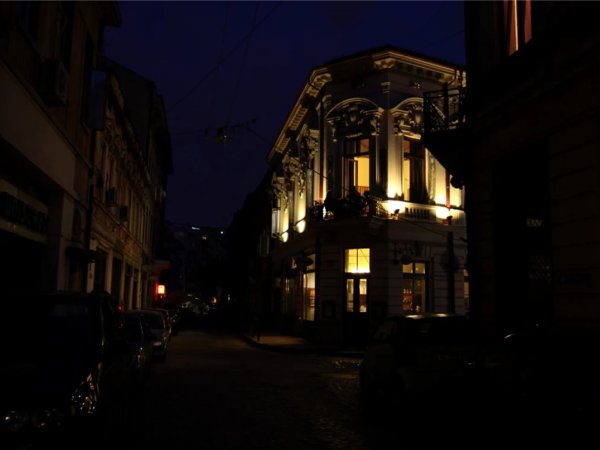
Bucharest has plenty of stories that come to the surface after dark. Among historic buildings, old streets, ruins hidden on the outskirts of the city and places that disappeared during the major demolitions of the communist era, stories have emerged over time about ghosts, unexplained noises, curses and mysterious apparitions. Around Halloween, these stories take on a special atmosphere. Not because the existence of ghosts has ever been proven, but because some of the places said to be haunted have genuinely spectacular, tragic or little-known histories. Sometimes, the documented truth is even more fascinating than the legend. From Strada Franceză, where a controversial story about a supposed orphanage has circulated for years, to the ruins of Chiajna Monastery, where tradition says that bells can still be heard even though the old bell has disappeared, and from the corridors of the Central School to Cișmigiu Hotel and the area of the former Brâncovenesc Hospital, Bucharest offers several stops that are perfect for a Halloween walk.
French Street and the legend of the haunted orphanage
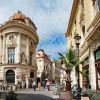
In the heart of Bucharest's Old Town, on Strada Franceză, one of the capital's most disturbing urban legends has circulated for years. The story refers to a house at number 13 that supposedly once operated as an orphanage where hundreds of abandoned children allegedly met a tragic end. The story became so well known that the building is sometimes described as the capital's "haunted orphanage."
In versions of the story circulating online and in publications devoted to urban legends, the owner was supposedly a man named Stavrache Hagi-Orman. According to the legend, he took in street children and subjected them to terrible living conditions. Some accounts claim that 203 children died there, while the legend says that, after nightfall, the voices of the children could be heard coming from the building, asking for water and help.
The problem is that this story should not be confused with the documented history of Bucharest. A recent investigation published on the city's official tourism platform points out that there is no historical evidence confirming the existence of such an orphanage on Strada Franceză or the existence of a person named Stavrache Hagi-Orman. The story appears to belong primarily to contemporary urban folklore.
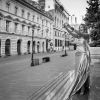
Strada Franceză itself is very real and has a long history. The National Archaeological Record lists it among Bucharest's historic streets and notes that it was documented as early as 1659, when it was known as "Ulița cea domnească," or the Princely Street. Over the centuries, it was also known by names such as Ulița Ișlicarilor and Ulița Franțuzească.
For a Halloween walk, the area remains interesting precisely because of the contrast between the lively atmosphere of the Old Town and the dark stories attached to its old streets. And if you pass by the place associated with the legend, it is worth looking at the story with a critical eye: the ghosts of the children belong to the city's imagination, while the age and history of the street are documented facts.
Chiajna Monastery, the ruin surrounded by the sound of bells
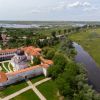
If there is a place near Bucharest that seems almost designed for a Halloween story, it is Chiajna Monastery. The ruins of the former church are located in the Giulești-Sârbi area, on the western edge of Bucharest, and the massive appearance of the structure, its relative isolation and its turbulent history have fueled local imagination for generations.
According to the Archdiocese of Bucharest, construction of the church began during the reign of Alexander Ypsilantis and was completed under Nicolae Mavrogheni toward the end of the 18th century. Archaeological research has also identified the foundations of former monastic cells belonging to the complex.
The site was later associated with wars, epidemics, abandonment and decay. Stories about shadows, apparitions and unexplained events emerged around the ruins. The best-known legend is that of the ghostly bell: according to the story, on certain nights the sound of a bell can be heard coming from the ruins even though the old bell is no longer in the tower. Other versions claim that the bell was hidden somewhere or thrown into the Dâmbovița River.
The atmosphere is enhanced by the fact that the ruins remained, for a long time, witnesses to a history that had been abruptly interrupted. Stories about shadows or ghosts are not evidence of paranormal phenomena, but rather part of the site's oral tradition and modern image.
Today, Chiajna-Giulești Monastery is once again an active religious establishment, while the ruins of the old church should be regarded as a historic monument, not merely as a backdrop for horror stories. For a Halloween walk, the area can be spectacular, but visitors should respect the monastic grounds and avoid entering areas where access is prohibited.
Central School and the ghost of Anca, the student
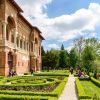
In the Icoanei neighborhood stands one of Bucharest's most beautiful historic educational buildings: Central School. The institution dates back to 1851, when Prince Barbu Știrbey approved the establishment of the Domnesc Pensionnat for Young Ladies. The present building, associated with architect Ion Mincu, became one of the defining constructions of 19th-century Bucharest.
The age of the institution and the building has naturally contributed to the emergence of numerous stories surrounding Central School. Over the years, the press has reported accounts of unexplained noises, doors that supposedly moved on their own, sudden sensations of cold and other events interpreted by some people as paranormal phenomena. An older report even mentioned supposed hidden rooms and legends surrounding the building's basement.
In 2026, another version of the story brought attention to the legend of a student named Anca. According to recently published accounts, her ghost supposedly haunts the corridors of the former girls' boarding school, and some people claim to have heard her footsteps after dark. The same reports point out, however, that there are several versions of the story and no single documented explanation for the young woman's alleged tragedy.
Therefore, if you choose Central School for a Halloween walk, it is worth keeping the legend and history separate. The building, the institution and its heritage are real; the ghost of Anca belongs to urban folklore. Moreover, since the school remains an active educational institution, it should only be visited when access is officially permitted.
Cișmigiu Hotel, the building with a tragic legend
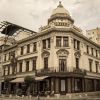
At 38 Regina Elisabeta Boulevard stands one of Bucharest's best-known historic hotels. The building was completed in 1912 and was initially known as Palace Hotel. Its design is associated with architect Arghir Culina, while engineer Nicolae Nacu Pissiota was responsible for the structural design and owned the property. The hotel had around 200 rooms and was considered one of the important buildings in Bucharest at the beginning of the 20th century.
After nationalization, the building went through several transformations, and during the period following the communist era it was also used to accommodate students of the Academy of Theatre and Film. This stage in its history contributed to one of the hotel's best-known legends.
The story says that a female student fell into the elevator shaft and was seriously injured, crying for help before eventually dying. In versions of the legend, her cries could later be heard along the hotel's corridors, turning the building into one of the capital's supposedly haunted locations. The story has been reported by several publications, but it should be regarded as an urban legend rather than proof of a paranormal phenomenon.
What is particularly interesting is that the building's real history is spectacular enough without ghosts. The hotel went through periods of glory, nationalization, deterioration and abandonment before eventually being restored and reopened. The present-day building therefore preserves the memory of a Bucharest that changed dramatically over more than a century.
The former Brâncovenesc Hospital area and Safta's curse
The final stop is one of the most powerful from a historical perspective. In the area of Unirii Square, near Domnița Bălașa Church and the former Princely Court, once stood Brâncovenesc Hospital, one of Bucharest's major medical institutions.
The hospital opened its doors to patients in 1838, as part of the Brâncovenesc foundations established through the initiative and wealth of Safta Brâncoveanu. Over the years, the complex was expanded and modernized, and during the 20th century it became one of the capital's important medical institutions. Historical accounts note that the hospital was destroyed by a fire in 1879 and subsequently rebuilt, while further modernization works were carried out in the early 1900s.
Its end came during the communist-era redevelopment of Bucharest. On March 29, 1984, on the orders of Nicolae Ceaușescu, Brâncovenesc Hospital was demolished as part of the projects associated with the new Civic Centre.
One of the best-known legends about curses in Bucharest emerged around its destruction. According to the story, Safta Brâncoveanu had supposedly left a solemn warning for anyone who dared to destroy her foundation.
After the hospital was demolished, the story was retrospectively connected with the deaths of Nicolae and Elena Ceaușescu, who were executed on December 25, 1989. Some sources even preserve the alleged wording of the inscription and the connection later established by collective memory between the curse and the events of December 1989.
Here, however, the "ghost" is less an apparition than the memory of a destroyed city. The hospital no longer exists, but its history can still be reconstructed through documents, fragments and surviving traces preserved around Bucharest. The area of the former hospital reminds visitors of an institution that operated for more than a century and a half before being sacrificed as part of the radical transformation of the capital.
A Halloween walk through this area can be even more impressive when viewed not only through the lens of curse stories, but also through the real history of the city's demolitions. In many parts of Bucharest, today's city stands above a vanished city.
A Halloween walk between legend and history
The five locations have one thing in common: none of them actually needs proof of ghosts to be fascinating. Strada Franceză preserves the memory of old Bucharest, Chiajna Monastery is a ruin with a history spanning more than two centuries, Central School is one of the city's most important educational heritage sites, Cișmigiu Hotel tells the story of the transformations of an iconic building, while the former Brâncovenesc Hospital recalls one of the most painful demolitions of the 1980s.
If you choose to include them in a Halloween walk, it is worth keeping a clear distinction between what is documented and what belongs to legend. Ghosts, footsteps heard in corridors, bells ringing without a bell and curses are all part of Bucharest's folklore, but the stories behind them almost always have a real starting point.
And perhaps that is the most fascinating thing about the capital: sometimes, the real horror story is not about a ghost appearing at night, but about people, buildings and entire neighborhoods that once existed and disappeared, surviving today only in photographs and in the city's collective memory.
We also recommend: Hotel Cișmigiu, haunted by immortal legends. The story of Neli Bejan, the student from Bessarabia who died in the elevator shaft