Ana Rubeli and the stories behind Bucharest’s houses. From “Aici a stat” to historic neighbourhoods

By Raluca Ogaru
- Articles
- 28 OCT 26
Who lived in an old house, what happened on its street, and what does the neighbourhood still retain of its former life? These questions lie at the heart of “Aici a stat”, the project founded by Ana Rubeli. Through research, guided tours and cultural events, she brings the public closer to buildings and the people who gave them a place in the city’s history.
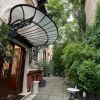
Bucharest plays an important role in this exploration. From the former neighbourhoods of Sfânta Ecaterina and Flămânda to places associated with Cella Delavrancea, her projects introduce visitors to a city whose stories extend beyond its façades.
From finance and communication to researching old houses
Ana Rubeli’s educational background spans several fields: finance, communication studies and actuarial studies in the Netherlands. In her biographical profile, she describes her interest in heritage alongside her professional work with probability, statistics and financial models.
Before establishing her own cultural association, she volunteered for the Art History Association and ARCEN. Her interest in historic buildings subsequently developed into a project combining archival research with fieldwork, photography and public outreach.
This work involves more than identifying an attractive façade. An address needs to be connected with names, documents and successive changes. For readers or tour participants, the result is an opportunity to understand why a particular house deserves attention and how it relates to the history of its street.
“Aici a stat”: understanding buildings through their inhabitants
The project’s name, meaning “Here lived”, points to its focus: the connection between a place and the people who inhabited it. “Aici a stat” explores the history of buildings and the biographies of the figures associated with them, through both online publications and events where people can encounter these stories in person.
Activities include guided tours, architectural treasure hunts and classical music recitals in historic spaces. The same building can therefore be explored through an explanation of its architecture, the story of a former resident or music performed in an interior of cultural significance.
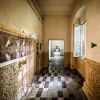
For Bucharest, projects like these offer a way to connect with the heritage encountered in everyday life. Houses we pass on our way to work or to a transport stop can become starting points for questions about professions, families and changes within a neighbourhood.
Sfânta Ecaterina and Flămânda: two historic neighbourhoods explored in a book
This interest in neighbourhood history is reflected in “Mahalale de patrimoniu: Sfânta Ecaterina și Flămânda” (Heritage neighbourhoods: Sfânta Ecaterina and Flămânda), published by Ana Rubeli through Editura Vremea in 2024. The 280-page book explores a part of Bucharest through two of its historic neighbourhoods, traditionally known as mahalale. Bibliographical details are available in the publisher’s catalogue.
The two areas took their names from the churches around which their communities developed. In his introduction to the book, historian Simion Câlția places this corner of the city near much better-known landmarks, including Dealul Mitropoliei, Piața Unirii and Carol Park. The focus thus shifts towards streets and houses that may lie outside the usual routes.
Reading a book like this can accompany an unhurried walk. Rather than looking exclusively at famous monuments, readers have an opportunity to see a neighbourhood as a whole: homes, churches, neighbouring properties and traces of urban change. The book offers a starting point for discovering this local history.
Following Cella Delavrancea’s footsteps through music and walks
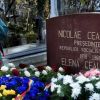
A recent example of how Ana Rubeli connects biographies with places is the 2026 edition of the “Aici a stat” Festival, dedicated to Cella Delavrancea. Concluding on October 18, it included recitals, cultural gatherings, an exhibition and two guided tours led by the project’s founder.
At Suțu Palace, the recital and reading “Travelling with Cella Delavrancea” brought together pianist Anastasia Maria Barbu’s performance and readings by actress Natalia Cebanu. Music and literary excerpts offered the audience two ways to explore the artist’s world.
According to the organisers’ announcement, the outdoor exhibition displayed along the fence of Suțu Palace was extended until November 1, 2026. For those visiting the Universitate area during this period, the address is 2 Bulevardul Ion C. Brătianu. The panels dedicated to Cella Delavrancea can provide a stop on a walk through the city centre.
How to discover Bucharest through the project
For upcoming tours and gatherings, the starting point is the “Aici a stat” platform. Each event announcement should be checked separately for its date, meeting point, registration requirements and any admission fee. Joining a tour does not automatically include access to the interiors of all the houses featured.
Exploration can also continue independently, with a book or a researched account of a building’s history. A walk takes on greater depth when you know who commissioned a house, who designed it and what has changed around it. This is also the thread connecting Ana Rubeli’s projects: discovering the city’s history through specific places and the people whose lives intersected with them.