Nightlife in Communist Bucharest: Bars and Controlled Escapes
By Eddie Țone
- Articles
- 15 APR 26
The 1980s. You walk along the wide boulevards of Bucharest, where the dim light of the streetlamps carves long shadows onto the asphalt. The gray facades of the neighborhood apartment blocks hide under the darkness of the evening, yet the city harbors a secret pulse—an underground vibration that defies the rigor of the regime.
Nightlife in communist Bucharest represented a unique ecosystem: a blend of escapism, strict control, and human adaptability. If you didn't live through those years, now is your chance to discover a world of sharp contrasts, where the luxury of hotels intended for foreigners coexisted with the thick smoke of neighborhood beer halls and the absolute intimacy of apartment parties.
To truly understand this dynamic, one must look beyond the uniformity imposed during the day. As evening fell, Bucharest residents would swap their work clothes for outfits sacredly kept for special occasions, desperately seeking those small cracks in the wall of austerity through which they could breathe freely.
Two Decades of Illusion and Opening
The '60s and early '70s brought a period of ideological relaxation, immediately reflected in the effervescence of Bucharest evenings. Walking mentally through that era, you notice a capital partially synced with Western rhythms. On Magheru Boulevard, neon signs for the CEC (Savings Bank) or Loto-Prono gave the air an almost cosmopolitan feel. During this time, nightclubs operated with generous hours, and jazz music echoed from the speakers of central venues.
Iconic restaurants featured rich menus inspired by international gastronomy. At the Berlin Restaurant, waiters in bow ties served refined dishes while German beer sat proudly on the tables. At Cina or Pescăruș, live orchestras maintained an atmosphere of perpetual vacation, where dancing and loud conversations drowned out every daily worry. Vinyl records released by Electrecord, reel-to-reel tapes, or cassette players of the era brought the latest hits, and young people learned new dance moves, timidly copying the motions seen in foreign films screened at the boulevard cinemas.
The drinks of the time reflected this temporary openness. Cuban Havana Club rum, vermouth, and even bottles of Pepsi-Cola became accessible, forming the base of the (admittedly simple) cocktails served at the bar. This window of normalcy created a generation that tasted freedom and was later forced to hide it behind closed doors.
The Microcosm of Luxury and the Watchful Eye of the Securitate
Beyond the venues accessible to the general public, communist Bucharest hosted a network of bars and restaurants with "closed circuits," intended almost exclusively for foreign citizens and the nomenclature elite. Here, we enter a gray zone—a space of compromise and total surveillance.
The English Bar inside the Athenée Palace Hotel was the absolute epicenter of this universe. Once you cross the (imaginary) threshold of this space, you are hit by the scent of fine tobacco mixed with the aromas of Scotch whisky and French cognac. Here, business deals were closed, currencies were exchanged, and state secrets were whispered. Loyal clients included Western journalists, diplomats, and Romanians with connections deeply anchored in power structures.
Every move was documented. The Securitate (the secret police) controlled the environment via microphones hidden in ashtrays, under tables, or in chandeliers. The venue's staff—from bartenders to doormen—often had dual subordination. Despite this, the allure of the place remained magnetic. The fact that one could smoke a pack of Kent (the unofficial currency of the time) and drink an authentic gin and tonic justified, for many, the risk involved.
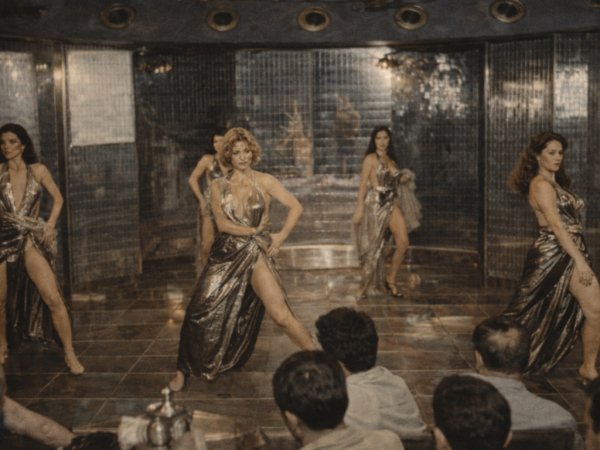
Another nerve center of luxury entertainment was Bar Melody. Originally located in the basement of the Patria Cinema, it gathered the "cream" of Bucharest society. Cabaret shows, ballerinas in spectacular costumes, and live music created a bubble of unreal opulence in contrast with the rest of the country. Currency traffickers, luxury black-marketers, and the "girls" (young women practicing high-end prostitution, tolerated by authorities in exchange for information squeezed from foreign clients) formed the human ecosystem of these places.
Neighborhood Beer Halls and Restaurants: The Refuge of the Common Man
Descending from the high spheres of central hotels, you discover the nightlife of the average Bucharest citizen. Here, luxury is replaced by conviviality, by sawdust scattered on the floors of beer halls, and by the dense smoke of grills.
Caru’ cu Bere (though also located in the center) remained a bastion of tradition, its intact stained glass and Neo-Gothic architecture providing an imposing backdrop for long evenings. Thick glass mugs, filled with draft beer, clinked incessantly. The menu, though growing poorer as the years passed, offered the classic mici with mustard, a portion of breaded bologna (parizer pane), or traditional bean stew (iahnie de fasole).
Neighborhoods had their own centers of attraction. The terraces in Herăstrău, the restaurants in Drumul Taberei or Titan became overcrowded on summer evenings. Consumption was most often modest in the '80s: a bottle of white wine diluted with cold seltzer water and a few peanuts. The essence of these outings resided in socialization. Romanians perfected the art of "making light of a bad situation," and at the wooden tables of these taverns, the best political jokes were told—always in a low voice and after a careful scan of the people at neighboring tables.
As mentioned, with the transition into the 1980s, product quality began to drop drastically. Seltzer replaced mineral water, domestic vodka took the place of imported spirits, and the juice Brifcor became the ultimate substitute for any Western soft drink. Even so, the desire to go out, to see people, and to feel the city's pulse kept these places alive.
10:00 PM and the Move Underground
The last decade of the communist regime brought a brutal change of scenery. Official decrees imposed the closure of restaurants and bars at 10:00 PM under the pretext of saving electricity. Sidewalks emptied quickly, street lighting was reduced to a minimum, and the city seemed submerged in a heavy sleep.
In reality, nightlife simply changed its address. The era of the famous "dancing tea" (ceaiul dansant) began. These private parties, organized in apartment flats, became the social center for young people. Preparations for a "tea" required a remarkable collective effort. Girls brought homemade cakes using hard-to-find ingredients. Boys sourced the drinks—beer, often a cheap vermouth, domestic rum, or, in lucky cases, a bottle of secărică (caraway spirit).
The centerpiece of any apartment party was the reel-to-reel tape recorder. Soviet models like Kashtan or Majak sat enthroned on a living room table, flanked by clandestinely recorded tapes. Western music circulated under the table. The rhythms of ABBA, Boney M., Queen, or Modern Talking transformed cramped living rooms into dance floors. Lights were often turned off or replaced by a red bulb, creating the necessary intimacy for slow dances.
The cold in the apartments—a constant of 1980s winters—was combated through frenetic dancing and blankets thrown over sofas. At midnight, coffee was served—most often a blend of chickpeas and roasted barley known as "nechezol," prepared in an ibric. In an era of absolute restrictions, these apartments on the fourth or seventh floor of anonymous blocks became the most exclusive clubs in Bucharest.
Survival Through Humor and Escapism
The nightlife of that period created its own language and specific human archetypes. You have the Bucharest "wise guy" (șmecherul), capable of sourcing a bottle of original whisky or nylon stockings for his girlfriend. You have the bartender, viewed with respect and a dose of fear, the keeper of the keys to the products under the counter. You have the restaurant doorman, an absolute authority who decided who entered and who remained on the sidewalk, often convinced by a 25-lei bill discreetly slipped into his pocket.
This entire nocturnal staging represented an exercise in emotional survival. Going out and hosting apartment parties provided that necessary space where people could forget, for a few hours, the food lines, the gas quotas, and the interminable political speeches broadcast on television.
The Echo of Yesteryear’s Evenings in the Present
If you walk today along those same boulevards, you are dealing with a completely different capital. The blinding light of digital advertisements has replaced flickering neons, and clubs in the Old Town pulse until dawn. However, the architecture still keeps the secrets of decades past.
The Intercontinental building (now the Grand Hotel Bucharest) continues to dominate University Square, a reminder of the times when it represented the border between East and West. Athenée Palace welcomes its guests in the same history-laden salons, though the microphones in the chandeliers have become museum pieces. Caru’ cu Bere continues to serve thousands of customers, keeping its background noise unchanged for over a century, albeit with a much more elegant decor.
To understand how Bucharest residents enjoyed themselves in those years is to understand the resilience of an entire generation. Behind every bottle of Pepsi shared among four people, behind every reel-to-reel tape listened to in secret, and behind every evening spent on a dimly lit terrace, there was a visceral desire to live normally. And the city, with all its constraints, always offered the perfect stage for this silent resistance, carried out in dance steps and cigarette smoke.
You may also like: What once was, what remains – iconic communist-era department stores and what they’ve become