What Summer in Bucharest Felt Like Before Malls and Air Conditioning
- Articles
- 01 JUN 26
Summer in Bucharest began with the scent of linden trees warmed by the sun and windows thrown wide open toward the street below. The city slowly slipped into a different rhythm sometime after mid-June, and the evenings seemed longer than at any other time of year. Inside apartment blocks, thin curtains moved gently in the breeze flowing between the kitchen and the balcony, the radio played softly somewhere in the background, and the sound of trams rose all the way to the upper floors as naturally as birdsong.
Back then, Bucharest lived outdoors during summer. The city spilled onto sidewalks, benches, in front of apartment buildings, into parks and pastry shops. Children disappeared outside in the morning and returned home late in the evening with dusty knees, sticky hands from melted ice cream, and skin carrying the smell of sun and heat. Around the buildings came the sound of balls bouncing against asphalt, metal roller skates rattling over alleyways, and voices echoing upward toward open windows where mothers shook tablecloths or turned peppers in frying pans.
The afternoons carried a heavy white light that made the asphalt shimmer. The city slowed down beneath it. Trams arrived overheated, their windows pushed open, carrying that unmistakable mix of hot metal, cheap perfume, and summer dust. People walked slowly, instinctively searching for the shade of buildings and the coolness of underpasses. Every so often a watermelon seller would appear, and the sweet, cold scent spread immediately through the warm air around him.
Pastry shops became temporary refuges from the heat. At Capșa, Casata, Scala, or the neighborhood confectioneries, glasses of cold braga sweated onto metal tables while ice cream sundaes arrived topped with real whipped cream and tiny spoons that clinked softly against glass dishes. The air smelled of cocoa syrup, vanilla, and freshly ground coffee. Ceiling fans turned lazily above people talking without hurry, with the comforting feeling that summer somehow created extra time.
Evening settled over the city in a way Bucharest still sometimes remembers, for those who know how to notice it. After eight o’clock, the heat slowly began to retreat from between the apartment blocks and people stepped outside again. Chairs appeared in front of building entrances, carried down from upstairs apartments, children ran between the few parked cars, and neighbors talked for hours about ordinary things while sunflower seeds and cold sparkling water sat on small tables nearby. From open windows came the smell of tomatoes sliced for dinner, fresh bread, and chilled watermelon waiting in the kitchen.
Downtown summer evenings carried a particular kind of elegance. Calea Victoriei glowed beneath yellow streetlights, cinemas lit up their marquees, and people dressed beautifully to go see a film as if preparing for a small celebration. From the summer gardens came the sound of clinking glasses and light music drifting through the night air, while tables occupied until late transformed the city into a calmer, softer, more patient place.
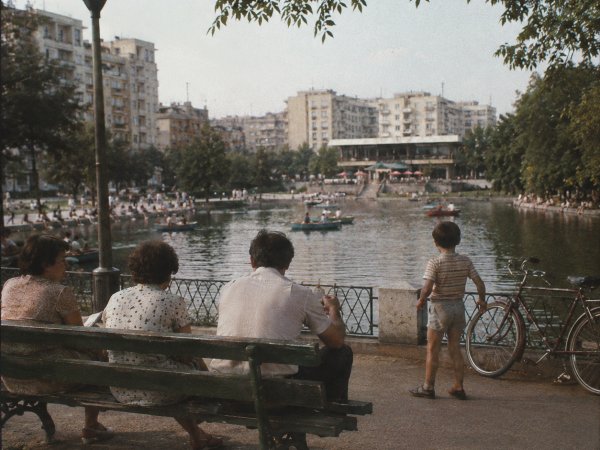
The parks became true territories of summer. Cișmigiu smelled of still water, chestnut trees, and cotton candy, while families wandered slowly along the alleys with an almost ceremonial rhythm. At Tineretului or Floreasca swimming pools, colorful towels covered the burning concrete, cassette players filled the air with Modern Talking or Compact songs, and the scent of tanning oil blended with the smell of boiled corn.
Summer holidays began first inside the city itself. Before anyone reached the seaside or the mountains, there was this Bucharest summer lived among apartment blocks, linden trees, trams, and long evenings. It was a season that seemed patient with people, turning small things into real events. A bottle of sparkling water taken from the refrigerator, an evening walk to the neighborhood ice cream kiosk, a newly bought cassette played beside an open window, or an August thunderstorm watched from the balcony could fill an entire day with meaning.
Today, summer in Bucharest is lived more indoors, inside cool shopping centers, between screens and constant air conditioning, with the city viewed through large windows and crossed in haste. And yet, sometimes, on a warm June evening when the linden trees bloom once again and trams pass by with their windows open, the old Bucharest of summers before malls briefly returns exactly as it once was: warm, noisy, alive, and incredibly present.
Also recommended Giovanni's Secret and the Queue at Velocità. Bucharest and Its Love Affair with Ice Cream, Over 170 Years in the Making