Famous houses in Bucharest: The Ceaușescu House, from the Spring Palace to the memorial museum of the former dictator
- Articles
- 04 JUN 26
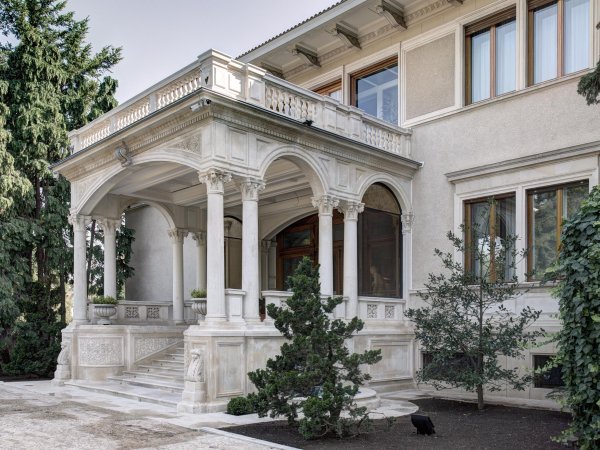
Bucharest hides numerous buildings with fascinating stories, but few have sparked as much interest, controversy, and curiosity as the Ceaușescu House, known during the communist period as the Spring Palace. Located in the exclusive Primăverii district, this impressive residence was, for nearly a quarter of a century, the private home of Nicolae and Elena Ceaușescu, as well as their children, Valentin, Zoia, and Nicu. Today, the building is open to the public as a memorial museum, offering visitors an insight into a world of luxury and privileges that were difficult to imagine for most Romanians during the communist era.
From protocol residence to the home of the Ceaușescu family
The history of the Spring Palace begins in the mid-1960s, at a time when the communist regime was consolidating its power in Romania. The building was constructed between 1964 and 1965 at the initiative of the communist leader Gheorghe Gheorghiu-Dej, who wanted a new official residence. The destiny of the building, however, was about to change rapidly. Gheorghiu-Dej died in March 1965, before the completion of the works, and the new leader of the Romanian Communist Party, Nicolae Ceaușescu, decided to transform the property into his family’s home.
The architectural project was carried out by architect Aron Grimberg-Solari, while the interior arrangements, furniture, and landscape concept were developed by architect Robert Woll together with landscape engineer Teodosiu. In its initial form, the residence did not satisfy the new communist leader. For this reason, between 1970 and 1972, the palace underwent an extensive process of expansion and modernization, with its surface area practically doubling.
The transformations were carried out under the careful supervision of the Ceaușescu couple, who frequently intervened in decisions regarding architecture and interior design. Each of the family’s three children received their own apartment within the residence, while the common spaces were designed to reflect the status and political ambitions of the communist leader.
The Primăverii district, a symbol of the communist nomenklatura
To fully understand the significance of the Ceaușescu House, one must also look at the evolution of the district in which it is located. The Primăverii district was developed in the 1930s as a residential area intended for Bucharest’s elite. After the establishment of the communist regime and the adoption of the nationalization law in 1948, many owners were evicted, and their villas entered state ownership.
Gheorghe Gheorghiu-Dej decided that these properties should be allocated to high-ranking leaders and activists of the Communist Party. The purpose was simple: members of the nomenklatura were to live in a controlled area that was easy to supervise. As the number of privileged individuals grew, new villas were built to accommodate the entire political elite.
By 1989, the Primăverii district had become a symbol of the privileges enjoyed by the communist regime. More than 50 villas were occupied by the most influential people in the state, and access for ordinary citizens was strictly controlled. In this context, the Spring Palace represented the focal point of a world completely separated from the everyday reality of the population.
The luxury hidden behind the walls
During the communist period, very few Romanians knew what was inside the presidential residence. The building was permanently guarded, and approaching the property was almost impossible for ordinary citizens.
The interior still impresses today through its dimensions, elegance, and the diversity of materials used. The decorations include finishes made from carefully selected wood essences such as oak, maple, cherry, walnut, mahogany, rosewood, African pear wood, and Canadian cherry wood. The rooms are spacious, bright, and arranged in such a way as to combine comfort with opulence.
One of the most spectacular rooms is the indoor swimming pool, decorated with vividly colored mosaics. Throughout the residence, visitors can admire works of art signed by important Romanian artists, including Octav Băncilă, Camil Ressu, Rudolf Cumpăna, Dumitru Ghiață, and George Baron Lowendal. The palace also houses numerous handwoven tapestries and mosaics created by artists Olga Porumbaru and Florin Pârvulescu.
Interestingly, many of these works did not belong to the Ceaușescu family but came from the collections of state museums, being transferred here to contribute to the prestige of the residence.
The legends and mysteries of the Spring Palace
After the fall of the communist regime, the Ceaușescu House became the subject of numerous stories and urban legends. One of the most famous claimed that the interior contained solid gold faucets and objects inlaid with precious stones. In reality, many of these rumors proved to be exaggerated, although the luxury of the residence was undeniable.
Another persistent legend speaks about the existence of secret tunnels connecting the palace to various strategic points in the capital. It is said that these underground passages would have allowed the communist leader to travel quickly and discreetly in emergency situations.
However, the existence of the anti-atomic bunker is a documented fact. It was secretly built beneath the residence and can be accessed through an entrance hidden behind a padded door that closes hermetically. Its construction reflects the fears specific to the Cold War period and the constant concern of the communist leadership for security.
What happened to the palace after the 1989 Revolution
Surprisingly, the Spring Palace emerged almost completely unharmed after the December 1989 Revolution. While other symbols of the regime were vandalized, the building was protected by the army.
After the fall of the regime, the residence was emptied of numerous objects and gifts received by Nicolae Ceaușescu over the years, including exotic presents offered by African leaders. Subsequently, the building was used as a protocol villa intended for Romanian and foreign official delegations.
In 2014, the property was put up for auction but failed to find a buyer. The most suitable solution came two years later, when the building was opened to the public and transformed into a museum.
The Ceaușescu House today, one of the most visited museums in Bucharest
Today, the Ceaușescu House functions as a permanent exhibition and offers visitors the opportunity to discover the lifestyle of the former dictator from a lesser-known perspective. The museum aims not only to present the political leader but also the man behind the office, his passions, his daily activities, and the personal universe he built within the residence.
Visits take place exclusively through guided tours available in Romanian and English. Groups are limited to a maximum of 25 people, and advance booking is required for larger groups. Those seeking a more exclusive experience can opt for a private tour.
The visiting schedule is from Tuesday to Sunday, between 10:00 a.m. and 5:00 p.m., while the museum remains closed on Mondays and public holidays. Photography and filming are prohibited during the tour in order to protect the heritage and the visitor experience.
Today, what was once one of the most heavily guarded places in Romania has become a space accessible to everyone. The Ceaușescu House represents not only an important tourist attraction of the capital but also a testimony to the profound contrasts between the privileged life of the communist elite and the reality experienced by most Romanians during the final decades of the communist regime.
We also recommend: