Famous boulevard names: Dacia, the last boulevard designed before the First World War, the artery of the most beautiful villas of the Bucharest high society
- Articles
- 04 MAR 26
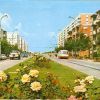
In the urban landscape of the city of Bucharest, there are arteries that are not just simple traffic routes, but true chapters of history. Dacia Boulevard is one of them. With an identity shaped at the beginning of the 20th century, this artery impresses through the elegance of its buildings, through its cultural weight, and through its essential role in the development of the modern Capital.
An ambitious project in the time of Vintilă Brătianu
Its name evokes a deep historical filiation: the Kingdom of Dacia, founded by the Geto-Dacians in the 1st century A.D., a symbol of Romanian identity and continuity. From the very beginning, the boulevard was conceived as a large-scale project, meant to connect two vital points of the city – the North Railway Station and the Obor Railway Station – and to create a modern axis, capable of supporting the development of a capital in full transformation.
The design of the boulevard took place during the mandate of Mayor Vintilă Brătianu, a prominent figure of Romanian political life at the beginning of the 20th century. Initially, the artery bore the name “New Boulevard,” a simple yet suggestive designation for the ambition of the administration to shape a modern Bucharest, with wide streets and coherent alignments.
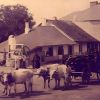
The new artery carved its way through the old neighborhoods of the city, cutting through the traditional urban fabric and imposing a new perspective on space. Near today’s Spain Square, the boulevard crossed the gardens of the famous bookseller Ioanid.
His story adds a picturesque note to the history of the place: in 1872, when the bookshop business was no longer bringing the desired profit, Ioanid decided to cultivate vegetables and fruits in his garden on Polonă Street. His products were highly sought after around Easter, Saint George’s Day and May 1st, periods when Bucharest residents used to organize festive meals and outings in the open air.
The transformation of these gardens into an elegant boulevard is symbolic of the city’s evolution: from periphery with orchards and agricultural land to a central artery, flanked by imposing villas and prestigious institutions. Dacia Boulevard thus became the expression of a new urban vision, in which modernity and tradition coexisted harmoniously.
An artery with two worlds: the splendor of the high society and the area of craftsmen
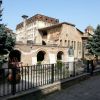
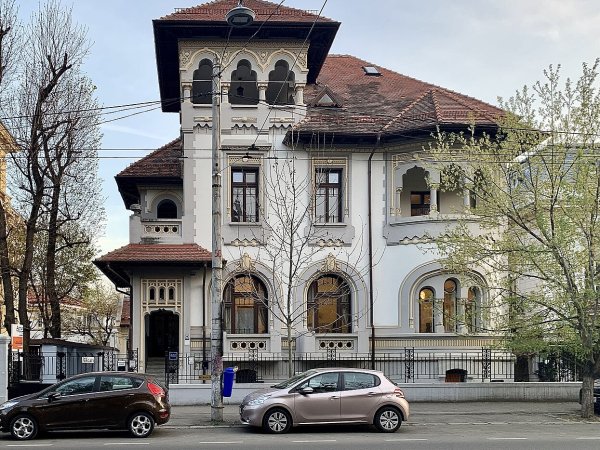
One of the particularities of Dacia Boulevard was its division into two distinct segments from a social and architectural point of view. The first section, the one closest to the city center, was dominated by luxurious residences, built in the Neo-Romanian style, with Byzantine influences. Here lived the Bucharest high society – political elites, renowned doctors, university professors and men of culture.
The façades of these villas still impress today through elaborate details: trilobed arches, massive columns, decorative belts and windows framed with motifs inspired by Brâncovenesc architecture. The Neo-Romanian style, strongly affirmed at the beginning of the 20th century, had become a declaration of national identity, and Dacia Boulevard was one of its most spectacular showcases.
In contrast, the segment towards Traian Street had a more modest character. Craftsmen and merchants lived here, and the houses were simpler, with functional architecture. This difference reflected the social structure of old Bucharest, where distinctions of status were visible even in the urban landscape.
The route of the boulevard starts from Griviței Road, crosses Victory Avenue and reaches Roman Square – a place where, formerly, the Popa Cosma suburb was located. It then continues towards Dorobanți Road, intersects important streets such as Polonă and Icoanei, and stops in Moșilor Road. This trajectory turns it into an axis that connects historical and cultural areas of prime importance of the Capital.
Institutions and monuments that give identity to the boulevard
On Dacia Boulevard there are numerous heritage buildings, included in the architectural ensemble “Dacia Blvd.” (19th–20th centuries). Among them are the Cihoski House, the villa of Dr. Petre Herescu – considered the founder of the Romanian school of renal surgery – and the Aurel Mincu Villa, a remarkable example of Neo-Romanian style with Byzantine influences.
An essential landmark of the boulevard is Colegiul Național Cantemir Vodă, an institution founded in 1868 and declared a historical monument. Over time, personalities such as the mathematician Dan Barbilian (known in literature as Ion Barbu), the historian Constantin Giurescu or the geographer Simion Mehedinți taught here. Among the former students are renowned names such as George Călinescu, Mircea Cărtărescu, Ștefan Luchian or the director Lucian Pintilie.
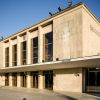
Here we also find Muzeul C.I. și C.C. Nottara, dedicated to the Nottara family, and the “Elvira Popescu” Cinema Hall within the Institutul Francez din București, inaugurated in 1974. The cinema bears the name of the famous Franco-Romanian actress Elvire Popesco, who enjoyed resounding success in France, especially in the years 1930–1940, when she played in numerous French comedies.
Along the boulevard we also encounter Ion C. Brătianu Park, the “Virgil Madgearu” Economic College, Spain Square, Gemeni Square and the Licurici Kindergarten. Each of these landmarks contributes to the complex identity of the area, where cultural life, education and residential space intertwine harmoniously.
Dacia, a synthesis of Bucharest’s urban history
Dacia Boulevard is not only a traffic artery, but a living chronicle of the transformations through which Bucharest has passed in the last century and a half. From Ioanid’s gardens and the Popa Cosma suburb, to the sumptuous villas of the high society and the prestigious institutions, each stage has left a visible imprint.
Today, a walk along this boulevard offers a lesson in urban history. The restored façades, the architectural details and the cultural institutions recall the ambition of a generation that wished to build a European city, anchored in tradition but open to modernity. In a Bucharest in continuous change, Dacia remains an emblematic artery, a symbol of elegance and collective memory.
Through its architecture, through the people who lived and studied here, but also through its urbanistic role, Dacia Boulevard preserves its status as a famous name of the Capital – an artery that tells the story of the most beautiful villas of the Bucharest high society and of a city at the crossroads between tradition and modernity.
We also recommend: Famous boulevard names: Constantin Brâncoveanu, the Prince of Gold, the ruler beheaded for his faith