Bucharest’s Historic Hospitals: Architecture, Philanthropists, and Stories of Life and Death Behind Their Walls
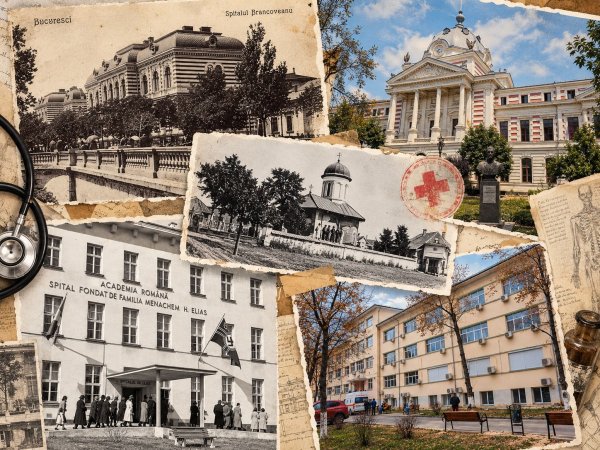
By Eddie Țone
- Articles
- 24 OCT 26
Bucharest tells its history through palaces, churches, and houses with wrought-iron balconies. Yet there is another map of the city, far less visible and probably far more human. It features hospital wards with high ceilings, tree-lined courtyards, pharmacies, lecture halls, isolation pavilions, and corridors where all the things a city usually prefers to keep separate have come together: illness and hope, wealth and poverty, science and superstition, birth and death.
The capital’s old hospitals offer a surprisingly revealing account of Bucharest’s development. They first appeared thanks to noblemen and rulers who devoted part of their fortunes to charitable works. The 19th century brought doctors trained in Vienna and Paris, hospital pavilions designed according to modern sanitary principles, and the first serious medical schools. The following century introduced laboratories, reinforced concrete, and air-conditioning systems. Then wars and the communist regime changed the rules once again.
Some of these buildings still exist. Others survive only in archival photographs. Taken together, they tell one of Bucharest’s most fascinating stories.
Colțea, Where Bucharest Invented Its Modern Hospital
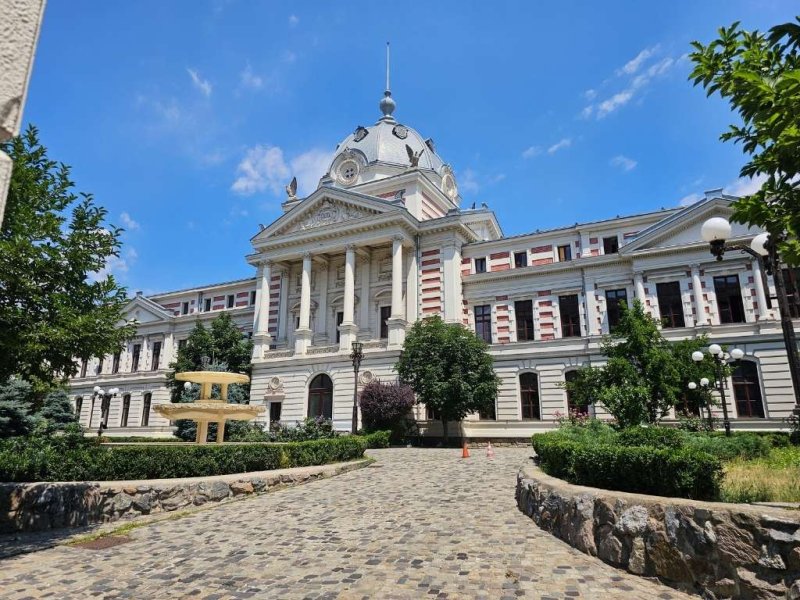 Colțea Hospital
In the city center, in a place where traffic along I.C. Brătianu Boulevard generates enough stress to justify a medical consultation, stands the institution that effectively marked the beginning of Bucharest’s hospital history.
Mihai Cantacuzino, a high-ranking nobleman holding the title of spătar, purchased the land occupied by an old church associated with Colțea Doicescu and began building a large religious and social complex in the 1690s. The hospital opened in 1704, organized along the lines of the Venetian Ospedale di San Lazzaro e Mendicanti. Its first two wards contained 12 beds each, one for men and the other for women. The complex also included a pharmacy, accommodation for a surgeon, and facilities for education.
For early 18th-century Bucharest, the idea was remarkable. Medical care was beginning to acquire a dedicated space, organized according to established rules and financially supported by a system of foundations and property holdings. The hospital was becoming an urban institution.
The complex also had a famous landmark. Colțea Tower, built in the early 18th century, rose more than 40 meters above the city, dominating a skyline then composed mainly of church spires and low rooftops. The tower disappeared in 1888, during the major urban transformations of the city center.
The hospital building underwent repeated renovations and reconstructions. The present monumental structure dates from a major late-19th-century project associated with architect Josef Schiffeleers. Its architecture reflects the ambitions of an era when medicine had become a prestigious public institution and hospitals were expected to have façades comparable to those of important administrative buildings.
Colțea also played an enormous role in medical education. The National School of Medicine and Pharmacy operated within the complex, and the development of Bucharest’s Faculty of Medicine was directly intertwined with the hospital’s existence. It was also here, in 1876, that the Romanian Red Cross Society began its activities.
In other words, this single location brings together the beginnings of Bucharest’s hospital system, modern medical education, and the Romanian Red Cross.
Pantelimon, the Hospital Built on the Outskirts for Serious Illnesses
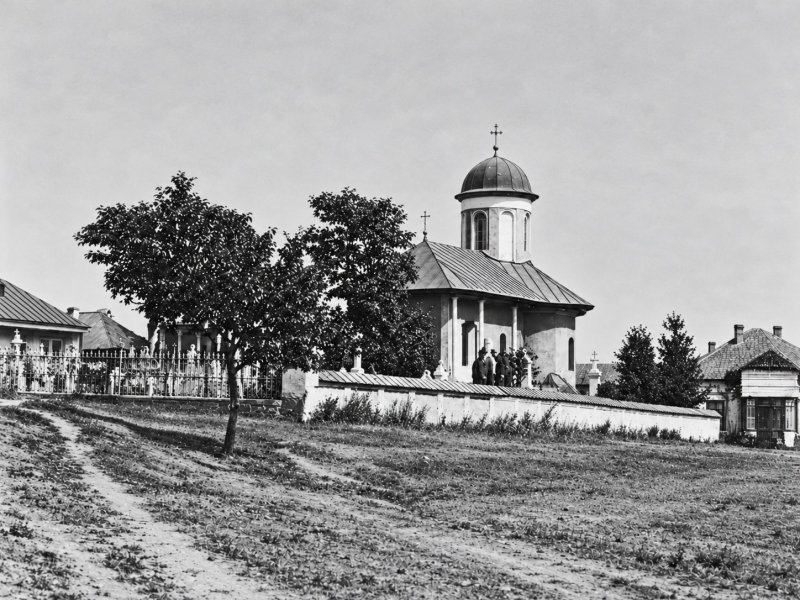 Saint Pantelimon Monastery and the former hospital complex, around 1900. / Photo restoration with the help of AI
The second major chapter begins in eastern Bucharest, near the Colentina River. In the 1730s, Prince Grigore II Ghica initiated the construction of the Saint Pantelimon Monastery and Hospital complex. Work continued after his return to the throne and was completed around 1750–1752. The hospital initially had 12 beds, with its capacity increasing later.
Its location away from the densely built city center also made sense from a public health perspective. Institutions intended for patients with contagious diseases or chronic illnesses were placed on the outskirts, where isolation was easier to organize.
Dr. Constantin Caracaș, one of the most remarkable figures in Bucharest medicine during the early 19th century, also worked at Pantelimon. His description of the old building reads almost like a modern public health inspection report: high walls, low ceilings, and poor ventilation. Caracaș would die of the plague in 1828, after spending years caring for the sick.
At Pantelimon Hospital, medicine suddenly takes on a human face, one marked by self-sacrifice. Epidemics periodically swept through Bucharest, and doctors physically entered their midst. Masks, protective suits, and intensive care belonged to other eras. In Caracaș’s time, medical practice was defined above all by direct contact between doctor and patient.
The old Pantelimon foundation later supported the development of other medical institutions, including Colentina Hospital. The original complex suffered extensive destruction under the communist regime, following damage caused by the 1977 earthquake. Some of its buildings were later incorporated into the complex developed in the area.
Filantropia and the Doctor Who Convinced Bucharest to Pay for the Care of the Poor
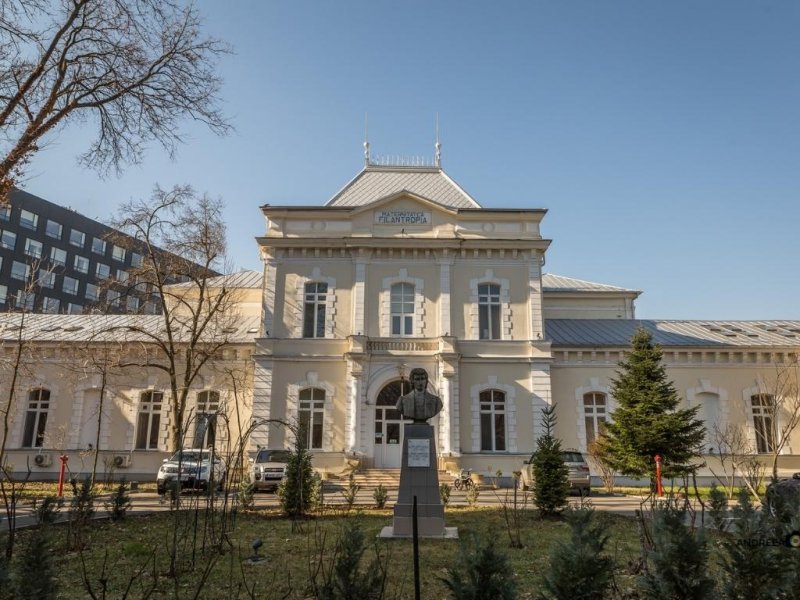 Filantropia Hospital
Constantin Caracaș reappears a few decades later in a story that bears a striking resemblance to a modern crowdfunding campaign.
As the city’s physician, he proposed launching a public subscription to finance the construction of a hospital for patients who lacked financial means. Grigore Băleanu, a high-ranking nobleman holding the title of Grand Logothete, donated money, building materials, and land near the Mavrogheni Fountain. Contributors included members of prominent aristocratic families, while Russian General Mikhail Kutuzov also appears among the donors. Construction began in 1813, during the reign of Ioan Gheorghe Caragea.
The name says almost everything: Filantropia means “love of humanity.”
The institution admitted patients regardless of their origin, religion, or social status and provided free treatment. In early 19th-century Bucharest, this was a revolutionary principle. The hospital was becoming a social service, anticipating the modern concept of public access to healthcare.
Filantropia later specialized in obstetrics. Between 1881 and 1883, a new maternity building with 120 beds was constructed. It also housed the School of Midwives, and the hospital became one of the key institutions in the development of Romanian obstetrics.
Professor Ștefan Capsa introduced clinical observation records and medical statistics into obstetric practice, while Dumitru Drăghiescu developed aseptic and antiseptic procedures, reducing the impact of puerperal infections. These technical terms conceal an enormous change. In a 19th-century maternity ward, an infection following childbirth could turn a happy event into tragedy within days. Medical hygiene and antiseptic practices radically transformed those prospects.
Filantropia’s historic buildings have survived and been integrated into the modern hospital. Bucharest preserves something relatively rare here: the continuity of medical activity within a complex more than two centuries old.
Brâncovenesc, the Hospital Built by a Woman Who Turned Her Fortune into a Public Institution
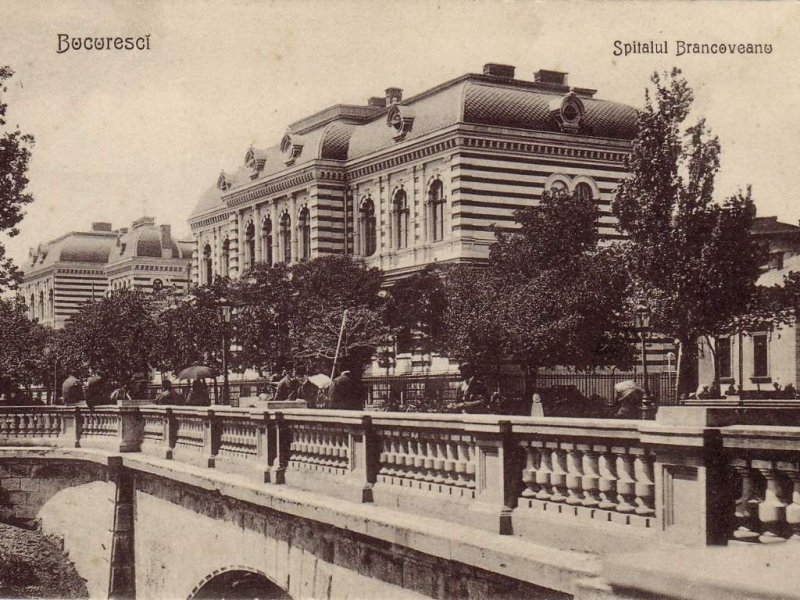 Brancovenesc Hospital, at the end of the 19th century
Few Bucharest stories are as dramatic as that of Brâncovenesc Hospital. Safta Brâncoveanu, wife of the nobleman Grigore Basarab Brâncoveanu, put into practice her plan to establish a hospital intended primarily for the poor. The building was completed in 1837 and inaugurated on October 14, 1838. Initially, it had 60 beds distributed across six wards. An extension in 1842 added another 40.
The hospital formed part of the Brâncovenesc charitable complex near Domnița Bălașa Church. Safta Brâncoveanu thus continued a family tradition in which private wealth was put to public use through religious, educational, and medical foundations.
A fire severely damaged the hospital in 1879, and its reconstruction toward the end of the 19th century changed its appearance. In 1904, reinforced-concrete floor structures were introduced, at a time when this technology was still in an early stage of adoption in Romania. The hospital consequently became significant for both medical history and the history of construction.
The building’s fate came to a brutal end. In March 1984, amid the redevelopment of central Bucharest and the construction of the new Civic Center, Brâncovenesc Hospital was demolished. Its staff and medical activities were transferred to other institutions. All that remained of the great complex in the city’s collective memory were photographs, documents, and a few salvaged fragments.
The urban-planning irony remains bitter. An institution founded through a philanthropic bequest and expanded over almost a century and a half disappeared in a matter of weeks.
Colentina, the Hospital Whose First Building Was So Badly Constructed That It Had to Be Rebuilt
 Colentina Hospital
In 1858, Prince Scarlat Ghica decided to build a new hospital on an 8.73-hectare plot donated by Prince Grigore Ghica. The institution was initially named “New Pantelimon,” symbolically linking the project to the Ghica family’s older medical foundation.
The first construction attempt, however, produced an episode that is rather amusing, at least from the comfortable distance of a century and a half. Work began according to plans drawn up by architect M. Hartl, but an inspection committee examining the project in 1861 identified serious problems with workmanship and material quality. The solution was radical: demolish the work already completed and start the project again.
It may offer some consolation to know that Bucharest was already struggling with controversies over the quality of public construction in 1861. Some urban traditions have a remarkable ability to survive.
Construction resumed in 1862, and the first pavilion was completed at the end of the following year. The hospital was inaugurated on January 24, 1864, in the presence of Alexandru Ioan Cuza, on the anniversary of the Union of the Romanian Principalities.
The pavilion-based design also had medical advantages. Separating the buildings reduced the risk of infections spreading and allowed different specialties to occupy distinct spaces. Important medical schools subsequently developed here, including those specializing in neurology, surgery, and infectious diseases.
Elias, or When Philanthropy Entered the 20th Century and Discovered Air Conditioning
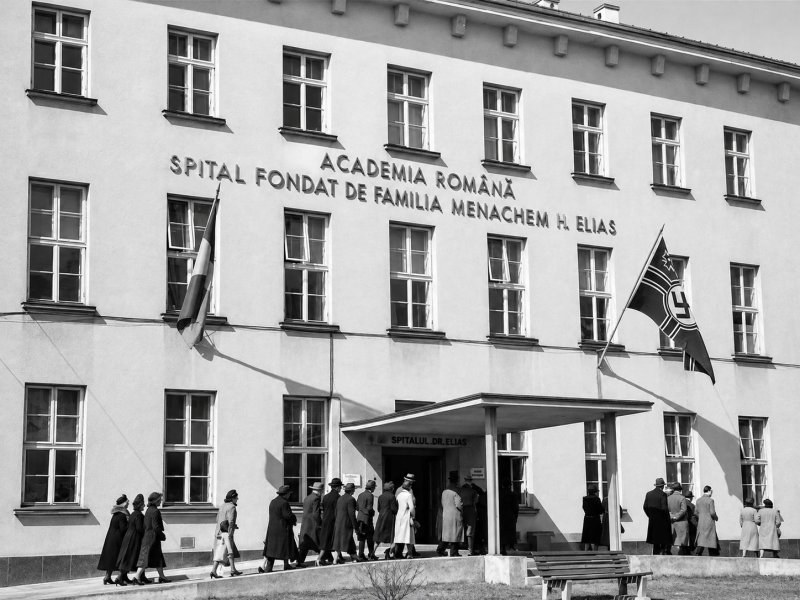 Elias Hospital, in the Luftwaffe ownership period
The story of Jacques Menachem Elias seems almost designed to demonstrate how profoundly a single will can change a city.
Elias, a prominent Bucharest businessman of Sephardic Jewish origin, designated the Romanian Academy as the sole beneficiary of his estate. His 1914 will provided for the establishment of a foundation that would finance educational and healthcare projects, including the construction of a hospital in Bucharest with at least one hundred beds. Elias died in 1923, and the Menachem H. Elias Family Foundation was established in 1925.
Construction of the hospital began in 1934. The project was designed by architect Radu Dudescu, with engineer Emil Prager participating in its construction. On November 15, 1938, the institution officially opened in the presence of the future King Michael I and Queen Helen.
Its facilities show how rapidly medicine had changed in just a hundred years. The hospital had specialized laboratories, physiotherapy and hydrotherapy equipment, and patient rooms equipped with call systems and air-treatment installations. Some wards even had radios.
The comparison with Colțea’s beginnings is striking. Around 1700, the great innovation was having 24 beds in a hospital organized according to a Western European model. By 1938, a patient could be admitted to a room with controlled ventilation and an electrical system for summoning staff.
Political history soon came knocking. Between 1941 and 1944, the hospital was requisitioned by the Romanian General Staff and made available to the German Aeronautical Mission. In 1944, it was taken over by a Soviet medical unit, and after 1948 it became part of the Ministry of Health’s hospital network. Since 2002, it has once again operated under the administration of the Romanian Academy.
Caritas, the Hospital for the Poor That Disappeared from Bucharest’s Medical Map
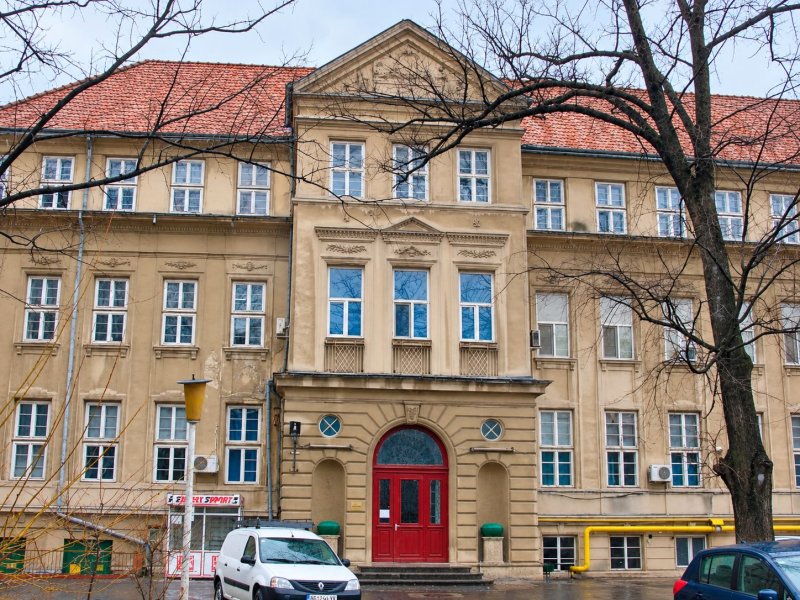 Caritas Hospital, before the demolition
In the Dudești–Traian area, where old Bucharest was home to one of the city’s largest Jewish communities, a medical institution emerged toward the end of the 19th century with a history almost as extensive as that of the neighborhood itself.
The origins of Caritas Hospital are closely linked to Bucharest’s Jewish community. Around 1880, a charitable institution for women and children from impoverished families operated here, and from 1891 its activities expanded to include an outpatient clinic. During the First World War, between 1916 and 1918, the complex served as a military hospital. A new maternity building was inaugurated in 1933, and the complex continued to expand with facilities for internal medicine and surgery.
Caritas also tells the story of a Bucharest world that has almost vanished. The hospital belonged to a network of social institutions established and supported by the Jewish community, in a neighborhood where schools, synagogues, shops, and charitable organizations formed a remarkably well-structured urban system.
Following nationalization in 1948, the hospital became a public institution and subsequently a teaching hospital. Beginning in the 1950s, it housed departments headed by major figures in Romanian medicine. Professor C.C. Iliescu organized the internal medicine department, surgery became associated with Professor Ion Juvara, and tuberculosis medicine with Maximilian Popper, the physician whose name is now borne by a street immediately beside the former hospital.
Caritas became particularly well known for its maternity services. Over the decades, it housed obstetrics, gynecology, and neonatology departments, and entire generations of Bucharest residents were born within the complex. Doctors who worked there remember it as one of the capital’s major hospitals, with important cardiology, intensive care, and university-affiliated medical services.
Its end came in a far less spectacular fashion than its beginning. Part of the property was returned to its former owners after 2005, and legal issues concerning ownership of the buildings complicated the hospital’s operations. In 2011, the authorities decided to close the Caritas – Academician Nicolae Cajal Clinical Hospital as part of a nationwide program to reorganize several healthcare facilities. Government Decision No. 776/2011 formally marked its disappearance from the hospital network.
A substantial part of the complex subsequently fell into disrepair. In 2013, City Hall documents described four buildings constructed between 1933 and 1940 as being in an advanced state of deterioration. These included laboratories, the morgue and workshops, the archive, and an auxiliary building. The General Council approved their removal from public property records for demolition, and the work was carried out in 2014.
The main building was preserved, making the Caritas story even stranger. The hospital disappeared as an institution, several buildings physically vanished, and the surviving fragments remain in an area that had itself experienced the massive demolitions of 1980s Bucharest.
The Philanthropists Who Unknowingly Drew the Capital’s Medical Map
Taken together, Bucharest’s historic hospitals tell a story that extends far beyond medicine.
Mihai Cantacuzino, Grigore Ghica, Safta Brâncoveanu, Constantin Caracaș, and Jacques Elias belonged to entirely different eras. Yet each used wealth, social standing, or professional prestige to establish institutions intended to continue operating long after their founders were gone.
The philanthropic model played an enormous role in the city’s medical development. Before the modern state built an extensive public healthcare system, hospitals often emerged through donations and charitable foundations, subsequently supported by estates, regular income, or public subscriptions.
Architecture followed the same evolution. Colțea began within the framework of a monastic complex. Filantropia marked the emergence of the modern civilian hospital. Brâncovenesc acquired the monumental character of a 19th-century urban institution. Colentina developed the pavilion-based model. Elias had already entered the age of the technologically advanced hospital.
Behind all these transformations, however, stood the patients, the people whose presence is hardest to find in archival photographs. The women who gave birth at Filantropia before antiseptic practices were introduced. The plague victims cared for by Constantin Caracaș. The poor patients for whom Safta Brâncoveanu financed hospital beds at Brâncovenesc. The wounded and the doctors trained at Colțea. Lives that passed through buildings which, in the meantime, have become historic monuments.
That is why Bucharest’s medical heritage deserves to be considered as something more than a chapter in architectural history. Buildings tell us what the city looked like, while hospitals reveal how the city treated its people, offering a far more precise account of urban history.
You may also like: Ioan Cantacuzino, the hospital and the legacy. The story of the microbiologist who founded the Romanian school of immunology