Why Do Bucharest Metro Stations Look So Different? Three Stories Few Passengers Know
- Articles
- 20 OCT 26
In some Bucharest metro stations, rows of columns interrupt the view along the platform. In others, the space opens up beneath an enormous vaulted ceiling. There is even a station where passengers walk across fossils millions of years old without realising it. And beneath one of the busiest areas of the Romanian capital lies a station with platforms so narrow that it seems to have been built according to entirely different rules.
Bucharest's metro network was not designed all at once. The first stations opened in 1979, and the system expanded gradually, using different construction technologies and reflecting changing priorities. Some unusual features resulted from engineering challenges, others from choices of materials or even political decisions.
Titan: The Metro Station That Feels Like an Enormous Hall
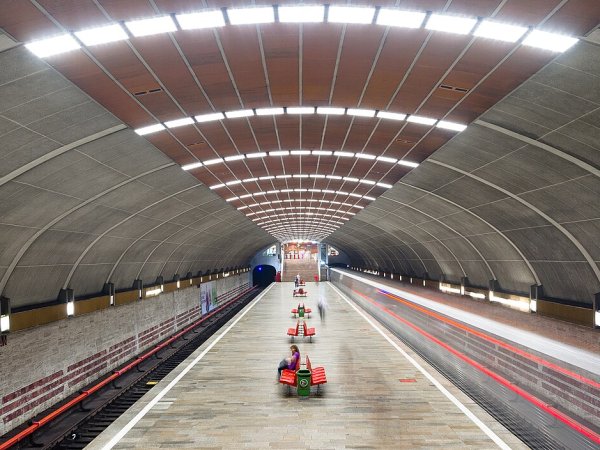
Anyone stepping off a train at Titan immediately notices something unusual: the columns that divide the platforms in many other stations are missing. Instead, a vast vaulted ceiling stretches across the entire space, creating the impression of an enormous underground hall.
Opened in 1981, the station's distinctive shape was not chosen purely for aesthetic reasons. Its construction involved significant engineering challenges, including work in water-saturated ground. Engineers used ground-freezing technology, a method that temporarily stabilises the soil to make excavation possible.
The result is one of Bucharest's most recognisable metro stations. Its history is closely connected to the development of the surrounding neighbourhood, as explored in the article The History of Titan: Where the Name Balta Albă Comes From, How IOR Park Appeared and Why the Metro Transformed the Neighbourhood.
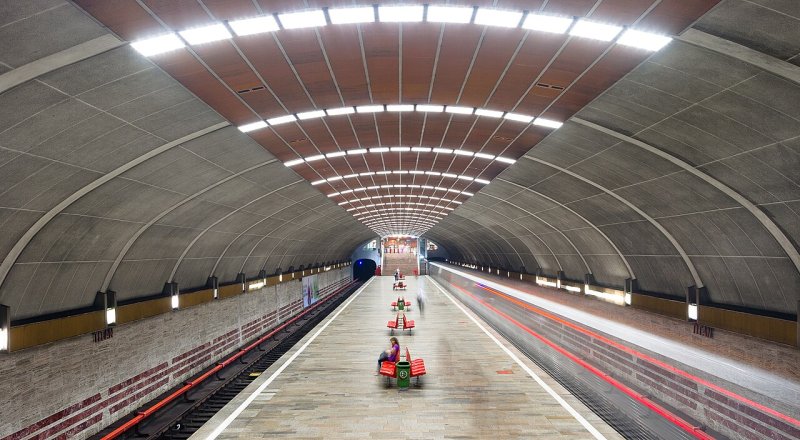 Photo Mihai Petre / Wikipedia
Politehnica: The Station Where the Floor Is More Interesting Than the Walls
At Politehnica, the most remarkable feature is not above passengers' heads, but beneath their feet.
The station, inaugurated in 1983, has a limestone floor containing visible marine fossils. These organisms were preserved in stone millions of years before Bucharest existed, and today they form part of one of the capital's most unusual public transport spaces.
You do not need to visit a museum or buy a special ticket to see them. All you have to do is look carefully at the floor instead of focusing entirely on the screen announcing the next train.
The story behind these fossils is explored in the article The Petrified Ocean at Politehnica Metro Station: Bucharest Residents Walk Over Fossils Millions of Years Old Every Day.
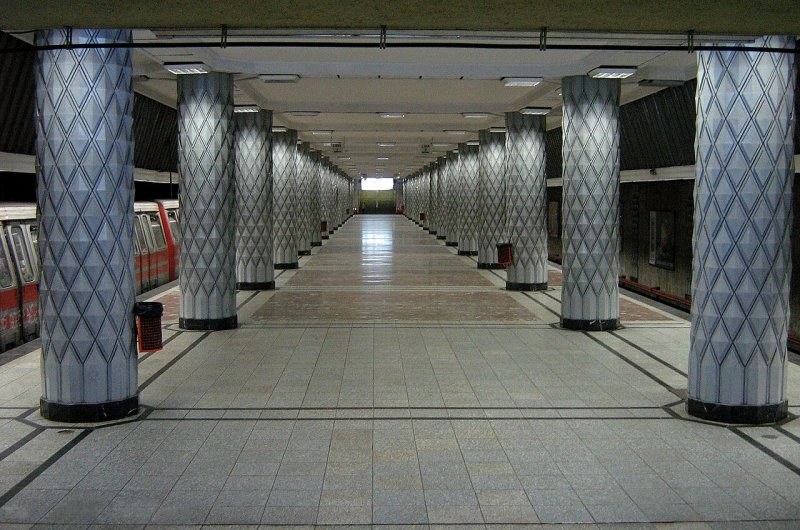 Photo: De la Gabriel / Wikipedia
Piața Romană: The Metro Station That Almost Never Existed
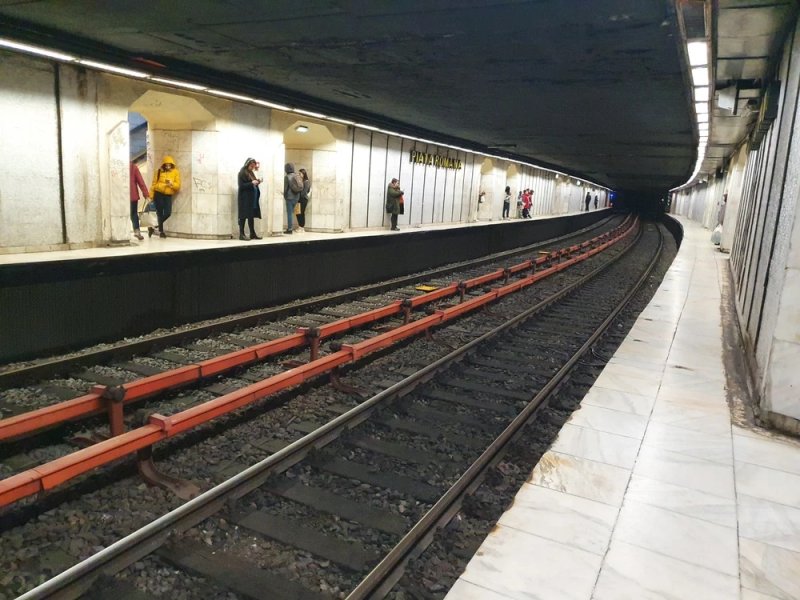
If Titan feels unusually spacious, Piața Romană creates exactly the opposite impression. Its platforms are exceptionally narrow, and the station has a layout unlike most other stops on Line M2.
The explanation lies in the history of Bucharest's metro construction. The section between Piața Unirii and Pipera opened in 1987, but Piața Romană station did not begin operating until 1988.
According to accounts from specialists involved in the project, the station had been removed from the official plans following intervention by the political leadership. However, the designers reportedly preserved the possibility of building it later.
This is also where the frequently repeated story about Elena Ceaușescu comes from. According to the account, she opposed the station because she believed students should walk more. Although widely associated with Piața Romană, this explanation comes from recollections of the period rather than a confirmed official planning document.
What is certain is that Piața Romană opened after the rest of its section, and its narrow platforms remain one of the most distinctive features of Bucharest's underground network.
Why Older Metro Stations Look So Different from Newer Ones
Beyond these three examples, the differences between Bucharest's metro stations also reflect the periods in which they were built.
The earliest sections, opened from 1979 onwards, were designed to transport large numbers of passengers efficiently through a city undergoing rapid industrial development. Durable materials, structural columns and relatively simple geometric forms became characteristic of many stations from that era.
By contrast, Line M5, which opened in 2020, reflects a different approach. Its stations feature more uniform finishes, integrated lighting and greater attention to accessibility and passenger navigation. These differences are not simply aesthetic; they also reflect advances in construction technology and changing design requirements.
The evolution of the network is explored further in the article Bucharest Metro: The City's Underground Story.
When we are in a hurry, metro stations are simply places where we wait for trains. But Titan, Politehnica and Piața Romană reveal an underground history of architecture, engineering and decisions that shaped the Romanian capital.
Sometimes, discovering something new about Bucharest does not require visiting somewhere unfamiliar. All it takes is looking more closely at a station you have passed through hundreds of times.