Driving in Bucharest 100 Years Ago: A 10 km/h Speed Limit, Mandatory Horns and Sealed Wheels for Breaking the Rules
- Articles
- 21 OCT 26
In today's Bucharest, where drivers can spend tens of minutes travelling just a few kilometres, it is difficult to imagine a time when the authorities were mainly concerned about cars moving too fast. At the beginning of the 20th century, when automobiles were still a rarity on the capital's streets, traffic regulations imposed a maximum speed of just 10 km/h, while motorists were required to announce their approach with audible signals. Those who broke the rules faced penalties that seem extraordinary today, including having their cars taken off the road and their wheels officially sealed.
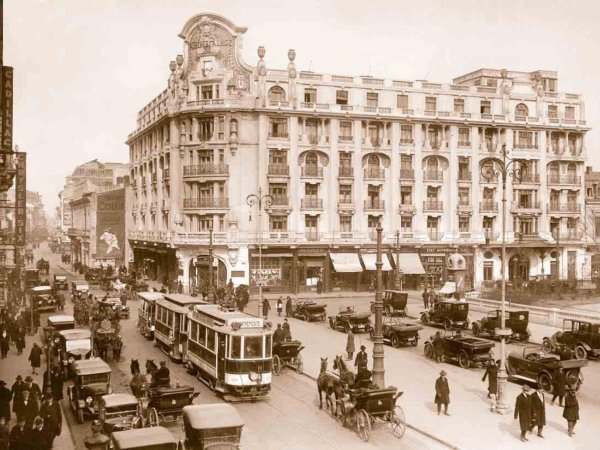
These details appear in a historical regulation reproduced by historian Aurel Duțu in a study published in 1969 in București – Materiale de Istorie și Muzeografie. The document offers a glimpse into a period when the city authorities were trying to accommodate automobiles in a Bucharest still dominated by horse-drawn carriages, carts, trams and pedestrians, each moving at a very different pace.
When 10 km/h Was the Maximum Speed Allowed in Bucharest
One of the most striking provisions concerned speed. Under the historical regulation, automobiles were not allowed to exceed 10 km/h within the city or on the road leading towards the racecourse. To make the limit easier to understand, the document compared it to the ordinary trotting speed of a horse, a familiar reference for Bucharest residents at the time.
The restriction may seem extraordinarily low today, when Romania's general urban speed limit is 50 km/h, although different limits can apply on particular roads. Yet Bucharest's streets were not designed for modern motor traffic, and automobiles had to share them with horse-drawn vehicles in a city where the rules of priority, signalling and traffic management were only beginning to develop.
The arrival of the automobile did more than change how people travelled. It also introduced risks for which the city had few established solutions. The story of Romania's first recorded car accident, which took place in Bucharest in 1901, illustrates the difficulties of introducing motor vehicles into a capital accustomed to a very different kind of traffic.
Drivers Had to Sound Their Horns When Approaching Intersections
While unnecessary honking is prohibited under today's traffic regulations, audible warnings were once part of a driver's obligations. The historical regulation required motorists to sound their horns when entering a street or approaching an intersection, giving other road users time to react to the approaching automobile.
The requirement made practical sense in a city where traffic was not yet controlled by the traffic lights and road signs familiar to modern drivers. Pedestrians, carriage drivers and people transporting goods by cart all had to adjust to vehicles that moved and operated differently from the traditional means of transport.
Bucharest's first electric traffic light would not appear until the interwar period, and the history of the capital's first traffic light and its early traffic conditions reveals just how dramatically the organisation of intersections has changed.
Today, the use of audible warning devices is regulated and restricted to legally permitted situations, rather than being a routine way of announcing a vehicle's presence at every intersection. In other words, behaviour that was once compulsory could now constitute a traffic offence if there were no legitimate reason to sound the horn.
What Happened to Drivers Who Broke the Rules: Sealed Wheels and Months Without Their Cars
The penalties described in the historical regulation were just as remarkable as the driving rules themselves. Exceeding the speed limit could result in a car being taken out of circulation for two months, while a repeated offence could extend that period to six months. To ensure the restriction was respected, the authorities could even seal the vehicle's wheels, effectively preventing its owner from using it.
Other requirements were taken seriously as well. Failure to comply with the rules concerning vehicle identification or audible warnings could lead to temporary driving bans, with more severe penalties for repeated violations.
Romania's modern traffic enforcement system works differently, using fines, penalty points, driving licence suspensions and, in certain legally defined circumstances, vehicle immobilisation. Although the authorities can still prevent a vehicle from being used in specific situations, sealing its wheels for months as a punishment for speeding belongs to a very different era.
How Cars Were Identified and What Drivers Had to Do After Dark
The regulation also established requirements for identifying automobiles, which had to display visible registration numbers at both the front and rear. The rear number had to be illuminated after dark, while night-time driving required two lamps, referred to in the historical document as faru, an old Romanian term for headlights.
These provisions reflect how different automotive technology was at the beginning of the 20th century, when lighting and vehicle identification systems had not yet developed into the standardised equipment used today. Without modern technology, the rules were intended to make vehicles visible and ensure they could be identified if an incident occurred.
The introduction of Bucharest's first vehicle registration plates was an important step in organising road traffic, as the authorities needed a reliable way to establish who owned each automobile and who was responsible for its use.
From the First Driving Tests to the Modern Driving Licence
As automobiles gradually became more common on the capital's streets, simply owning a car was no longer enough to justify driving it without restrictions. In 1907, the first provisions concerning the examination of prospective motorists were introduced, with the procedure organised through the Bucharest Police Prefecture.
Another important milestone came in 1913, when the Regulation on Motor Vehicle Traffic was published in Romania's Official Gazette, establishing, among other things, the format of the Romanian driving licence. The document looked very different from the plastic card used today. According to historical information published by Romania's Ministry of Internal Affairs, it was mounted on thin cloth in the national colours and carried a serial number recorded in a register kept by the prefecture.
Organised driver training was also beginning to develop during this period. The establishment of Romania's first driving school in Bucharest in 1910 marked an important step towards making driving a regulated skill rather than an activity reserved for a small number of wealthy automobile owners.
From Cars That Were Too Fast to a City Where Traffic Barely Moves
More than a century after these early regulations, Bucharest has a far more complex road network, complete with traffic lights, signs, road markings, priority rules and traffic monitoring systems. Cars are faster and technologically safer, but their growing numbers and the pressure on urban roads have created problems that the authorities of the early 1900s could scarcely have imagined.
There is a certain irony in this transformation. More than 100 years ago, the authorities were trying to slow down automobiles as they began sharing the streets with horse-drawn carriages and carts. Today, in many parts of the capital, congestion itself prevents drivers from travelling anywhere near the legal speed limit.
From mandatory horn signals and wheels sealed as punishment for speeding to modern driving licences and today's road regulations, the history of traffic in Bucharest reveals just how much the city has changed. What remains remarkably familiar, however, is the underlying challenge: finding rules that allow everyone using the capital's streets to travel safely.