How weddings were celebrated in Belle Époque Bucharest: Between tradition, dowries and the grandeur of wealthy families
- Articles
- 23 OCT 26
At the beginning of the 20th century, Bucharest was a city undergoing a spectacular transformation. The Romanian capital was increasingly adopting Western models, particularly French ones, and the change could be seen in its architecture, fashion, restaurants, entertainment and the way the upper classes spent their leisure time. Weddings were no exception. For wealthy families, marriage was much more than a romantic moment. It was a family and social event in which reputation, wealth, education and the social connections of the two families all mattered. At the same time, religious traditions and Romanian customs continued to play an important role. It should be noted, however, that there was no single type of “Bucharest wedding.” The ceremony of an aristocratic or very wealthy family did not necessarily resemble that of a family of merchants, craftsmen or civil servants. Even more importantly, rural customs should not be confused with those of urban society in the capital. Historical sources show, however, that among Bucharest’s upper classes, marriage took place in a world where tradition and Western influences constantly met.
Marriage began with the family, not with the party
In Bucharest society at the end of the 19th century and the beginning of the 20th century, the choice of a life partner was strongly influenced by the family. For young women from wealthy families, freedom of choice was much more limited than it is today, while reputation, financial circumstances and the social position of the future husband were important considerations.
Social life nevertheless provided numerous opportunities for young people to meet. Balls, soirées, receptions, performances and promenades along Șoseaua Kiseleff were part of the daily life of Bucharest’s elites. Especially during the winter season, the grand houses of the capital became places for social gatherings, and attending such events could contribute to the formation of relationships and, eventually, to bringing two families closer together.
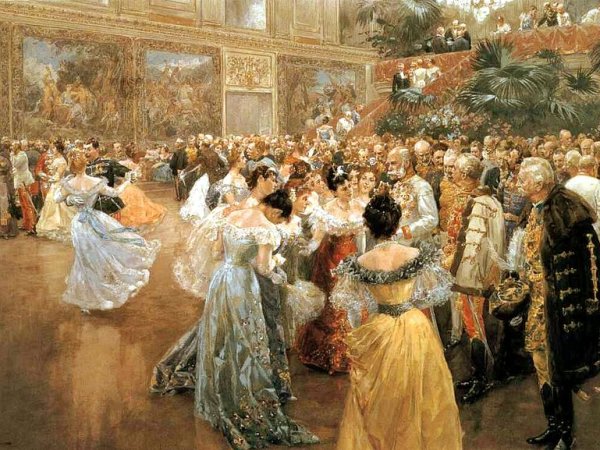
In Belle Époque Bucharest, a ball was more than a simple opportunity for entertainment. The quality of the guests, the elegance of the hosts, the clothing, the music and even the menu all contributed to a family’s prestige. Șuțu Palace, the homes of the Știrbei and Bibescu families, as well as other aristocratic residences, were among the places where important social events took place.
The dowry, an important element of marriage
More than a century ago, love and social status were not the only factors that mattered in a marriage. The dowry was also highly significant, including in urban society.
In rural areas, a dowry could consist of land, animals, textiles, household objects and the traditional dowry chest. In cities, particularly among families with financial means, it could take a different form and include money, furniture, tableware, jewelry or other goods needed to establish a household.
The economic role of the dowry also explains why marriage could be viewed as an alliance between families. For parents, the future son-in-law or daughter-in-law was a serious matter, and financial and social compatibility could carry almost as much weight as the feelings of the two young people.
This reality must also be viewed in the context of women’s status at the time. Romanian society during the Belle Époque continued to define a woman’s position largely through her roles as wife, mother and member of the family, while her social and legal independence was far more limited than it is today.
Balls could become true marriage markets
For young women from respectable families, balls represented some of the most important opportunities for socializing. In aristocratic salons, people danced the waltz, polka, polka mazurka, quadrille and lancers, while parties could continue until the early hours of the morning.
A ball would generally begin around 10 p.m. and could open with a ceremonial quadrille. Around midnight or one in the morning, supper would be served, after which the party continued, with the cotillion sometimes being danced until three or four in the morning.
Under such circumstances, it was natural for young people to have opportunities to observe and get to know one another. However, the degree of freedom was far from what it is at a modern ball. Young women were accompanied and supervised by family members, while mothers could remain close to their daughters even during social gatherings.
Reputation also mattered enormously. In a society where the social world was relatively small, a young woman’s behavior could quickly become the subject of discussion.
The bride’s dress reflected Parisian fashion
Belle Époque Bucharest was strongly influenced by Western fashion, particularly French and Viennese styles. This was especially visible in the clothing worn by wealthy families.
Elegant dresses were long, sophisticated and richly decorated, while lace, silk, velvet, jewelry and refined accessories were part of the wardrobes of women from high society. Toward the end of the 19th century and the beginning of the 20th century, women’s fashion was characterized by tightly fitted waists, voluminous dresses, elaborate hats and numerous accessories.
A bride from a wealthy family could have her wedding outfit commissioned from an important dressmaker, making the gown one of the central elements of the entire event. Unlike today, when bridal fashion has become a highly specialized industry of its own, the bride’s dress at the time was integrated into the general fashion of the elite.
The groom also paid attention to his appearance. Formal attire was essential, while for a military officer, a uniform could be the appropriate choice for the ceremony.
The religious ceremony remained at the heart of the wedding
In a society in which religion continued to play a major role, the religious wedding ceremony was the solemn centerpiece of the marriage. For Orthodox families, the church was the place where the marriage was sanctified before the religious community.
The religious ceremony was connected to the civil formalities required for marriage, while the event was followed by a gathering of family members and guests. The exact scale of the celebration, however, depended greatly on the social status and financial means of those involved.
This is where one of the most important differences from the image of the traditional Romanian wedding emerges. Customs involving processions, wedding banners, numerous rituals and celebrations lasting several days existed throughout Romania, but they should not be presented as a universal model for Bucharest. Sources describing Romanian weddings at the beginning of the 20th century discuss such traditions mainly in the context of traditional and rural communities.
Weddings among the upper classes resembled grand receptions
For wealthy families in Bucharest, the celebration following the ceremony could take on the appearance of a sophisticated social reception. Guests were carefully selected, while the menu, decorations, music and clothing all contributed to the prestige of the event.
Bucharest’s upper classes were already accustomed to such gatherings. Soirées, dinners and balls were an important part of social life, and an important wedding could become one of the highlights of the season.
There were even standards by which the success of a party was judged. In the case of major balls, contemporary sources mention the importance of supper and the objects distributed to guests during the cotillion. At Șuțu Palace, for example, valuable or elegant gifts were handed out, and such details contributed to the hosts’ reputation.
A wedding in Bucharest’s upper society could therefore become a true exercise in social representation. The family demonstrated its status through the venue, the number and prestige of the guests, clothing, music and hospitality.
Carriages, Șoseaua and fashionable Bucharest
The atmosphere in which such events took place was highly cosmopolitan. Bucharest had adopted numerous elements of Western lifestyle, while the upper classes frequented the Opera, restaurants, balls and major social events.
One of the key places for social life was Șoseaua Kiseleff. Taking a promenade along the avenue was a true Bucharest ritual, and wealthy people could be seen in elegant carriages, while other residents watched this display of fashionable society.
The carriage itself had symbolic value. For wealthy families, an elegant carriage and horses could be a visible sign of status, while arriving at an important event became part of the spectacle.
Bucharest was not yet the city of automobiles it would later become. Carriages were still among the most visible markers of wealth, and an important wedding could transform the streets around the church and reception venue into a genuine urban spectacle.
A wedding between two worlds
A wedding in Belle Époque Bucharest should therefore be understood within a city caught between tradition and modernity. On the one hand, family, religion, dowry and reputation remained important. On the other, the elites rapidly adopted Western fashion, music and lifestyle.
In Bucharest’s salons, French was spoken, waltzes and quadrilles were danced, European-inspired dresses were worn, and prominent families competed for prestige through balls and receptions. At the same time, marriage remained an institution in which family interests and social status carried considerable weight.
For this reason, a Belle Époque Bucharest wedding should be imagined neither as a simple replica of traditional Romanian village weddings nor as an event identical to those held in major Western capitals. It was a combination specific to Bucharest around 1900: a ceremony deeply connected to family and religion, complemented by the grandeur, elegance and cosmopolitanism of a capital increasingly determined to resemble Paris.
And for families belonging to high society, the wedding was perhaps more than any other event the moment when love, wealth, reputation and prestige came together in a single public spectacle.
We also recommend: The Code of Good Manners in Belle Epoque Bucharest: gentlemen entered the restaurant first, while ladies went out wearing hats and gloves