The Second Life of Communist Factories: How Bucharesters Transformed Former Industrial Hubs into Cultural Centers and Leisure Spaces
By Raluca Ogaru
- Articles
- 30 JUN 26
If you stroll along Splaiul Unirii or around Gara de Nord, the grey concrete seems like nothing more than the numb memories of an industrial era. For decades, these former communist factories were left to rot or viewed as scrap metal giants just waiting for their inevitable demolition. But the city is breathing a different air now. Bucharesters refused to let history turn into rubble and transformed production halls into living laboratories for culture, design, and socializing.
These massive structures no longer manufacture cotton, stockings, or mechanical components, but they do produce ideas, independent art, and community. Organic urban regeneration has turned peeling walls into the most vibrant meeting points on the capital's map.
Nod Makerspace and the metamorphosis at Timpuri Noi
At Splaiul Unirii 160, the noise of old textile machinery has been replaced by the hum of 3D printers and laser cutters. The former Cotton Factory now houses Nod Makerspace, the first center of its kind in Romania, a massive space dedicated to engineering, design, and creative education. What started as a brave initiative by a group of architects has evolved into a dynamic ecosystem spanning over 2,000 square meters.
Beyond the digital prototyping workshops and individual studios where local startups thrive, the building shelters MATER, the first material library in South-Eastern Europe. And if you just want to feel the energy of the place without building anything, the factory roof holds a surprise. The terrace hosts Deschis Gastrobar, an urban skybar where open-air movie screenings and cultural debates blend perfectly with sunsets over the Dâmbovița River.
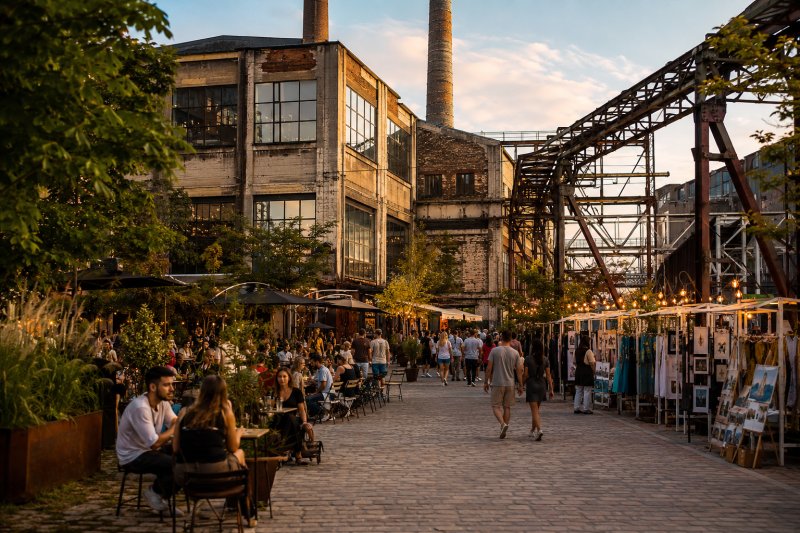
Illustrative image generated with AI.
Malmaison and Combinatul Fondului Plastic redefine independent art
If you want to understand where contemporary Bucharest art truly pulses, you need to shift areas and look for hidden communities. On Calea Plevnei, inside a 19th-century military barrack that was later turned into a garment factory during the communist regime, Atelier Malmaison was born. Visual artists occupied the long corridors, turning austere rooms into painting studios, micro-galleries, and performance spaces. It stands as a pure model of cultural solidarity, surviving through self-funding and sheer passion.
Combinatul Fondului Plastic
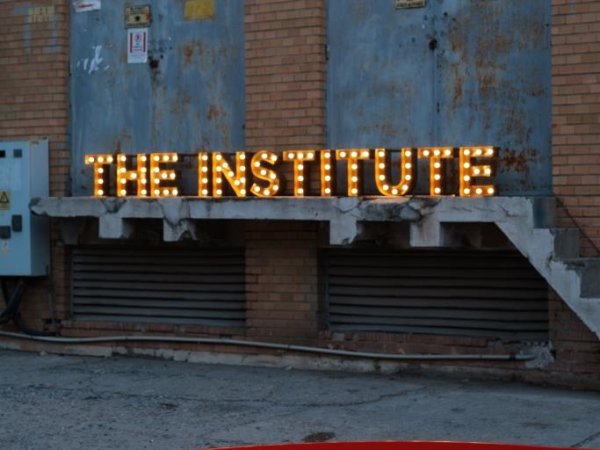
A bit further north, on Băiculești Street, Combinatul Fondului Plastic is another massive example of functional conversion. The space, partly managed by the Romanian Fine Artists' Union, received a fresh lease on life through major projects developed by organizations like The Institute. The halls where metals and industrial ceramics used to be processed now host avant-garde exhibitions, contemporary art galleries like Sandwich, and design events that draw thousands of visitors.
READ ALSO:
The Kandia Chocolate Factory — Romania's Sweet Dream Under Communism
Industrial architecture is no longer a symbol of decline, but a blank canvas for the cultural identity of the new Bucharest. By visiting these spaces, you don't just discover spectacular venues—you directly support the local creators who are rebuilding, brick by brick, the human texture of the city.