Elena Ghica, the history of a legendary woman: from princess of Bucharest to the poet Dora D'Istria and the first woman to climb the Alps
- Articles
- 13 AUG 26
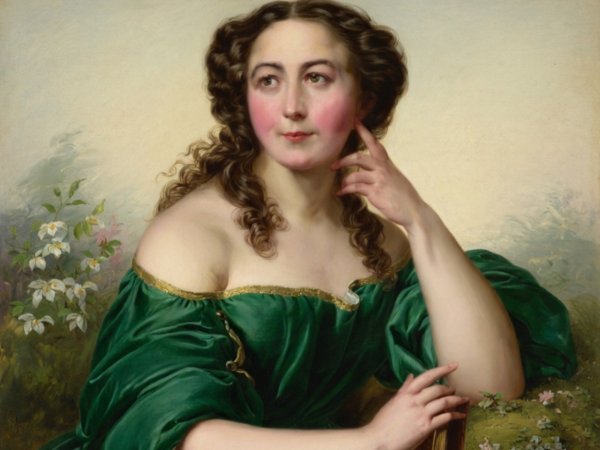
Elena Ghica, known in the literary world under the pseudonym Dora d'Istria, was one of the most fascinating female personalities of the 19th century. A princess of Romanian origin, writer, essayist, painter, traveler, mountaineer, and one of the early voices advocating for women's emancipation, she lived an existence that seems taken from a novel. She grew up in a princely family, received an exceptional European education, knew the great capitals of the continent, married a Russian prince, came into conflict with the authoritarian environment of tsarist Russia, and ultimately chose the intellectual freedom of Western Europe. Born in Bucharest on February 3, 1828, Elena was the daughter of Grand Ban Mihalache Ghica and Caterina Faca and the granddaughter of ruler Grigore IV Ghica. Historical sources sometimes use the date January 22, 1828, corresponding to the Julian calendar then in use, while February 3 represents the date according to the Gregorian calendar. Her life was marked from childhood by an extraordinary thirst for knowledge. She learned numerous foreign languages, including Greek, Latin, French, Italian, English, German, Russian, and Albanian, while her education included literature, music, painting, history, and philosophy. At only 14–15 years old, she worked on translating Homer's “Iliad” into German, an achievement that illustrates the extraordinary intellectual level she had already reached during adolescence.
The child prodigy from the Ghica family
Elena Ghica grew up in an aristocratic environment where education was regarded as an essential component of personal development. Her father, Mihalache Ghica, was an important personality of the period, a collector of antiquities, numismatist, and archaeologist, while her mother, Caterina Faca, was also interested in culture and education. Elena benefited from private tutors and received an education that went far beyond what was usual for a young woman from high society at the time.
Her precocious intelligence quickly became a subject of admiration. According to biographies dedicated to her, during childhood she came to master several foreign languages, and during adolescence she was already venturing into literature and translation. However, she was not interested in only one field. She studied painting and music and became familiar with the culture of the great European centers, becoming a true cosmopolitan intellectual.
In 1842, the Ghica family left Romania for a period, and Elena continued her education in the great European cities. She passed through Vienna, Dresden, Venice, and Berlin, coming into contact with the artistic and academic circles of the time. In Venice she studied painting, and during her youth she had the opportunity to meet important cultural figures and political personalities. This European experience was to definitively shape her worldview.
Painting was not merely a passion for her. In Saint Petersburg, where she settled after her marriage, Elena took part in a landscape competition organized at the Hermitage Museum and received an important distinction. Thus, before becoming famous as a writer, she had already demonstrated her artistic talent.
The marriage to the Russian prince and the departure from Russia
In 1849, Elena Ghica married the Russian officer Alexandr Koltsov-Massalski. The marriage took her to Saint Petersburg, where she entered the world of the Russian aristocracy and continued to study and create. For a while, it seemed that her destiny would be that of a privileged European princess, integrated into imperial society.
However, Elena had a personality that was too independent to easily accept the conventions of the environment in which she had arrived. Her liberal ideas, sympathies toward Western values, and concern for freedom came into conflict with the authoritarian atmosphere of tsarist Russia. During the Crimean War, her favorable attitudes toward France and England intensified tensions with the Russian authorities. Historical sources report that she was subjected to reprisals and that, eventually, the Russian experience led her to leave the country.
Her departure from Russia actually marked the beginning of the most important stage of her life. Elena did not abandon her aristocratic identity, but she refused to allow her social rank to define her existence. In the West, she was to build her own intellectual identity, under the name that would become famous: Dora d'Istria.
Dora d'Istria, the writer who crossed borders
The pseudonym Dora d'Istria became one of the best-known female signatures in 19th-century European literature. Elena wrote mainly in French, but she also published in Italian and Greek, and her work covered extremely diverse subjects. She addressed history, geography, religion, politics, literature, folklore, and the social problems of her time.
Among her works are “La vie monastique dans l'Église orientale,” published in 1855, “La Suisse allemande et l'ascension du Mönch,” devoted to her Swiss experience, as well as works dedicated to the condition of women, the peoples of the Balkans, and Romanian culture. “Des femmes par une femme,” published in 1864, was one of the writings through which she expressed her concern for the situation of women and the need to improve their social status.
Dora d'Istria was not merely a writer concerned with literature in the strict sense. She viewed culture as an instrument of social change. She supported women's education, their intellectual emancipation, and access to a broader public life. At the same time, she was interested in the national movements of the peoples of southeastern Europe and paid particular attention to Romanians, Greeks, and Albanians.
Her studies on popular culture and the identity of Romanians made her known in European intellectual circles. Her work must also be understood in the context of the 19th century, a period when ideas about nation, freedom, and emancipation were transforming Europe. Dora d'Istria found herself at the center of these debates and tried to offer them her own perspective.
The ascent of Mönch and the Romanian flag in the Alps
One of the most spectacular pages in Elena Ghica's biography is connected to her passion for mountains. In Switzerland, the princess decided to climb Mönch, one of the important peaks of the Bernese Alps. At a time when mountaineering was considered an extremely difficult activity and when women's participation in such expeditions was unusual, her plan seemed almost unbelievable.
For the ascent, Elena prepared seriously and relied on experienced guides. The expedition was organized under difficult conditions, and unfavorable weather forced the group to postpone its progress. Eventually, on June 11, 1855, Elena Ghica reached the summit of Mönch, at an altitude of approximately 4,100 meters. She is considered the first Romanian woman to reach this peak and one of the first women to accomplish such Alpine ascents.
The moment also acquired a strong symbolic value. On the summit, Elena raised a flag in the Romanian colors, on which the name of her country was written. For a woman who had lived for years far from Bucharest, the gesture represented a declaration of attachment to her origins.
The experience of the ascent also became a literary subject. Elena transformed the Alpine adventure into a book, “La Suisse allemande et l'ascension du Mönch,” published in 1856. Thus, mountaineering and literature came together in an unusual way in her work.
A woman ahead of her time
Elena Ghica's courage was not manifested only on the mountain. She also had the intellectual courage to support ideas that, in 19th-century society, were far from being universally accepted. She defended women's right to education and to broader participation in society and criticized the limitations imposed upon them by social conventions.
At the same time, she was an indefatigable traveler. She lived in several European countries and came into contact with important personalities from the continent's cultural and political life. Romania nevertheless remained a constant presence in her concerns. Studies dedicated to her work show how important the issue of Romanian identity and the relationships among the peoples of the Balkans were for Dora d'Istria.
During her years in Italy, Florence became the center of her existence. Here she continued her literary and intellectual activity and lived in a villa that would later become associated with her name, Villa d'Istria. Far from Bucharest, she nevertheless remained deeply connected to the country where she had been born.
To whom did Elena Ghica leave her fortune?
Elena Ghica's connection with Bucharest did not end once she left Romania permanently. On the contrary, her will demonstrates that the memory of her family, her native city, and the institutions created by her ancestors continued to be of great importance to her.
In her will, Elena Ghica stipulated that part of her fortune should go to the Bucharest City Hall, with the purpose of contributing to the administration and support of Pantelimon Hospital, an institution connected to the Ghica family. The gesture can be regarded as a form of symbolic return home: the woman who had spent most of her life traveling throughout Europe chose for part of what she had accumulated to be used in the city where she had been born.
Elena Ghica died in Florence on November 17, 1888, at the age of 60. According to her wishes, she was cremated, and her ashes were deposited in the Trespiana cemetery in Florence.
Her destiny remains one of the most unusual in Romanian cultural history. Elena Ghica was, at the same time, a princess and an intellectual, an artist and a writer, a traveler and a mountaineer, a feminist and a researcher of Balkan cultures. She refused to remain a prisoner of her rank and built her own identity through Dora d'Istria.
From the aristocratic salons of Bucharest and Saint Petersburg to the peaks of the Alps and the intellectual circles of Florence, her life was a constant search for freedom. And the flag raised on Mönch in 1855 can be regarded not only as a patriotic gesture, but also as the perfect image of a woman who chose to climb, literally and figuratively, beyond the limits imposed on women in her era.
We also recommend: Great Romanian Dynasties: Four Centuries of Ghica, a Line of Rulers, Princes, and Accomplished Diplomats