Great Romanian Dynasties: Four Centuries of Ghica, a Line of Rulers, Princes, and Accomplished Diplomats
- Articles
- 10 FEB 26
The Ghica family represents one of the most influential dynasties in Romanian history, with a tradition spanning more than four centuries. From modest beginnings, the Ghicas came to shape the history of Moldavia and Wallachia, lead the political and diplomatic destinies of the principalities, and engage in the country’s cultural and social development. In this article, we explore the fascinating history of the Ghica family, its remarkable contributions, and the individual stories of members who marked entire eras.
Gheorghe Ghica – the Beginnings of the Family and Reign in Moldavia and Wallachia
The earliest Ghica in Romanian lands comes from Albania, with roots in the Greek regions, and his name was Gheorghe. Coming from a modest family, he arrived in the Romanian Principalities through trade. During the reign of Vasile Lupu, around 1634, Gheorghe Ghica was brought to court, granted minor boyar titles, and began his rise in social hierarchy. Over time, he became the Great Vornic of Lower Moldavia and was sent as an agent to the permanent representative of Romanian rulers in Constantinople (Capuchehaia). Lupu’s successor, Gheorghe Ștefan, retained him as an agent and gave him his granddaughter as a daughter-in-law.
In 1658, Gheorghe Ghica succeeded his father-in-law on the throne of Moldavia. Although Gheorghe Ștefan tried to reclaim the throne, Ghica defeated him at Strunga. By the end of the year, he was alongside the Turco-Tatar armies, plundering Transylvania. After surviving another attempt at dethronement, the Tatars sent him to rule Wallachia in March 1659. There, by Turkish order, he moved the capital to Bucharest and demolished the residence in Târgoviște.
Ghica survived another attack on his power but did not remain long on the throne. The Vizier Kupruli planned to transform the country into a pashalik, and Ghica could no longer pay tribute. A poor country, famine, plague—what could he do? He was captured, bound, taken to Adrianople, and then moved to Constantinople, where he died in 1664.
Aga Nicu Ghica – the Revolutionary and Visionary of Comănești
Another remarkable member of the Ghica family was Aga Nicu Ghika, close to the revolutionary youth of the mid-19th century. Son of treasurer Dumitrache Ghica, involved in coal extraction in the Comănești area, Aga Nicu was born in 1789 and became a doctor of law. It is said he attempted to obtain rulership in 1848 and founded the “Society of Physicians and Naturalists” in Iași in 1831. Unfortunately, financial difficulties related to the Comănești estate led him to suicide, though the town developed under his family’s stewardship.
Aga Nicu had five children: Dimitrie N., Eugen, Nicolae, Gheorghe (Jorj), and Maria. Dimitrie N. Ghica, born on December 31, 1839, was a doctor of law from the University of Berlin, prefect of Bacău, deputy, and magistrate. In 1895, he led an expedition to Somalia with his son, Nicolae, bringing zoological and botanical trophies to the “Grigore Antipa” Museum in Bucharest, such as Sporobolus ghikeea, Crotolazia comanestianae, and Justitia romaniae.
Eugen Ghica, Dimitrie’s twin, was born on January 1, 1840, and followed a different path, serving as an officer in the Union army during the American Civil War under Abraham Lincoln. In 1869, he was elected member of Parliament for Bacău county, remaining in office until his death in 1913. He married the sister of the King of Serbia.
Nicolae Ghica and International Expeditions
Dimitrie N.’s son, Nicolae Ghica, born in 1857, continued his father’s expeditions, traveling to Morocco, the Sahara, the United States, Canada, and Alaska, making various scientific discoveries. Graduated from Lausanne and Geneva, he was a diplomatic attaché in Paris, governor of the Nation’s Bank, president of the Romanian Forestry Fund, and minister in Marghiloman’s government during World War I.
Tragically, Nicolae committed suicide in 1921, similarly to his grandfather Aga Nicu, due to financial problems and pressures from the National Bank. His wife, Ioana Ghica (born Băleni), was one of the greatest composers of religious music, with works broadcast on the radio until late in World War II. Among her most famous pieces were “Sculați, sculați, boieri mari”, “Sus în poarta Raiului”, and “La bisericuță”.
Dimitrie (Dede) Ghica-Comănești – the Astronomer and Bohemian Aristocrat
One of Ioana and Nicolae’s children was Dimitrie (Dede) Ghica-Comănești, born in 1904. In 1925, he married Valentina Bibescu, daughter of aviator George Valentin Bibescu. Dede dedicated himself to astronomy and, in 1938, published observations about auroral lights in the Romanian sky in the Bulletin Astronomique de la Societé de la France. The couple was arrested by the communists in 1949 and reunited only in 1956, thanks to the interventions of Martha Bibescu.
Dora D’Istria – Writer and Philanthropist
Dora D’Istria, born Elena Ghica, was one of the greatest writers of the 19th century with an impressive destiny. Niece of Grigore IV Ghica and daughter of Ban Dimitrie Ghica, she demonstrated remarkable talents: at ten she spoke nine foreign languages, and by fourteen she had translated Homer’s Iliad.
She was a painter, singer, swimmer, and passionate hunter. During the Crimean War, she was punished by the Russians, but continued her literary and philanthropic activity in Switzerland and France. She was granted honorary citizenship of Athens and died on November 17, 1888.
Pantazi Ghica and His Public and Masonic Activity
Pantazi Ghica, brother of Ion Ghica, was a writer, Freemason, and active participant in the 1848 Revolution. He lived on Cometei Street in Bucharest, one of the city’s most romantic streets. He engaged in literary, political, and Masonic activities, achieving the rank of Grand Mason at the age of 32.
Monsignor Vladimir Ghika – Sacrifice and Devotion
Monsignor Vladimir Ghika (1873-1954), grandson of ruler Grigore Ghica, chose a life of sacrifice, dedicating himself to helping the poor, sick, and abandoned. Converted to Catholicism at 29, with studies in Paris and a doctorate in theology from Rome, he opened the free dispensary “Bethleem Mariae” and the Saint Vincent de Paul hospital.
He participated in medical services during the Balkan War and World War I. Arrested by the communists in 1952, he died in detention in 1954. He was beatified in 2013.
Ion Ghica – Diplomat, Politician, and Revolutionary
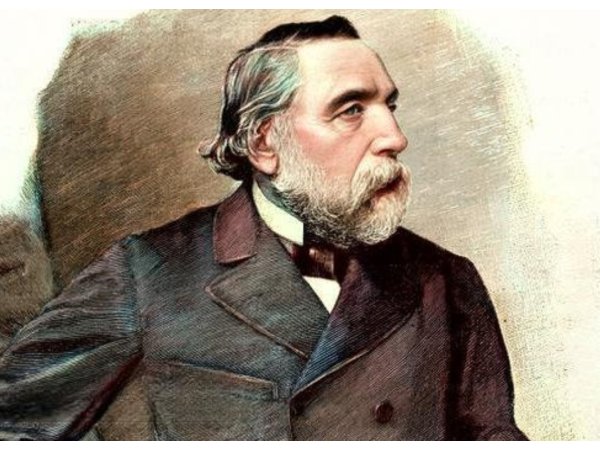
Ion Ghica (1816-1897) was one of the brightest Romanian minds of the 19th century: economist, mathematician, writer, teacher, diplomat, and politician. He served as Prime Minister five times and was a revolutionary in 1848. He studied at Saint Sava College and in Paris, where he befriended Vasile Alecsandri. In 1848, he actively participated in the Bucharest Revolution and drafted a memorandum to the Ottoman Porte advocating Romanian demands.
During the Crimean War, he was appointed governor of Samos Island, fighting pirates in the Aegean Sea. In 1859, on the eve of the Union of the Principalities, he returned to the country, serving as President of the Council of Ministers in Moldavia and Wallachia, contributing to the establishment of Prince Carol’s rule.
The Ghica dynasty represents a symbol of Romanian history, politics, culture, and diplomacy, with members who influenced various domains, from science and literature to music, religion, and politics. From Gheorghe Ghica, vornic and ruler of Moldavia and Wallachia, to revolutionaries, explorers, composers, and diplomats, the Ghica family left an invaluable legacy for Romania and European culture. This family remains an example of dedication, courage, and influence over the centuries, with remarkable life stories and contributions that continue to inspire.
We also recommend: Great Romanian dynasties: the Bibescu family, the Oltenian boyars, controversial ruler, the first aviator and the princess who captivated Marcel Proust