The most beloved of teachers: Aron Pumnul, the mentor of the great Mihai Eminescu, has a street named after him in Bucharest
- Articles
- 11 AUG 26
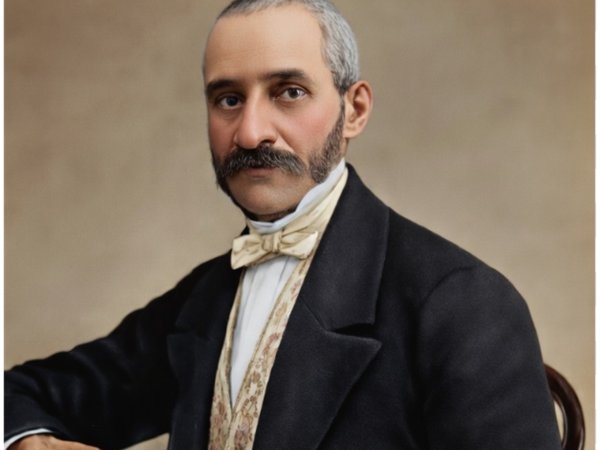
In the history of Romanian culture, there are teachers who have remained in the memory of generations not only through the books they wrote or the ideas they promoted, but above all through the people they shaped. Aron Pumnul was one such teacher. A linguist, philologist, literary historian, teacher and revolutionary of the 1848 generation, he belonged to a generation that understood that education and culture could become essential instruments for affirming national identity. Born into a modest family in Transylvania, Aron Pumnul followed an extraordinary path, from a child who started school late because of a heart condition to a scholar appreciated in Vienna and a teacher who would exert a profound influence on the young Mihai Eminescu. He took part in the 1848 Revolution, experienced exile, fought for the rights of Romanians in Bukovina and laid the foundations for important projects dedicated to Romanian culture. Today, his name can also be found in Bucharest, where a street bears his name, a discreet reminder of the legacy of one of the most important teachers and scholars of 19th-century Romanian culture.
From the sick child in Cuciulata to the brilliant student in Vienna
Aron Pumnul was born on November 27, 1818, in the village of Cuciulata, in Brașov County, into a family of Romanian serfs living under the difficult social conditions of Transylvania at the time. His childhood was marked by a serious health problem, a heart condition, which meant that he did not begin school until he was 14 years old. This delay, however, did not prevent him from catching up quickly and demonstrating remarkable intellectual abilities.
Between 1832 and 1836, he attended school in Odorhei, after which he went to Blaj, one of the great Romanian cultural centers in Transylvania. Here he was taught by figures such as George Barițiu and Simion Bărnuțiu, personalities who would profoundly influence his intellectual development. After his years in Blaj, he continued his studies at the Piarist Lyceum in Cluj, where he was among the classmates of some of the future leaders of the 1848 generation, including Avram Iancu, Alexandru Papiu-Ilarian, Petru Dobra and Iacob Mureșianu.
In 1843, he was appointed professor of philosophy in Blaj, but in the same year he received a scholarship to study in Vienna. He attended theology courses while also studying philosophy, history and philology. In Vienna, he distinguished himself through excellent academic results and became involved in the intellectual and cultural life of Romanian students. He organized a student society known as “Românimea cea tânără” (“Young Romania”), inspired by Enlightenment and national ideas associated with the Transylvanian School.
It was also during his years in Vienna that he began his journalistic activity. In “Foaie pentru minte, inimă și literatură”, George Barițiu’s journal, he published one of his first linguistic studies, dealing with the particular character of the Romanian language and with questions concerning its alphabet and orthography. It was the beginning of a scholarly career that would become one of the defining elements of his life.
Teacher, journalist and activist in the 1848 Revolution
In 1846, after returning from Vienna, Aron Pumnul resumed his teaching activity in Blaj. There he became closely associated with Timotei Cipariu, one of the great scholars of the age and a fundamental figure in the development of Romanian philology. Together they contributed to the publication of important periodicals, including “Organul luminărei”, launched in 1847, and “Învățătorul poporului”, in 1848. Through the press, Pumnul sought to take cultural and national ideas beyond the restricted circle of intellectuals and bring them closer to ordinary people.
The year 1848 would radically change his destiny. Aron Pumnul became actively involved in the Revolution of the Romanians in Transylvania and played an important role in organizing the first major popular assembly in Blaj on April 30, 1848, known as the “Assembly on Thomas Sunday”. It preceded the great National Assembly on the Field of Liberty in May. For Pumnul, the revolution was not merely a political confrontation, but also a struggle for the social, cultural and national rights of Romanians.
After the defeat of the revolution, the Hungarian authorities sentenced him to death. He was forced to flee Transylvania and reached Wallachia, where he also became involved in the revolutionary movement there. Nicolae Bălcescu appointed him propaganda commissioner for Râmnicu Sărat County, but the intervention of Ottoman and Russian troops and the defeat of the Wallachian revolution forced him into exile once again.
His final destination was Bukovina, where he arrived in Chernivtsi. There he would spend the final part of his life and become one of the most important figures in the cultural and national revival movement of the Romanians in the province.
The “apostle of Romanianism” and Mihai Eminescu’s teacher
In Chernivtsi, Aron Pumnul continued his struggle through culture. On February 12, 1849, he became a substitute teacher of Romanian at the theological institute, while also giving free classes at the gymnasium. In 1852, he was appointed permanent teacher, and later, following a competitive examination, he became the first professor of Romanian language and literature at the German-language gymnasium in Chernivtsi.
It was an exceptionally productive period. He resumed his journalistic activity and became editor of the Romanian section of the newspaper “Bucovina”. He obtained permission from the authorities to organize literary lectures in which he spoke about the Latin origins of the Romanian language and people. In 1850, he published “Convorbire între un tată și-ntre fiul lui asupra limbei și literelor românești”, a work reflecting his concerns with the Romanian language and with the way it should be cultivated and passed on to future generations.
It was also in Chernivtsi that he met the student who would become one of the greatest figures in Romanian and world literature: Mihai Eminescu. The relationship between teacher and student went beyond the ordinary framework of a pedagogical relationship. Pumnul became an intellectual and moral model for Eminescu, and the young poet remained profoundly marked by his teacher’s personality.
Aron Pumnul also founded a library of Romanian books, housed in his own home. The library played an important role for Romanian students in Chernivtsi, and Eminescu was among those who helped take care of it. From 1865, the young poet lived in the home of his mentor. The house thus became one of the symbolic places of Romanian culture in Chernivtsi.
“Lepturariul”, the work that influenced generations of Romanians
Aron Pumnul was not only a teacher and national activist. He also made a major contribution to the development of Romanian literary history. Between 1862 and 1865, in Vienna, he published “Lepturariu rumînesc cules de’n scriptori rumîni”, an extensive anthology in five volumes, considered one of the earliest attempts to present Romanian literature systematically from all the provinces inhabited by Romanians.
The importance of “Lepturariul” is even greater because the work became known to Mihai Eminescu. For the young poet, the book was a genuine source of intellectual formation and a way of discovering the Romanian literary heritage. This is why “Lepturariul” occupies a special place in the history of the relationship between the two men.
In 1864, Aron Pumnul also published in Vienna “Grammatik der rumänischen Sprache für Mittelschulen”, a Romanian grammar written in German and intended for secondary schools. Through these works, his concern for education met his interest in the scholarly study and cultivation of the Romanian language. He thus became one of the important figures in the beginnings of Romanian literary history and the systematic study of the language.
His final years and farewell to his great student
Aron Pumnul was also involved in the public life of Bukovina. In 1861, he took part in the first free elections in the autonomous province and made considerable efforts to support talented young people, advocating scholarships for deserving students who lacked financial means.
Despite his intense activity, his health remained fragile. The heart condition that had affected him since childhood would eventually cut his life short. Aron Pumnul died in Chernivtsi in January 1866, at only 48 years of age. According to the calendar system used, his death is recorded as January 12/24, 1866. His final moments were accompanied by Mihai Eminescu, the student he had taught and welcomed into his home.
His teacher’s death deeply affected Eminescu. In Aron Pumnul’s memory, the young poet wrote the elegy “La mormântul lui Aron Pumnul” (“At the Grave of Aron Pumnul”), one of the earliest important expressions of his literary sensitivity. The poem was included in the students’ memorial publication dedicated to their beloved teacher.
A few years later, in the study “O scriere critică”, published in Vienna in 1870, Eminescu gave his former teacher a memorable portrait. For the poet, Pumnul had gone beyond the condition of an ordinary individual and had become the expression of an idea, of a national consciousness that had helped transform a community into a nation.
Aron Pumnul remembered in Cuciulata and Bucharest
The memory of Aron Pumnul was preserved in his native village as well. In 1932, ASTRA and the “Principele Nicolae” High School in Sighișoara contributed to the unveiling of a marble commemorative plaque at his childhood home. In 1997, the “Aron Pumnul” Ethnographic Museum was opened in Cuciulata, while a bust of the scholar was erected in the courtyard of the village church.
In 2016, on the 150th anniversary of his death, one of the most appropriate forms of homage was the republication of “Lepturariul”, a fundamental work for the history of Romanian literature and for Eminescu’s intellectual formation. Two years later, on September 29, 2018, on the occasion of the 200th anniversary of his birth and in the context of the Centenary of the Great Union, another marble commemorative plaque was unveiled at his childhood home in Cuciulata, at number 113, through the involvement of ASTRA, the local community and Hoghiz Town Hall.
Aron Pumnul’s name has also reached Bucharest, where a street bears his name. The Aron Pumnul Street is therefore a discreet sign that the memory of this teacher does not belong only to Transylvania or Bukovina, but to Romanian culture as a whole.
Perhaps the most beautiful tribute remains the one paid to him by Mihai Eminescu himself. For the poet, Aron Pumnul was not merely the teacher who taught him Romanian language and literature. He was the man who opened the door to national culture, to books and to the idea of Romanian identity.
In Eminescu’s words, Aron Pumnul had ceased to be “only a simple person” and had become “the personification of a principle”, a man who had contributed to the formation of national consciousness. More than a century and a half after his death, these words perhaps explain best why Aron Pumnul’s name continues to be spoken with respect and why a teacher born in a Transylvanian village has a street bearing his name even in Bucharest.
We also recommend: Barbu Mumuleanu, the “voice of Romanian sorrow” who inspired Mihai Eminescu, has a street named after him in Bucharest