“Rain of stars” over the Capital: Where and when the Perseids can be seen in the sky over Bucharest
- Articles
- 11 AUG 26
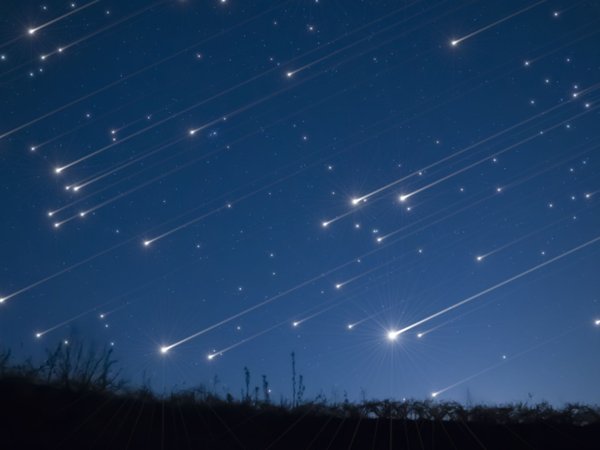
Every summer, the night sky offers one of the most spectacular astronomical phenomena visible to the naked eye: the Perseid meteor shower. In 2026, the phenomenon can also be observed from Bucharest, although the city’s light pollution considerably reduces the number of meteors that can be seen. The Perseids are active between July 17 and August 26, and the peak of the meteor shower will occur on August 13, at 6:00 a.m. Because the peak occurs during the daytime, the best nights for observations will be the night of August 12 to 13 and the night of August 13 to 14. The phenomenon is popularly known as a “rain of stars”, although this name is not scientifically accurate. The stars are not falling from the sky; instead, extremely small particles of cosmic dust enter Earth’s atmosphere and produce luminous trails for a fraction of a second. Under ideal conditions, the Perseids can offer a truly spectacular display, and during the peak, approximately one meteor can be seen every minute.
When can the Perseids be seen in 2026
According to the “Admiral Vasile Urseanu” Astronomical Observatory, the Perseids are active every year between July 17 and August 26. During this period, in addition to sporadic meteors, which do not belong to a particular meteor shower, observers can see meteors that appear to originate from the direction of the constellation Perseus. This is where the phenomenon gets its name.
In 2026, the Perseids will reach their peak on August 13, at 6:00 a.m. Since this time corresponds to daylight, the meteors cannot be observed precisely at the moment of maximum activity. For this reason, astronomers recommend observing the sky during the preceding night, August 12 to 13, as well as during the following night, August 13 to 14. High activity can generally be followed between August 11 and 14, when both the increase and the decrease in activity can be observed.
The most favorable part of the night is after midnight and until morning. Those who want to observe the phenomenon from Bucharest should therefore avoid the first hours of the evening and have patience until the sky becomes sufficiently dark. The longer the observation lasts, the greater the chances of seeing more meteors.
Where the “shooting stars” come from
Behind the spectacle in the sky is Comet 109P/Swift-Tuttle. When this comet passes near the Sun, the heat causes material from its nucleus to sublimate, and particles of cosmic dust are released into space. Every year, Earth passes through the region where these particles are located, and they enter the planet’s atmosphere at very high speeds.
The luminous trail we see is produced by a particle that can be less than one millimeter in diameter. When it enters the atmosphere, the particle interacts with the air and produces ionization, causing that bright trail to appear across the sky for a brief moment. Astronomically, the particle is called a meteoroid, the luminous phenomenon observed from Earth is a meteor, while the term meteorite refers to a body that actually reaches Earth’s surface.
For an observer on the ground, everything happens extremely quickly. Sometimes, the luminous trail can last less than a second, making the Perseids even more spectacular. If we watch the sky for a sufficiently long time, a line of light may suddenly appear among the stars, only to disappear almost instantly.
Where can the Perseids be observed from Bucharest
The capital is not an ideal place for observing the Perseids, and the main reason is light pollution. The many sources of artificial light in Bucharest illuminate the atmosphere and make weaker meteors difficult to see. The “Admiral Vasile Urseanu” Astronomical Observatory states that in large cities approximately 10 to 20 meteors per hour can be seen, while in areas with a dark and clear sky, the number can reach approximately 100 per hour.
Therefore, for Bucharest residents who want to see as many Perseids as possible, traveling outside the city is the best option. Villages, rural areas, hills and especially mountainous regions, far from major sources of artificial light, offer much better conditions. Even an area on the outskirts of Bucharest can be more suitable than the city center if it has an unobstructed horizon and as little artificial light as possible.
Those who remain in Bucharest can try to find a darker location, away from brightly illuminated buildings and heavily trafficked roads. However, it is important to understand that there is no location inside the capital that can provide the same conditions as a rural or mountainous sky.
How should you watch the sky to see as many meteors as possible
One of the advantages of the Perseids is that you do not need a telescope or another astronomical instrument. In fact, the naked eye is enough to observe meteors. The recommendation of the “Admiral Vasile Urseanu” Astronomical Observatory is for observers to lie down, on a sleeping bag, a blanket or a deck chair, so that they can look at as large an area of the sky as possible without becoming tired.
Warmer clothing can also be useful, even though it is August, because observations take place during the night and until morning, when temperatures can drop. Patience is also necessary. To see more meteors, an observation period of at least one hour is recommended. The longer we watch the sky, the greater the chances of catching a luminous trail.
It is not necessary to look at a single point in the sky either. Meteors can appear in different regions of the sky. To identify a Perseid, astronomers trace the apparent path of the meteor backward. If this trajectory leads toward the area between the constellations Cassiopeia and Perseus, the meteor is considered a Perseid.
How many Perseids will we be able to see
The figures given for this phenomenon should be understood as estimates under ideal conditions. The “Admiral Vasile Urseanu” Astronomical Observatory states that predictions indicate a maximum of approximately 100 meteors per hour under perfect observing conditions, although, normally, the actual number seen is about half that value. During the peak, this means that an observer located in an area with a very good sky may see, on average, approximately one meteor per minute.
In Bucharest, however, expectations should be adjusted. Because of the city lights, the estimate is approximately 10 to 20 meteors per hour. It is possible that no meteor will appear during a certain period, followed by two or three luminous trails within a short interval. The phenomenon does not occur with clock-like regularity, and the meteors appear seemingly at random.
Another favorable aspect in 2026 is that, according to the Astronomical Observatory, the Moon will not interfere with observations of the Perseids. Thus, during the nights around the peak, lunar conditions will not add another significant source of light to the sky.
The “rain of stars” is not really a rain of stars
The expression “rain of stars” is spectacular and has long been part of popular language, but from an astronomical point of view, the Perseids do not represent an actual rain of stars. In the case of a genuine meteor storm, the number of observable objects would be in the thousands per hour. Such events are extremely rare.
The Perseids nevertheless remain one of the most accessible astronomical spectacles of the year. They do not require tickets, telescopes or sophisticated equipment. All that is needed is a sky as dark as possible, a comfortable place to lie down and, above all, patience.
For residents of Bucharest, the nights of August 12 to 13 and August 13 to 14, 2026 are the main moments to watch. Those who can leave the capital and travel toward a rural or mountainous area with a clear sky will considerably increase their chances of seeing the spectacle. Under the best conditions, the Perseids can transform several hours spent beneath the night sky into a memorable experience, with dozens of luminous trails appearing and disappearing in an instant.
We also recommend: Concerts, festivals, and outdoor activities in Bucharest in August 2026