Who was General Eraclie Arion and why does a street in Sector 1 of Bucharest bear his name?
- Articles
- 12 AUG 26
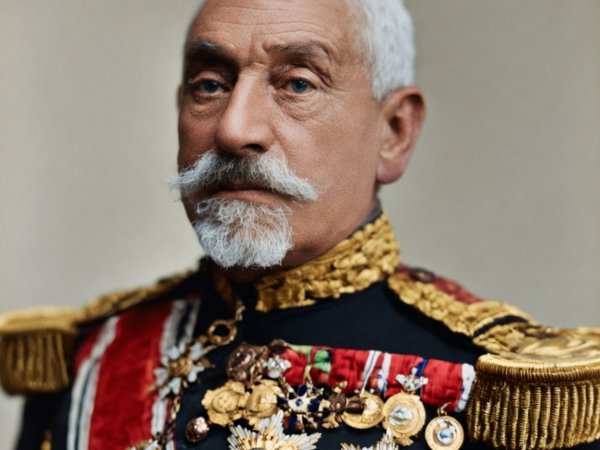
In Bucharest, there are numerous streets named after rulers, politicians, writers, artists, or military figures who contributed to the development of modern Romania. Some of these names are very well known, while others have almost disappeared from collective memory. Among the personalities whose names are preserved in the capital’s street nomenclature is General Eraclie Arion, one of the important figures of the Romanian artillery in the second half of the 19th century. General Eraclie Arion Street is located today in Sector 1 of Bucharest, in the Băneasa area, and its existence represents a discreet form of recognition of a remarkable military career. Arion was not only a high-ranking commander, but also an artillery specialist, an army organizer, a participant in the War of Independence, and one of the military men who contributed to the modernization of Romania’s defense structures. The street bearing his name thus recalls a man who devoted almost his entire life to building and professionalizing the Romanian army.
The origins of the family and Eraclie Arion’s childhood
Eraclie Arion, also encountered in documents under the form Eracle Arion, was born on February 24, 1838, in Bucharest, into a large family with boyar origins from the Ialomița area. The genealogy of the Arion family can be traced back to around the middle of the 17th century, which placed the future general in a family environment with a long-standing tradition.
His father, Scarlat Arion, had no fewer than 16 children, and Eraclie was one of them. Despite belonging to such a large family, the young Arion distinguished himself through his interest in study and his intellectual abilities, which would later enable him to rise rapidly through the military ranks.
Sources devoted to the history of Romanian artillery describe him as an intelligent and highly educated officer, capable of combining practical experience in the field with the technical knowledge acquired in prestigious educational institutions.
Arion’s family life later became closely connected with Fierbinți, a locality with which he would remain strongly associated until the end of his life. In 1866, he married Sevastia, also known as Vatica, the daughter of Nicolae Alexandrescu, nicknamed Cafegibașa, an appellation derived from the position he had held at the court of Prince Grigore Ghica. His wife had inherited a significant estate at Fierbinți, covering approximately 1,623 hectares.
The couple had four children: Nicolae, who became a colonel, Zoe, Viorica, and Margareta. Thus, the Arion family continued to have a strong connection both with the military environment and with the Fierbinți estate, which would eventually become the place of his final resting place. The history of the Fierbinți estate and its connection with the general have been documented in a monograph dedicated to the history of the locality.
From the military school in Bucharest to his studies in France
Eraclie Arion chose a military career at a very young age. Between 1855 and 1857, he attended the Officers’ School in Bucharest, an institution that would train many of the future commanders of the Romanian army. At the end of his studies, he received the rank of second lieutenant in 1857.
His education, however, did not end at the military school in Romania. At that time, Romania needed modern military cadres familiar with Western methods and new military technologies, and Arion was sent to study in France. Between 1857 and 1861, he attended the École Polytechnique in Paris and the School of Artillery and Engineering in Metz. This technical education would decisively influence his entire career.
In 1861, he became a lieutenant, in 1864 a captain, in 1868 a major, and in 1870 a lieutenant colonel. His advancement was rapid, but it was accompanied by increasingly important responsibilities. Between 1861 and 1863, he served in the 1st Artillery Regiment, and later held positions in the Artillery Directorate of the Ministry of War.
One of his main concerns was the modernization of Romanian artillery. Between 1864 and 1868, as an officer in the Artillery Directorate, he supervised the manufacture of guns ordered by the Ministry of War at the Armaments Factory in Nantes. It was a period when the Romanian army was trying to abandon its old structures and equipment and move closer to Western military standards.
Arion and the modernization of Romanian artillery
In 1870, Eraclie Arion became commander of the 2nd Artillery Regiment, a position he held until 1875. In that year, he was promoted to colonel and appointed head of the Artillery Service of the General Staff, a position he held between 1875 and 1877.
In this capacity, Arion played an important role in developing the structure of the artillery. He advocated that each infantry division should have its own artillery regiment, a proposal formulated through report no. 550 of February 5, 1877. As a result of his initiative, two additional artillery regiments were created.
He also supported equipping the army with Krupp guns of 87 mm caliber, models 1875 and 1877, thereby contributing to the establishment of a modern territorial artillery. For the training of military personnel, he also prepared the “Instructions on Artillery in Combat,” a work reflecting his concern for standardizing training and using the weapon effectively on the battlefield.
Between 1877 and 1878, Arion participated in the War of Independence, the conflict following which Romania’s independence, proclaimed in Parliament on May 9, 1877, would be internationally recognized. He was involved in organizing Romanian artillery and preparing important military operations.
At Calafat, he organized the “Mircea” and “Elisabeta” batteries, intended to defend the city. He was also present when the “Carol” battery opened fire on the Ottoman positions, in the presence of Prince Carol. The event of May 15, 1877, would later acquire extraordinary symbolic significance for Romanian artillery.
Arion also coordinated the construction of the bridge over the Danube in the Săliștioara-Măgura area and contributed to preparing the Romanian artillery for action during the siege of Plevna. He was also present at the surrender of Osman Nuri Pasha, one of the important moments of the 1877 campaign.
The general who contributed to the training of Romanian artillerymen
After the war, Arion’s career continued to advance. In 1881, he became commander of the Special School of Artillery and Engineering, a position he held until 1882. Historical sources devoted to military education consider him one of the figures who laid the foundations of modern training for Romanian artillerymen and engineers.
In 1883, he was promoted to brigadier general and appointed Inspector General of Artillery. He remained in this position until 1892. At the same time, he played an important role in the development of military education and in the activity of the army’s professional institutions.
On May 10, 1892, he reached the rank of division general, according to a historical work published by the National Military Circle. Later, between 1893 and 1902, he commanded the 2nd Army Corps, while from 1895 until the end of his life he was governor of the Bucharest Fortress.
These positions demonstrate the importance he had acquired within the Romanian military structures. He was not merely an officer specialized in artillery, but a commander with major responsibilities in defending the capital and organizing the army.
General Arion and the history of the National Military Circle
A lesser-known episode in his biography is his connection with the Military Circle in Bucharest. Arion headed the Military Circle of Officers of the Bucharest Garrison between 1883 and 1893, and in 1889 he launched the idea of constructing a dedicated monumental headquarters for this institution.
The idea would become one of his important contributions to the institutional life of the army. It was not simply a matter of constructing a building, but of creating a representative space for the officer corps. The project was resumed in the following years, and the Military Circle began searching for a suitable plot of land for its future headquarters.
Today, the Palace of the National Military Circle is one of the emblematic buildings in central Bucharest, and the institution’s history preserves Arion’s name among those who contributed to the emergence of the project. The National Military Circle explicitly states that the idea of a dedicated palace probably belonged to General Eraclie Arion.
General Arion and the celebrations of Independence
One of his last major assignments was connected with the events organized in 1902 to mark the 25th anniversary of the proclamation of Romania’s independence, as well as other important moments in the reign of Carol I.
Arion organized the “Celebration of the First Gun,” dedicated to May 15, 1877, when the “Carol” battery at Calafat fired the first shot. The event was subsequently transformed into a tradition of Romanian artillerymen and, in 1902, was included in the official program of the anniversary celebrations. Historical military documents confirm General Arion’s role in organizing the festivities and coordinating the military ceremony.
Arion was also a member of the technical committees that analyzed the army’s armament, of the committee for testing the cupolas of the forts of the Bucharest Fortress, and of the country’s defense councils chaired by the king. He was also honorary president of the initiative committee for establishing the Artillery Review, an important publication for the development of the professional culture of the branch.
The general’s death and his grave in Fierbinți
Eraclie Arion died in Bucharest on September 7, 1903, at the age of 65. His funeral was held with an impressive ceremony, reflecting the prestige he enjoyed within the army. His coffin was transported on a gun carriage, accompanied by soldiers, officers, and the battle flag, while the religious service was held at Saint George Nou Church.
Initially, the general was buried at Șerban Vodă Cemetery in Bucharest. Later, his wife decided to move his remains to the family mausoleum in Fierbinți. The mausoleum was vandalized over time, and today the general’s grave is located within the grounds of the social assistance center in Fierbinți-Târg.
The obituary published in the “Artillery Review” in September 1903 summarized in a memorable formulation what his contemporaries considered to be the essence of his life: he was a man who lived through work, a teacher of the artillerymen, and a soldier devoted to his country and the throne.
Why General Eraclie Arion Street exists in Sector 1
Today, the general’s name can be found on the map of Bucharest in the form of General Eraclie Arion Street, an artery located in Sector 1, in the Băneasa area. The street is listed in Bucharest’s street nomenclature and has the postal code 013911.
It is not accidental that his name has been preserved in the urban memory of the capital. Arion was one of the military men who directly contributed to the modernization of Romanian artillery, participated in the War of Independence, held important positions in the army’s leadership, and served as governor of the Bucharest Fortress. In addition, he played a role in the development of military education and in the emergence of the idea of a monumental headquarters for the Military Circle.
Therefore, the street in Sector 1 does not merely commemorate a 19th-century general, but a specialist who participated in transforming the Romanian army into a modern institution. His name is connected with Krupp guns, Calafat and Plevna, the training of artillerymen, the defense of the capital, and the great ceremonies through which Romania celebrated its independence.
Eraclie Arion thus remains a representative figure of the generation of military men who contributed to the construction of modern Romania. And the street bearing his name in the northern part of the capital is, over time, a simple but important way of preserving the memory of a man about whom his contemporaries said that he lived through work and that his work was fruitful.
We also recommend: