The allure of the "image on the screen" in the 1930s. The first headquarters of Romanian Television and the journey to today's TVR
By Raluca Ogaru
- Articles
- 31 MAR 26
The Bucharest of the 1930s was a city of technological premieres, a place where the European avant-garde quickly found its echo. While television was still a science-fiction concept for much of the world, in the heart of Herăstrău Park (then known as Carol II National Park), the first headquarters of Romanian Television was rising in 1938. The Television Pavilion was not just an administrative building; it was a laboratory for social and financial experiments during an era when Romania was among the few countries owning "state-of-the-art" broadcasting equipment.
Located in the area where Pavilion H stands today, this building was specifically designed to house the Phillips equipment, purchased with significant financial effort. In an economic context where the investment had to be justified quickly, authorities at the time resorted to an unexpected marketing strategy to recover the funds spent on the 20th century's cutting-edge technology.
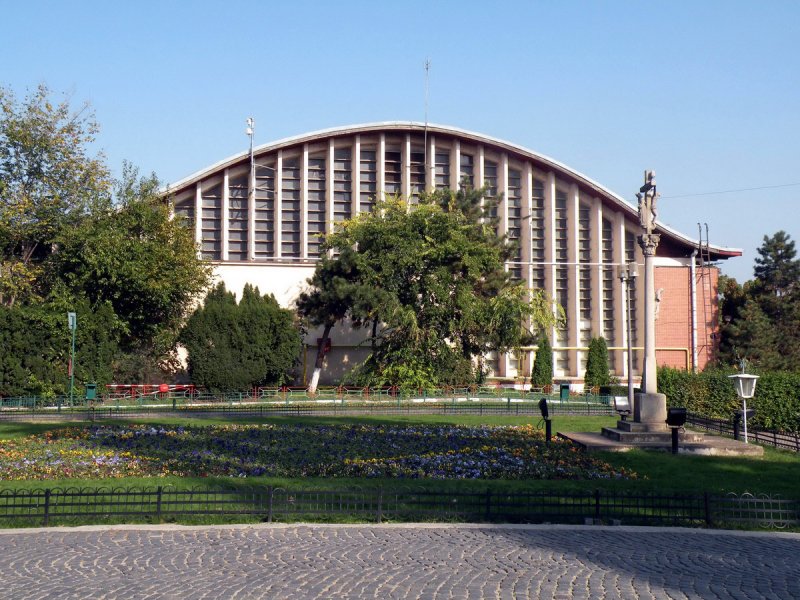
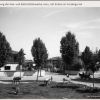
Pavilion H, before its transformation into Berăria H
Pay-Per-View: How You Could "Sell" Your Image on Screen
Breathe a sigh of relief—we aren't talking about today's cable subscriptions, but a much more direct experiment! To amortize the massive investment in Phillips equipment, the Television Pavilion was opened to the general public in a unique way. Anyone who wished to see their face and hear their voice transmitted onto a screen could do so, but for a fee. It was, essentially, an early form of a video "selfie," a luxury that curious Bucharest residents paid for to experience the magic of new technology firsthand.
The campaign was a success, turning the Herăstrău Pavilion into a major attraction. People came to the television station not just to see what others were doing, but to become protagonists themselves, even if only for a few minutes. This method of self-funding demonstrates the pragmatism of that period, where innovation had to sustain itself through public enthusiasm. Live the moment! Imagine the queue of elegant Bucharesters in 1938, waiting with excitement to step in front of giant cameras to become "immortal" on a black-and-white screen.
From Herăstrău to Calea Dorobanților: The Evolution of a Media Symbol
However, the history of the TVR headquarters did not stop in Herăstrău. Although the 1938 pavilion laid the technical foundation, constant broadcasting and large-scale development required a much more generous space.
The First Headquarters of Romanian Television
The beginnings of television in Romania were not marked by grandiose buildings, but by an improvised space that radiated overflowing creative energy. It all started in a modest studio located at 2 Molière Street, in the immediate vicinity of today's media giant on Calea Dorobanților. Although the area is a quiet residential neighborhood today, back then, that small address in Sector 1 represented ground zero for technological innovation, operating under the umbrella of the Romanian Radiotelevision.
Live the moment of December 31, 1956—a historical date for Romanian culture! That was when the country's first televised broadcast took place, a special New Year's Eve program that kept Romanians on the edge of their seats in front of the few existing receiving sets. The host of that memorable evening was Cleo Stieber, the station's first announcer, who officially marked the birth of TVR. Breathe a sigh of relief—though the technology of the time was rudimentary, the enthusiasm of the team on Molière Street laid the foundation for an institution that would define Romania's visual identity for the decades to follow.
The building in the Dorobanților Street
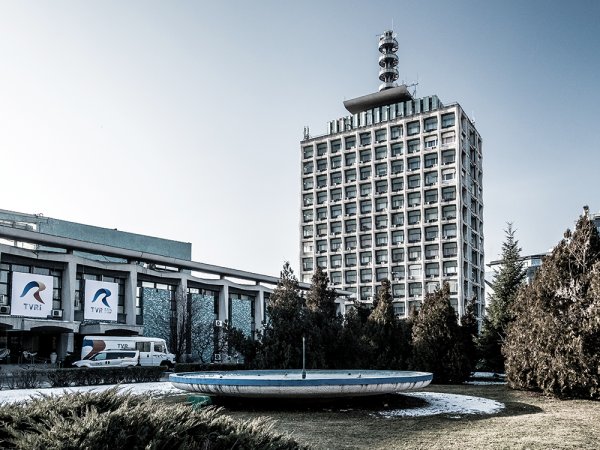
Thus, in the 1960s, the current headquarters on Calea Dorobanților emerged—an architectural masterpiece of its time, designed to become one of the most modern production centers in Eastern Europe. From a legal and heritage perspective, the Dorobanți building is now included on the list of historical monuments, serving as a landmark for Romanian modernist architecture.
The official basis for the development of television in Romania was always linked to the desire to keep pace with the West. Even if the beginnings in 1938 were marked by creative attempts to recoup the investment, the foundation remained solid: professionalism and the courage to invest in the future. Today, when we carry an entire TV station in our pockets in the form of a smartphone, it is worth remembering the Herăstrău Pavilion—the place where, for a few lei, the Bucharesters of yesteryear bought their ticket to the future of communications.