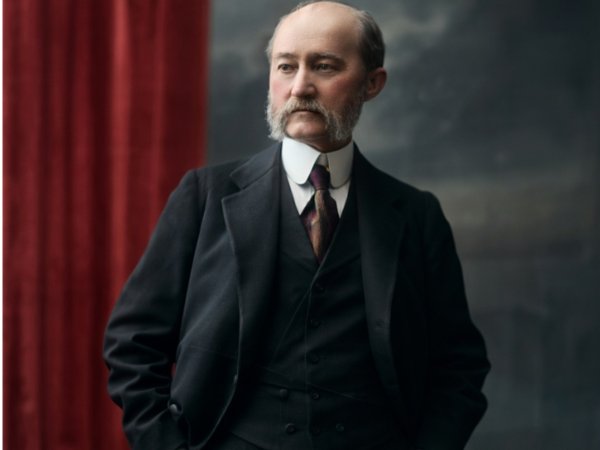
Who was Emanoil Porumbaru and why does he have a street named after him in the Aviatorilor district of Bucharest
- Articles
- 15 MAY 26
In the Aviatorilor district, among the streets that bear the names of notable figures in Romania’s history, there is also Emanoil Porumbaru Street. For many Bucharest residents, the name is familiar, yet few know the story of the man who played a significant role in the country’s political and diplomatic life.
An important name in Romanian politics
Emanoil Porumbaru belonged to the generation of political leaders who contributed to the consolidation of Romania’s modern institutions. He was active during a period of major transformations, when the Romanian state was developing its administration, infrastructure, and international relations.
Throughout his career, he held important positions in government and Parliament, and the experience he gained turned him into one of the respected figures of the National Liberal Party.
The origin and formation of Emanoil Porumbaru
Emanoil Mihăescu Porumbaru was born in 1845, in a Bucharest undergoing rapid change. The city was beginning to modernize, and the political and intellectual elite of the time was seeking alignment with Western models of administration and social organization.
There is less publicly available information about his childhood and education than about his political activity. However, his later career shows that he benefited from solid training, which allowed him to establish himself within the state leadership structures.
The generation he belonged to played a decisive role in the professionalization of Romanian administration and in the consolidation of parliamentary institutions.
The rise within the National Liberal Party
Emanoil Porumbaru became one of the important representatives of the National Liberal Party, a political formation that played a central role in Romania’s modernization.
The National Liberal Party supported infrastructure development, institutional strengthening, and the promotion of a foreign policy aimed at consolidating the independence and prestige of the Romanian state. In this context, Porumbaru stood out through his administrative competence and his activity within government structures.
His career reflects the profile of the professional politician of the era, capable of working both in administration and diplomacy.
Minister of Public Works
Between November 1896 and March 1897, Emanoil Porumbaru served as Minister of Public Works. Although his mandate was short, the ministry he led was of strategic importance.
Romania was investing heavily in railways, bridges, roads, and other works essential for economic development and urban modernization. Leading such a portfolio was reserved for experienced politicians, and his appointment reflected the trust he enjoyed within the party and the government.
President of the Senate of Romania
Another important moment in his career was his election as President of the Senate. The Senate was one of the fundamental institutions of the Romanian parliamentary system, and its president was responsible for coordinating legislative activity and ensuring the proper conduct of debates. This position confirms the prestige and influence Emanoil Porumbaru enjoyed in the political life of his time.
Minister of Foreign Affairs during the First World War
In January 1914, Emanoil Porumbaru was appointed Minister of Foreign Affairs, a position he held until December 1916.
His mandate coincided with one of the most difficult periods in European history. In the summer of 1914, the First World War broke out, and Romania initially adopted a policy of neutrality, carefully assessing the international context.
The Ministry of Foreign Affairs played a key role in managing diplomatic relations with the great powers and in preparing decisions that would shape the country’s future.
In August 1916, Romania entered the war on the side of the Entente, with the goal of uniting territories inhabited mostly by Romanians. Emanoil Porumbaru was in charge of diplomacy during this major historical moment.
Decorations received
His activity was also recognized through official decorations. On 8 August 1887, he was awarded the Order of the Star of Romania in the rank of Officer. Later, on 5 April 1897, he received the Order of the Crown of Romania in the rank of Commander.
These distinctions were among the highest honors awarded by the Romanian state to individuals who made significant contributions to administration and public life.
Final years and death
After a long career, Emanoil Porumbaru remained a respected figure in Romanian political life. He died in Bucharest on 11 October 1921, at the age of 76.
His death occurred in a Romania profoundly changed compared to the one he was born into: a modern, consolidated, and expanded state, whose development he had helped shape through his political and diplomatic activity.
Why there is a street named after him in the Aviatorilor district
Emanoil Porumbaru Street is located in the Aviatorilor district, a prestigious residential area in northern Bucharest.
This part of the city developed in the early decades of the 20th century and includes numerous streets named after important political, military, and cultural figures.
Naming a street after Emanoil Porumbaru represents a form of recognition of his contribution to the modernization of Romania’s administration and foreign policy.
Through its street naming system, Bucharest preserves the memory of figures who played significant roles in national history, even if they are less known today.
The Aviatorilor district, a space of urban memory
The Aviatorilor district is one of the most elegant areas of the capital, characterized by interwar villas, quiet streets, and architecturally valuable buildings.
Nearby are King Mihai I Park, the Arch of Triumph, and other important landmarks of the city. Emanoil Porumbaru Street blends naturally into this urban landscape where history and architecture meet.
For those who live in or walk through the district, the street name may seem like just a geographical reference. In reality, it preserves the memory of a man who held some of the most important positions in the Romanian state.
The legacy of Emanoil Porumbaru
Emanoil Porumbaru is not as well known today as other political figures of his era, but his contribution to public life was significant.
He led important ministries, presided over the Senate, and represented Romania during a period of major diplomatic complexity.
Through his work, he contributed to the consolidation of modern state institutions and to defining Romania’s position at a decisive moment in European history.
A name worth rediscovering
Emanoil Porumbaru Street in the Aviatorilor district is more than just an address on the map of Bucharest. It recalls a politician and diplomat who helped the functioning of the Romanian state’s institutions during a period of profound transformation.
Every time we pass through this street, we quietly encounter the memory of a man who held essential roles in Romania’s administration and diplomacy and who participated in building the modern state.
We also recommend: Vlad Țepeș, between history and legend. The ruthless ruler of Wallachia has a street named after him in Sector 2 of Bucharest