Tortured in communist prisons, “saved” by a love for art and history. A century with Barbu Brezianu, the greatest exegete of Constantin Brâncuși
- Articles
- 15 MAY 26
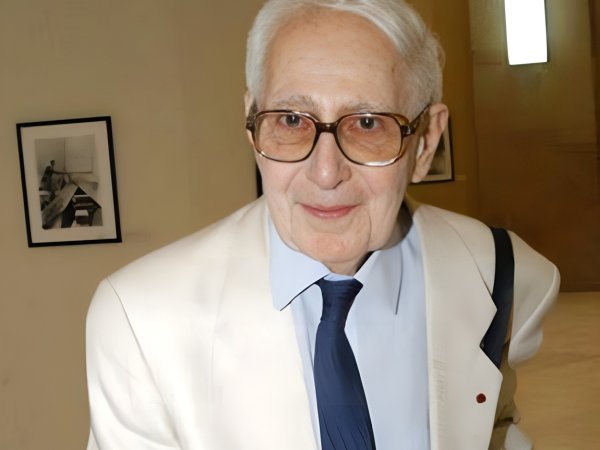
Barbu Brezianu is one of the complex figures of Romanian culture, an intellectual who lived through nearly a century of intense history, marked by major political, social, and cultural transformations. Born on March 18, 1909, in Bucharest, he lived to the age of 99, becoming a direct witness to radically different eras of modern Romania.
A nearly centenarian life between culture, history, and intellectual vocation
Although the title evokes the idea of suffering during the communist period, the information provided does not include verifiable details about possible detention or torture. Therefore, this aspect must be treated with caution: his documented biography focuses mainly on his literary, legal, and art-historical activity, as well as his exceptional contribution to the study of Constantin Brâncuși’s work.
What remains certain is that Barbu Brezianu was a man formed in direct contact with the cultural elite of interwar Romania and a dedicated researcher whose work decisively influenced how Constantin Brâncuși’s creation is understood today.
Intellectual formation at “Spiru Haret” High School and encounter with great teachers
Barbu Brezianu attended the “Spiru Haret” High School in Bucharest, one of the most prestigious educational institutions of the interwar period. Here he developed his general education and entered an intellectually vibrant environment in which literature, philosophy, and art played a central role.
An essential role in his formation was played by his mathematics teacher Dan Barbilian, known in Romanian literature as Ion Barbu. He had an unusual relationship with his students, sometimes replacing mathematics lessons with discussions about poetry and universal literature.
The students from the editorial board of the magazine “Vlăstarul” thus became participants in a true improvised literary circle, where authors such as Edgar Allan Poe, Mallarmé, Rimbaud, Lautréamont, and Valéry were discussed. For Barbu Brezianu, these experiences represented a decisive opening toward the world of great ideas and universal literature.
The interwar generation and contact with Romanian cultural elites
Also during high school and later at the beginning of his university studies, Barbu Brezianu came into contact with what cultural history calls the “golden interwar generation.”
He was part of intellectual circles frequented or animated by figures such as Mircea Eliade, Mircea Vulcănescu, Petru Comarnescu, Mihail Sebastian, Dan Botta, and Haig Acterian. He also met Constantin Noica, Ionel Jianu, and Eugène Ionesco, figures who would later become landmarks of Romanian and European culture.
This period represented an intense formative moment for Brezianu, in which ideas, debates, and cultural exchanges contributed to shaping a critical spirit and a strong intellectual vocation.
Literary debut and first published volumes
In 1930, with the support of friends from the cultural environment, Barbu Brezianu published his first poetry volume, titled “Nod ars” (“Burned Knot”). This was followed a few years later by “Zăvor fermecat” (“Enchanted Bolt”), as well as prose volumes such as “Jaf în dragoste” (“Robbery in Love”) and “Desferecare” (“Unfastening”).
His literary activity was noticed by important critics of the time. Tudor Arghezi, one of the most influential voices of Romanian literature, wrote about him in an appreciative way, highlighting the refinement and sensitivity of his writing, as well as the “elasticity, nuances, and delicate transparencies” of his style.
These appreciations confirmed his position in the interwar literary landscape, even though his later main interest shifted toward art history and academic research.
Translator, critic, and art historian
In addition to his literary activity, Barbu Brezianu was a highly skilled translator. One of his most important achievements is the translation of the Finnish epic “Kalevala,” a fundamental text of Nordic literature.
He also translated works by major authors such as Honoré de Balzac, Rudyard Kipling, Molière, François Villon, Pierre de Ronsard, and Charles Nodier. These contributions demonstrate vast literary culture and remarkable stylistic adaptability.
In parallel, he produced monographs dedicated to important Romanian artists such as Karl Storck, Nicolae Grigorescu, and Nicolae Tonitza, consolidating his reputation as an art historian and critic.
He also wrote numerous music and theatre reviews in the interwar press, demonstrating a constant interest in analyzing artistic phenomena as a whole.
Barbu Brezianu and Constantin Brâncuși – a defining intellectual relationship
Barbu Brezianu’s most important contribution remains, without doubt, his research on Constantin Brâncuși’s work.
Starting from articles published in the press of the 1960s, he developed an extensive effort of documentation and interpretation of the sculptor’s creation. This effort included over one hundred studies and articles published in journals from Romania and abroad.
Among the publications where his texts appeared are prestigious journals such as Art Journal, Les Lettres Françaises, One, Neue Literatur, Revue Roumaine d’Histoire de l’Art, as well as important Romanian publications such as “Studii și cercetări de istoria artei,” “Arta,” “Secolul 20,” “România literară,” “Viața Românească,” and “Contemporanul.”
This intense activity established him as one of the most important exegetes of Constantin Brâncuși, decisively contributing to the understanding and systematization of his work.
The monograph “Brâncuși in Romania” and its importance
One of his fundamental achievements is the monograph “Brâncuși în România” (“Brâncuși in Romania”), the first work of its kind to systematically inventory the sculptor’s works located on Romanian territory.
The book does not limit itself to cataloguing works, but also includes detailed biographical information about Constantin Brâncuși, his artistic trajectory, travels, exhibitions, and meetings with other major artists of the era.
This work became a reference point in Brâncuși studies, providing an essential documentary basis for later researchers.
Activity in a tense era and biographical interpretations
Barbu Brezianu’s life was marked by passing through extremely different historical periods: interwar Romania, the Second World War, and the communist regime.
The title of the article suggests experiences of suffering during the communist period, including detention or imprisonment. However, the information provided does not contain verifiable details confirming these claims. Therefore, they cannot be presented as certain facts.
It is important to emphasize that his known biography mainly highlights his intellectual activity and contributions in art history, especially in the study of Brâncuși’s work.
A century dedicated to culture
Barbu Brezianu lived almost a century, during which he witnessed major transformations of Romanian society. From the interwar period to the late modernity of the 20th century, he remained active in the cultural and intellectual sphere.
Through his works, translations, and studies dedicated to Romanian and universal art, he contributed to forming a coherent perspective on cultural heritage.
The intellectual legacy of Barbu Brezianu
Barbu Brezianu’s legacy is closely connected to how Constantin Brâncuși is perceived today in Romanian and international culture. His research provided a solid foundation for later studies and helped consolidate the sculptor’s reputation as a central figure of modern art.
At the same time, his literary activity and translations demonstrated rare cultural openness and the ability to connect Romanian literature with major European cultural currents.
A complex intellectual destiny
Barbu Brezianu remains a complex figure, situated at the intersection of literature, history, art criticism, and translation. His life reflects the evolution of Romanian culture in the 20th century and the difficulties, but also the achievements, of an exceptional intellectual generation.
Even where documentation is incomplete or interpretations differ, his essential role in the study of Constantin Brâncuși’s work and in the development of Romanian art history remains evident.
Through his entire activity, Barbu Brezianu emerges as a reference intellectual whose life was dedicated to understanding and interpreting culture in its deepest forms.