How Life Unfolded for Bucharest Residents in the 1940s in the Capital
- Articles
- 14 MAY 26
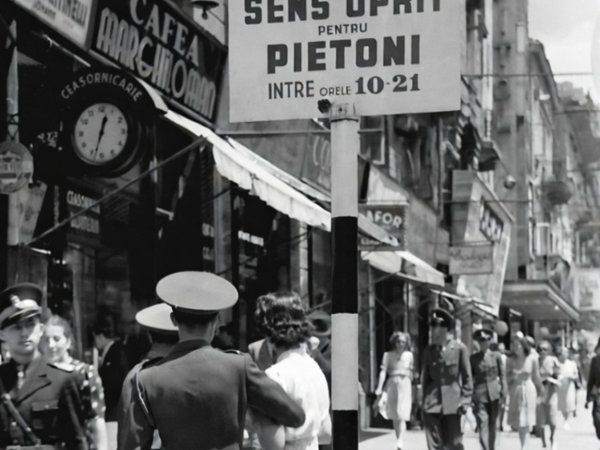
The 1940s represented one of the most turbulent and dramatic periods in the history of Bucharest. In less than a decade, the residents of the capital went through successive dictatorships, economic restrictions, devastating bombings, radical political changes, and the beginning of the communist regime. Even so, daily life did not stop. Bucharest residents continued to go to work, raise their children, and frequent cafés, cinemas, and parks, trying to preserve a sense of normality during a period marked by uncertainty and fear. During those years, Bucharest was an elegant and cosmopolitan city, with broad boulevards, imposing buildings, and an intense cultural life. At the same time, it was a city deeply affected by the European context dominated by World War II. The way Bucharest residents lived in the 1940s perfectly reflected the contrast between the urban refinement inherited from the interwar period and the hardships caused by the war and the political transformations that followed.
Bucharest at the Beginning of the Decade
At the beginning of the 1940s, Bucharest still preserved the charm and dynamism of the interwar period. The city was often nicknamed “Little Paris” due to its eclectic architecture, French influences, and developed social life. Boulevards such as Calea Victoriei and Magheru Boulevard concentrated elegant shops, luxury hotels, restaurants, bookstores, and cinemas.
The Bucharest elite frequented Athénée Palace, an emblematic place for the diplomatic and social life of the time. Politicians, businessmen, journalists, and foreign diplomats met there in a cosmopolitan atmosphere. At the same time, in working-class neighborhoods and on the outskirts, life was more modest, but communities were tightly knit, and the daily rhythm revolved around markets, churches, and schools.
Public transportation was well developed for the standards of the era. Trams and buses connected the main neighborhoods, and many residents traveled on foot. Markets such as Obor Market, Amzei Market, and Matache Market were essential centers of supply and social life.
The War and Changes in Daily Life
Romania's entry into the war in 1941 profoundly changed the lives of Bucharest residents. Many men were mobilized and sent to the front, and the families left at home had to adapt to shortages and restrictions. Basic products began to be rationed, and foods such as sugar, oil, flour, and meat became more difficult to obtain.
Long queues formed in front of shops, and housewives organized their shopping carefully. The wartime economy imposed prudence and ingenuity. Clothes were repaired and reused, and household items were preserved for as long as possible. In many families, every resource was used with great care.
The atmosphere in the city was marked by news from the front, official propaganda, and permanent uncertainty. Newspapers, radio broadcasts, and conversations in cafés were dominated by information about the course of the conflict. Despite the tension, people tried to continue their daily activities and maintain their usual routines.
The Bombings That Changed the Face of the City
The most dramatic moment for Bucharest was represented by the bombings of 1944. On April 4 and in the months that followed, Allied aviation attacked the capital, targeting railway infrastructure and strategic objectives. Thousands of buildings were damaged or destroyed, and the loss of human life was considerable.
Important areas of the city were affected, including the surroundings of Gara de Nord and the densely populated neighborhoods nearby. Air-raid sirens, bomb shelters, and the sight of ruins became part of everyday reality. Entire families spent their nights in basements or improvised shelters, hoping to escape unharmed.
After each attack, Bucharest residents returned among the rubble to search for relatives, salvage belongings, and try to resume ordinary life. Community solidarity played an essential role during this period. Neighbors helped one another, shared food and support, and the city tried to heal its wounds.
Cultural Life and the Desire for Normality
Even during the war, Bucharest preserved part of its cultural effervescence. Theaters, cinemas, and concert halls continued to operate, offering residents moments of escape from an oppressive reality. Performances were attended by both the elite and the general public.
The cinemas on Magheru Boulevard and Calea Victoriei attracted large audiences, and cultural magazines and newspapers remained important sources of information and entertainment. Cafés and confectioneries were meeting places where politics, literature, and daily events were discussed.
Parks such as Cișmigiu Park and Herăstrău Park offered a refuge for families, young people, and retirees. Evening walks, meetings with friends, and open-air concerts helped maintain a sense of continuity in an uncertain age.
Housing, Family, and Relationships Between People
In the 1940s, family life occupied a central place in the existence of Bucharest residents. In many homes, several generations lived under the same roof, and family ties were very strong. Parents and grandparents played an important role in children's education and in managing the household.
Housing varied considerably depending on social status. In central areas and elegant neighborhoods there were spacious apartments and villas, while on the outskirts many families lived in modest houses, sometimes without all modern utilities. Even so, cleanliness, order, and respect for tradition were highly valued.
Neighborly relations were of particular importance. People knew one another well, offered help when needed, and shared both joys and hardships. In times of shortages and danger, these bonds were essential to the survival and balance of urban communities.
The Change of Regime and the Beginning of a New Era
The events of August 23, 1944, led by King Michael I, marked Romania's exit from its alliance with Germany and the beginning of a new historical stage. For Bucharest residents, the change brought hope for the end of the war, but also new uncertainties.
In the years that followed, the presence of Soviet troops and the consolidation of communist influence profoundly transformed society. Nationalizations, administrative restructurings, and changes in economic and cultural life followed. Many families were affected by arrests, purges, and the restriction of freedoms.
Even so, the residents of the capital continued to adapt their lives to the new realities. Bucharest remained a vibrant city in which the memory of the interwar period intertwined with the beginnings of a completely different era.
A Decade of Contrasts and Everyday Resilience
The 1940s were a period of strong contrasts for Bucharest residents. The city's elegance and vitality confronted shortages, bombings, and radical political changes. Daily life was marked by fear, but also by solidarity; by restrictions, but also by the desire to preserve normality.
The people of Bucharest demonstrated a remarkable capacity for adaptation. They continued to work, study, participate in cultural life, and support their families and communities. Despite tragedies and uncertainties, the city and its inhabitants found the resources to move forward.
Today, understanding how life unfolded for Bucharest residents in the 1940s offers a valuable perspective on a decisive era in the history of the capital. It is the story of a city that went through dramatic trials, yet preserved its spirit, energy, and ability to be reborn.
We also recommend: Daily life during the La Belle Époque period: habits and urban routines Bucharest residents had at the end of the 19th century