Pache Protopopescu, the mayor who had the courage to reshape Bucharest
By Eddie Țone
- Articles
- 25 JUN 26
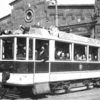
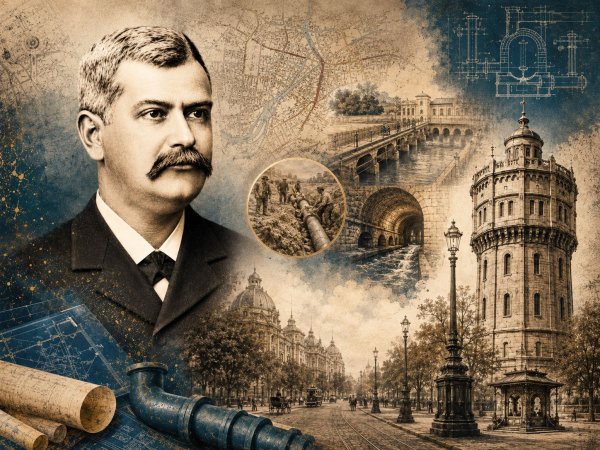
At the end of the 19th century, Bucharest was growing at the pace of a city that had bought itself European shoes but still walked through mud in them. Horse-drawn trams squeezed between houses, the streets preserved the crooked outlines of old neighbourhoods, and the municipal administration worked with limited resources for the ambitions of a young capital. In April 1888, Emanoil Pache Protopopescu arrived at City Hall: a jurist, professor, lawyer, former Prefect of the Police, and politician with a résumé substantial enough to fill several ministerial portfolios.
His term lasted until December 1891. It was brief on the calendar and dense in the city’s fabric. Schools, pavements, street surfacing, social services, public telephones, lighting, and decisive sections of the east–west axis all entered the municipal programme during those years. Pache Protopopescu was the mayor who gave Bucharest its first modern image.
A jurist shaped by Saint Sava and Europe’s great schools
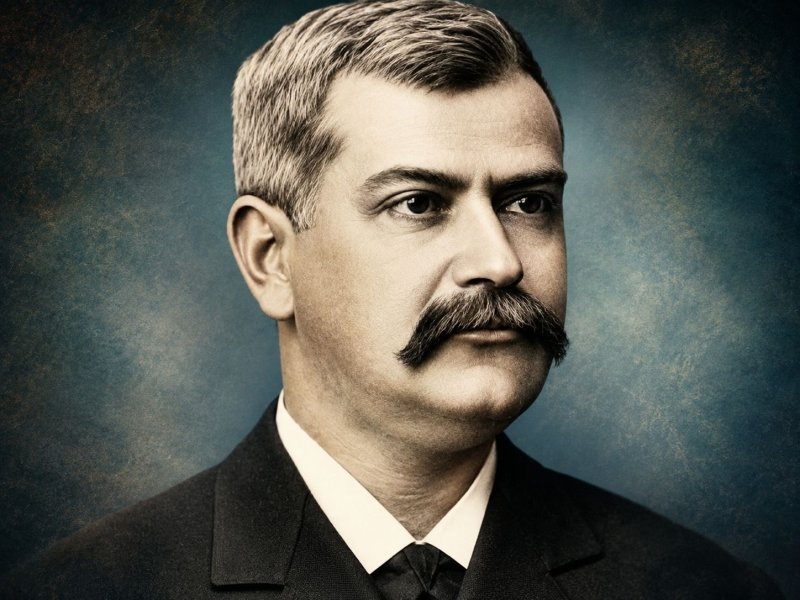
Pache Protopopescu was born in Bucharest in 1845, in the Negustori district, into a family connected to the Church. His father, Iancu Protopopescu, was a priest and archpriest. Official records and newspapers of the time use both Emanoil and Emilian, while the city permanently settled on the name Pache.
He attended Saint Sava College, then the Faculty of Law in Bucharest, earning degrees in Bucharest and Paris, followed by doctorates in Brussels and Geneva. He entered the world of courts early, and in 1871 became head of the Litigation Service and lawyer for the Municipality of Bucharest. There he saw from the inside how much depended on a file prepared on time, a clear decision, and an administration that knew exactly which street it was standing on.
As a teenager, he published, together with V. Popescu, a dictionary of Romanian expressions and translated a work of philology. He taught law at the Commercial School in Bucharest between 1879 and 1888, becoming its head in 1881. The nickname Pake remained in the city’s memory as a kind of second first name.
From liberal founder to the liberal-conservative camp
The answer regarding his political affiliation requires chronology. In 1875, Pache Protopopescu appears on the coordinating committee of the newly established National Liberal Party. During the 1880s, his political path moved toward the anti-liberal opposition, around the moderate liberals led by George Vernescu, and later into the Liberal-Conservative Party. Sources from the period also describe him as an independent conservative deputy.
The most accurate label for the period of his mayoralty is liberal-conservative, with a strong closeness to the conservative camp. In April 1888, Bucharest’s Municipal Council appointed him mayor, replacing Ion Câmpineanu. The change came after the fall of Ion C. Brătianu’s long government, within a system in which municipal councillors, ministries, and local networks of influence carried enormous weight.
City Hall treated as an urban project
Pache entered office with an idea that was fairly unusual for Bucharest at the time: the city needed coordination among specialists. He therefore worked with 24 commissions made up of doctors, engineers, and intellectuals. The capital faced simultaneous problems involving streets, drainage, schools, public health, transport, sanitation, and construction.
Road paving, pavements, lighting, and schools became part of the same wider picture. Bucharest needed better movement, and movement meant access to hospitals, passable roads, and construction regulations. Pache understood that modernisation involved grand boulevards, yet it could also be felt beneath the sole of a shoe arriving home on a dry pavement.
The east–west axis and the cost of a straighter city
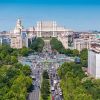
The most visible legacy of his term is linked to the great east–west axis. He also contributed to preparing the future north–south axis, although he did not live to complete it in full. The east–west project had begun as early as 1865, while Pache’s administration implemented the eastern section of the route, recognisable today through Carol I and Pache Protopopescu boulevards, completed in 1890. The city gained a clearer connection between the centre and its eastern districts, at a time when old neighbourhoods still preserved a maze of twists and narrow roads that created traffic jams and a formidable tangle for transport and supply routes.
The works involved major sacrifices: expropriations, paving, basalt pavements, and large-scale interventions in the old urban fabric. A contemporary chronicle speaks of four months of continuous work for a major breakthrough, an impressive deadline for the period.
Modernisation also required demolitions. Caimata Church and the old Armenian Church in the area crossed by the new route disappeared during the works connected with the boulevard. The city gained perspective and circulation, while losing old fragments marked by memory and human scale. Pache chose the direction of the boulevard, and that choice left traces on the map as well as in debates about heritage.
In 1890, the extension of the former Boulevard of the Horizon was also completed. Mayor Nicolae Filipescu would later attach Pache’s name to this artery, now one of the routes structuring the neighbourhood around Piața Pache.
Colțea Tower and the cost of modernisation
On the north–south axis, which would later connect Victory Square to Unirii Square through today’s Lascăr Catargiu, Magheru, Bălcescu, and I.C. Brătianu boulevards, his clearest intervention concerned the Colțea area. In 1888, Colțea Tower, one of the most recognisable landmarks of old Bucharest, was demolished, in one of the capital’s most debated episodes of modernisation.
The tower had been part of the Colțea complex and had served over time, among other roles, as a fire lookout. For the administration of the period, however, the building had become an obstacle in a city seeking wider streets, more efficient circulation, and an urban geometry closer to the Western model. It stood directly in the middle of the boulevard that is now called I.C. Brătianu.
Its demolition also reveals the paradox of modern Bucharest: the city modernised through construction, but also through disappearance. Part of the old city was sacrificed so that the new one could move faster, more directly and, at least in theory, more civilly.
Light, telephones, paving, and a winter facing an institutional opponent
Bucharest under Pache’s administration worked with technologies in full transition. Electric lighting had appeared in the city before 1888, while reports from Pache’s period indicate more than three thousand lighting points on streets and in squares, using a mixture of gas, petroleum, mineral oil, and electric fixtures. The evening city still smelled of fuel and contained plenty of shadows, but it was beginning to acquire a safer geography.
Public telephony also entered this story. For residents accustomed to letters and messengers, the telephone had the air of a small miracle installed inside a box.
Street paving received sustained attention. At the end of the 19th century, paving was a serious urban problem, which explains why it became such a priority. Bucharest had already experimented with several solutions: river stone, Dobrujan granite, Italian granite, Belgian porphyry, Scottish sandstone, and even wooden paving blocks.
During Pache Protopopescu’s administration, paving works continued and intensified. The city was trying to stabilise its main arteries and reduce its dependence on streets that became impassable after serious rain.
Pavements had existed in Bucharest since the 1860s, although the late 19th century brought them into a more visible stage of expansion and standardisation. In 1889 and 1890, streets were widened, kilometres of roads were paved, and pavements were built using cobblestone, artificial basalt, and boulders. Pache introduced street watering and brought water tanks, turbines, and snowploughs from Dresden. Bucharest’s winter had finally acquired an institutional opponent.
Schools, social assistance, and an administration concerned with people
Coming from education, Pache placed schools at the centre of his programme. During his term, 28 schools appeared, including the building that now houses the Gheorghe Lazăr National College and the School of Commerce on Domniței Boulevard. Research by the Bucharest Municipality Museum shows that most of the school buildings erected by City Hall during this period belonged to his administration.
The social programme followed the same practical logic. The city morgue was established, along with a 40-bed night shelter, canteens for poor people, and a free horse-drawn transport service for taking the sick to hospital and the dead to the morgue. The system resembles an early precursor to emergency services, before Nicolae Minovici’s Rescue Society became the landmark institution known today.
A Prefect of Police with the instincts of the 19th century
Before becoming mayor, Pache had served as Prefect of the Capital’s Police between May and September 1876. That same period produced the most uncomfortable episode in his biography. In the fight against prostitution, the police administration forced registered women to wear a distinctive sign, while brothels were required to display visible numbering and a red lantern.
It was a measure that says much about the social discipline of the era and about the power of a state that wrote its morality directly onto the street. Pache remains a modernising figure, with firm instincts and the cultural limits of his time.
The press, paving, and the resignation of 1891
Because of his urban radicalism, Pache Protopopescu’s term had very vocal opponents. The liberal-conservative press, especially the French-language newspaper Bucarest, attacked his administration over tram accidents, boulevard costs, land subdivisions, and paving works. By the autumn of 1891, the campaign had become an almost daily indictment.
The accusations included excessive spending and favours connected to public works. They appear in period publications and later commentary, although their political context requires caution. On 11 December 1891, Pache Protopopescu submitted his resignation, ending an intense term and leaving behind a visibly transformed city.
He withdrew in fragile health and died in Bucharest in 1893, aged only 48. The crowd gathered in front of his home, recorded by the press of the time, shows the popular standing he had gained.
“Pake’s Match”, the statue, and the memory of a mayor
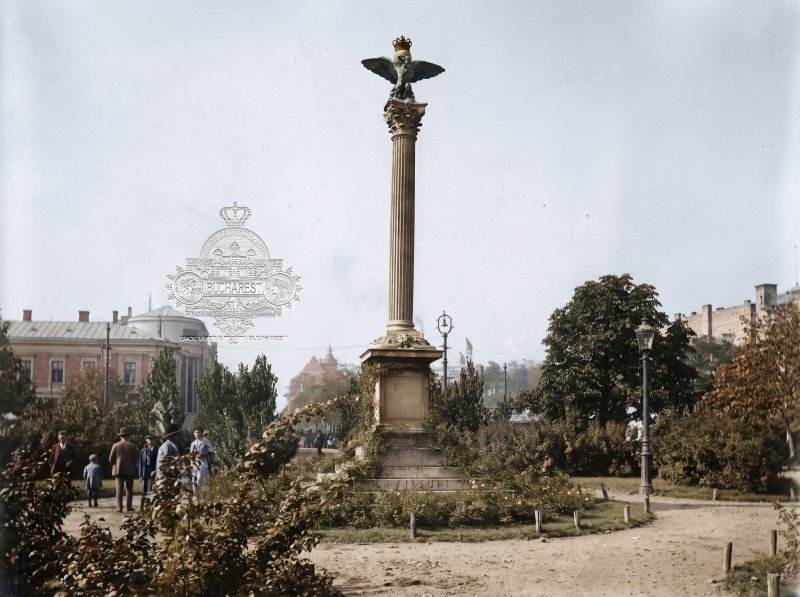
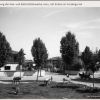
The Eagle Column, or “Pache’s Match” / Image recreated and colourised using artificial intelligence, while largely preserving the original details.
In 1890, Pache ordered the relocation of the eagle-topped column from the Atheneum area to the new boulevard on the east–west axis, at its intersection with Teilor Street, the future Rosetti Square. The monument received the popular nickname “Pake’s Match.” Even then, Bucharest had travelling monuments and commentators ready to baptise them.
After his death, in 1903, sculptor Ion Georgescu created a Carrara marble statue, erected in the square that bore his name. The monument was destroyed in 1948, during the new regime’s reshaping of public symbols. The boulevard, the square, and the phrase attributed to Tudor Arghezi — “the first good mayor of Bucharest” — nevertheless kept his name in circulation.
Why Pache Protopopescu remains among Bucharest’s great mayors
Pache’s merit can be seen in his combination of scale and pace. He worked on major circulation axes, invested in schools, expanded paving and lighting, introduced public services, and organised City Hall as a structure capable of thinking about the city by fields of responsibility. In only three years and a few months, he set mechanisms in motion that would shape Bucharest well into the following century.
Rankings of mayors always depend on criteria and on the taste of each era. In Pache’s case, the urban record offers sufficient arguments: a boulevard bearing his name, schools still operating, administrative rules, social services, and a change of scale in the way the capital viewed its own problems. Bucharest preserved his name, moved his monument, demolished his statue, and allowed the boulevard to speak for him.
You may also like: Why the most famous boulevard in central Bucharest has four names and how they are divided