Legendary Mayors of Bucharest: Vintilă Brătianu Gave Up His Salary as Mayor to Modernize the Capital
- Articles
- 06 AUG 26
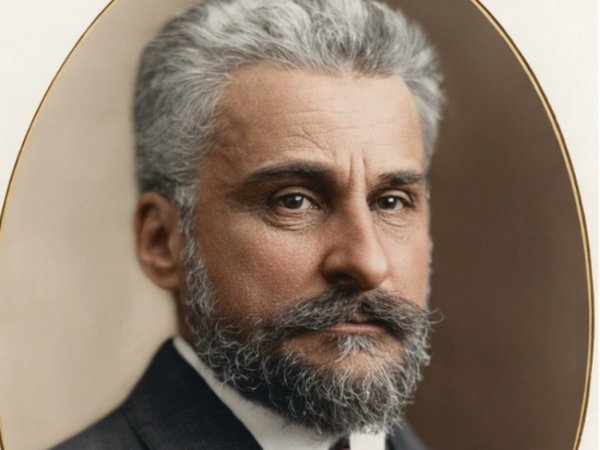
At the beginning of the 20th century, Bucharest was going through one of the most important periods of transformation in its history. The city was expanding at a rapid pace, its population was increasing year after year, and problems related to infrastructure, sanitation, transportation, and housing were becoming increasingly pressing. In this challenging context, the leadership of the Capital's administration was entrusted to a man who would radically change the way the office of mayor was perceived. An engineer by profession, educated in Paris and accustomed to thinking in terms of plans, projects, and efficiency, Vintilă Brătianu transformed Bucharest City Hall into a modern institution focused on achieving concrete results. His term in office, from June 21, 1907, to February 20, 1910, lasted less than three years, yet the scale of the projects completed ensured that his name would remain among the most important in the history of Bucharest's administration. During this period, the foundations were laid for institutions and projects that would influence the development of the Capital for many decades. Streets were modernized, new urban planning regulations were introduced, public buildings and housing were constructed, and electric public transportation entered a new stage of development. Historians consider Vintilă Brătianu one of the first Romanian mayors to implement the principles of modern urban planning in the administration of a major city. Less well known is the fact that, during his mandate, Vintilă Brătianu gave up his mayoral salary, choosing instead to direct those funds toward the administration's needs and the city's modernization projects. This gesture symbolized the way he understood public office: as a service to the community rather than a source of personal gain.
An engineer who became one of Bucharest's most efficient mayors
Vintilă Brătianu was born in 1867, the son of the great statesman Ion C. Brătianu and Pia Brătianu, née Pleșoianu. He studied engineering in Paris, and after returning to Romania, he began his career on the construction site of the Cernavodă Bridge, one of the country's most important engineering achievements of that era. His technical education would influence his entire public career, whether he held administrative or political office.
Throughout his career, he served as Minister of Finance, President of the Council of Ministers, and leader of the National Liberal Party, succeeding his brother, Ionel Brătianu. Nevertheless, the years he spent as Mayor of Bucharest are regarded as one of the most productive periods of his public life.
From a young age, Vintilă Brătianu distinguished himself through a pragmatic vision for Romania's development. He strongly supported the liberal principle "By Ourselves", which he considered the key to the country's economic and administrative modernization. He was not a theoretician but a man of action, convinced that progress could only be achieved through organized work, discipline, and intelligent investment.
On June 21, 1907, Bucharest's Municipal Council elected him mayor with an almost unanimous vote. Out of the 31 councilors present, 30 voted in his favor, while Constantin Hagi-Theodorachy was elected deputy mayor. In his inaugural speech, the new mayor refused to make spectacular promises, stating that his work should be judged solely by its results and that his objective was to implement the program presented to Bucharest's citizens during the local elections.
The press reacted differently to the new administration. Newspapers close to the Liberal Party welcomed his election, politically neutral publications expressed confidence in the new mayor, while conservative newspapers adopted an ironic tone, emphasizing that yet another member of the Brătianu family had reached an important public office.
Administrative reform and the beginning of modern urban planning
One of the first measures taken by Vintilă Brătianu was the reorganization of City Hall's administrative apparatus. Unlike his predecessors, he did not seek to increase the number of civil servants but rather to improve their professional qualifications.
For the first time in Bucharest's administration, applicants for public positions were asked about their education and professional credentials. Moreover, the mayor personally assessed the qualifications of existing employees to determine whether they genuinely deserved the positions they held. Those who proved unqualified, negligent, or lacking integrity were disciplined or dismissed. Thus began the era of the professionally qualified public servant, a novelty for the administration of that time.
At the same time, Vintilă Brătianu viewed Bucharest as an organism that had to be planned for the long term. Solving immediate problems was not enough; the city had to be prepared for the development of the decades to come.
With this vision in mind, the mayor launched extensive urban planning projects. He ordered the opening of wide, straight boulevards, the extension of existing thoroughfares through new connections, and the alignment of streets to create smoother traffic and a coherent urban structure. The most ambitious project was Colței Boulevard, inspired by the major urban transformations carried out in Paris by Baron Haussmann. The new boulevard was intended to connect Ion C. Brătianu Square with today's Romană Square and to absorb a significant share of the heavy traffic on Calea Victoriei.
During the same period, the Capital's street nomenclature was reorganized. Many streets had identical names or names considered inappropriate, prompting the administration to change them. Many of the names established at that time remain in use today, including Nicolae Golescu, Matei Millo, Vasile Conta, Grigore Alexandrescu, Maria Rosetti, Dr. Felix, and Theodor Aman. Brătianu even proposed that each street nameplate should include a brief explanation of the historical figure being commemorated, allowing citizens to learn more about the history of their city and the personalities who had shaped its development.
It was also during his mandate that important thoroughfares such as Calea Victoriei, Știrbei Vodă, Calea Moșilor, Calea Călărașilor, and Dacia and Ferdinand Boulevards were widened or modernized, while electric street lighting was extended along Elisabeta and Carol Boulevards, Kiseleff Road, and Cișmigiu Garden. At the same time, extensive stone paving works were carried out on the city's main traffic arteries, including the Dâmbovița embankments, Calea Griviței, Calea Rahovei, Calea Călărașilor, Berzei Street, Occidentului Street, Romană Street, and Teilor Street, using impressive quantities of stone, asphalt, and bitumen purchased through public tenders.
Affordable housing, Ioanid Park, and the revolution of electric public transport
Among Vintilă Brătianu's most important initiatives was the establishment of the Municipal Society for Affordable Housing, a social project regarded as revolutionary for Romania at the beginning of the 20th century. The mayor believed that the development of a modern city could not be separated from improving the living conditions of its residents. Thousands of workers' and civil servants' families were living in unhealthy dwellings lacking basic sanitary conditions, and the local administration had to find solutions to this problem.
During the Municipal Council debates in November 1908, Brătianu argued that inadequate housing contributed to the spread of disease, encouraged poverty, and affected both the physical and moral health of the population. For this reason, the Municipal Housing Institution was established, with the objective of building healthy and affordable homes for lower-income residents. The houses were to be purchased through monthly installments of approximately 25 lei and offered facilities considered modern for that era: two rooms, a kitchen, a cellar, a storage room, sanitary facilities, and a small garden. Through this project, Vintilă Brătianu demonstrated that local government could play an important social role, not merely an administrative one.
Ioanid Park, the first major urban planning project of modern Bucharest
While the affordable housing program addressed a social need, the development of Ioanid Park and the surrounding neighborhood represented the expression of Vintilă Brătianu's urban planning vision. He envisioned a Bucharest built according to clear planning principles, with green spaces, wide boulevards, and neighborhoods designed from the very beginning according to a coherent plan.
In 1909, the expropriations necessary for reorganizing the land belonging to the former Ioanid Garden were carried out. The present-day Dacia Boulevard and Dumbrava Roșie Street were opened, Polonă Street was widened, and a central park was created around which plots were laid out for elegant villas. Vintilă Brătianu hoped that this neighborhood would become a model for future urban developments and even declared that the new district could become "the most beautiful in Bucharest."
The project generated considerable controversy. Part of the press accused the administration of investing in a neighborhood intended for the wealthy while many poorer residents still lived in inadequate housing. In reality, the project was not designed as a real estate speculation. The costs of purchasing the land and installing public utilities were recovered through the sale of the building plots, while the proceeds were reinvested in developing the entire neighborhood and its central park. The villas that were later built, designed by renowned architects such as Petre Antonescu, Ion D. Berindey, Grigore Cerchez, and Paul Smărăndescu, transformed the area into one of Bucharest's architectural landmarks, a distinction it still enjoys today.
Modern transportation, infrastructure, and new regulations for a European city
Vintilă Brătianu's term also marked an unprecedented modernization of the Capital's infrastructure. Between 1908 and 1910, a new municipal slaughterhouse was built, equipped with machinery and refrigeration facilities imported from Germany, making it one of the most modern such complexes in Southeastern Europe at the time. The facility featured advanced equipment for slaughtering and transporting meat, as well as changing rooms, baths, and administrative offices, significantly improving both food supply and public hygiene in Bucharest.
During the same period, the Municipal Tramway Company of Bucharest was established, one of the most ambitious achievements of his administration. The new electric trams, manufactured by the Austrian company Simmering and equipped with electrical systems produced by A.E.G. Berlin, operated on six routes with a total length of nearly 15 kilometers. A depot was also built in the Lizeanu area to service the fleet, and it still exists today. Although the first accidents led part of the press to sarcastically nickname them the "murderous trams," the introduction of these vehicles marked the beginning of modern public transportation in Bucharest and represented a decisive step in the city's development.
The growing number of automobiles also prompted Vintilă Brătianu to introduce the first measures concerning traffic safety. During his mandate, the first regulations governing motor vehicles were adopted, and at the beginning of 1908 the first official driving examination was organized in the Capital. It was yet another demonstration of the administration's modern vision, anticipating issues that would become increasingly important in the decades ahead.
When he left office on February 21, 1910, to become Governor of the National Bank of Romania, Vintilă Brătianu left behind a profoundly transformed city. Affordable housing, Ioanid Park, electric trams, municipal outpatient clinics, public baths, the new slaughterhouse, and the major public works projects had all become landmarks of modern Bucharest and proof that a term of less than three years could change the destiny of a capital city.
The history of Bucharest remembers many mayors who contributed to the city's development, but few had the impact of Vintilă Brătianu. An engineer by training and an administrator by vocation, he understood that the modernization of a capital city is achieved not through spectacular projects alone, but through carefully planned investments, administrative discipline, and long-term planning. That is precisely why, more than a century after his mandate, many of his initiatives continue to shape everyday life in Bucharest, confirming his place as one of the most visionary and effective mayors in the city's history.
We also recommend: Legendary mayors of Bucharest: General Victor Dombrovski built schools and houses for workers