Legendary mayors of Bucharest: General Victor Dombrovski built schools and houses for workers
- Articles
- 03 AUG 26
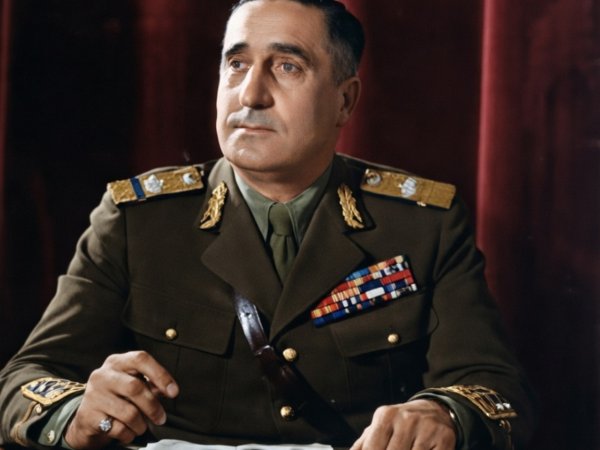
The history of Bucharest is closely connected to the activity of mayors who managed to radically change the image of the city in a surprisingly short period of time. Among them was cavalry General Victor Dombrovski, one of the most efficient mayors of the Romanian capital during the interwar period. Although his first term as Mayor General of Bucharest lasted only two years, between 1938 and 1940, the results he achieved were remarkable. During a period marked by the beginning of the Second World War and numerous economic difficulties, Dombrovski succeeded in transforming Bucharest into a vast construction site dedicated to modernization. The general did not regard local administration as an honorary position, but as a mission. His military experience influenced his leadership style, which was characterized by discipline, organization and prompt decision-making. During his term, major roads were modernized, overpasses above railway lines were built, green spaces and parks were developed, housing for workers was constructed, and significant investments were made in the city's energy infrastructure. The legacy left by Victor Dombrovski demonstrates that an efficient administration can produce visible changes even within a relatively short period, when there is a clear vision and the ability to put projects into practice.
A military officer who became the head of the Capital's administration
On the morning of September 30, 1938, the Council Hall of Bucharest City Hall hosted the ceremony during which General Victor Dombrovski was officially installed as Mayor General of the Capital. His appointment was not accidental. The general had already earned a reputation as a rigorous and efficient man, capable of managing complex situations and organizing large-scale projects.
Romania's capital was going through a complicated period at the time. The population had grown rapidly, the city's development had not always kept pace with the needs of its inhabitants, and the road infrastructure had become insufficient for the increasingly heavy traffic. Bucharest was already one of the largest cities in Southeastern Europe, yet many of its roads urgently required modernization.
Victor Dombrovski established his priorities from the very beginning: easing traffic congestion, modernizing infrastructure, developing neighborhoods, and improving living conditions for residents. Instead of proposing spectacular projects without practical results, the new mayor focused on concrete investments with an immediate impact on everyday life.
The fight against the traffic that was choking the city
One of Bucharest's biggest problems at the end of the 1930s was traffic. The city was crossed by numerous railway lines, and the barriers at level crossings blocked circulation dozens of times every day. At around 50 locations, drivers and pedestrians were forced to wait for as long as half an hour before trains passed.
General Dombrovski quickly understood that this situation seriously affected the mobility of the entire city and ordered the implementation of an extensive program to build road passages, both overpasses and underpasses. At that time, these works represented some of the most ambitious infrastructure investments in Bucharest.
The most spectacular project was the passage on Calea Griviței, inaugurated during the very first year of his term, in December 1938. The construction impressed through its scale and the speed with which it was completed. In only 150 days, approximately 25,000 cubic meters of earth were excavated and around 4,000 cubic meters of reinforced concrete were poured to build the passage over seven railway lines. The project significantly reduced congestion in one of the busiest areas of the Capital.
Infrastructure modernization was not limited to passages. Dombrovski's administration also launched extensive paving and rehabilitation works on the city's main roads, contributing to smoother traffic in a rapidly expanding capital.
Modern boulevards and transformed streets
General Victor Dombrovski believed that the development of a city begins with an efficient road network. For this reason, numerous important streets in the Capital underwent an extensive modernization process.
In May 1939, during the traditional "Month of Bucharest" celebrations, Marshal Constantin Prezan Boulevard was inaugurated. The new boulevard connected the Arch of Triumph with the eastern part of the city and featured modern paving, public lighting and a well-designed sewerage system, elements considered essential for a boulevard at the time.
Only two months later, a new section of Kiseleff Road, between the Hippodrome and Miorița Fountain, was opened to traffic, providing a faster connection to the northern part of the city.
At the same time, the municipal administration modernized important streets such as Doamnei Street, Smârdan Street, Batistei Street and Vasile Conta Street. Calea Victoriei, one of Bucharest's most representative thoroughfares, was widened to cope with the increasingly heavy traffic.
In addition, the intersection of Izvor Street and Splaiul Independenței was reorganized to eliminate congestion, while a road connection between the Izvor neighborhood and the North Railway Station was created through Hașdeu Boulevard, facilitating travel between two important areas of the city.
Investments in parks, lakes and green spaces
Besides road infrastructure, Victor Dombrovski paid special attention to the development of green spaces. In his vision, a modern city had to offer its residents not only good roads, but also places for recreation.
In 1939, the development works at King Carol II National Park were completed, one of the municipal administration's major projects during that period. At the same time, the sanitation works at Lake Tei were finalized, an investment that contributed both to improving the appearance of the area and reducing sanitary problems.
A concrete bridge was built over Lake Băneasa, facilitating traffic towards the northern part of the Capital and preparing the future development of this area of the city.
The general also sought to expand the existing green spaces. Two brick factories located near Grădina Icoanei were expropriated to allow the creation of new landscaped areas extending toward Lake Floreasca. At the same time, measures were taken to enlarge Vergului Park and to create more open space around Grădina Icoanei, where construction had become excessively dense.
These interventions reflected the administration's concern for the quality of the urban environment at a time when the concept of modern urban planning was becoming increasingly important.
Housing for workers and investments in education
Victor Dombrovski did not limit himself to spectacular infrastructure projects. He believed that the city's development also had to include improving housing conditions for its residents.
During the first year of his term, 75 houses were inaugurated in the Vatra Luminoasă neighborhood, intended for workers. These homes offered modern living conditions for that period and represented an example of planned housing development. At the same time, City Hall began the construction of another 50 houses in the same neighborhood, continuing the housing program intended for families with modest incomes.
Dombrovski's administration also paid attention to the education system by building new schools for the developing neighborhoods. Investments in education went hand in hand with the expansion of residential areas, ensuring that the new communities benefited from the necessary infrastructure.
This approach demonstrated that the mayor viewed urban development in an integrated manner, seeking to create functional neighborhoods rather than simply housing developments.
Bucharest, a city powered by energy and large-scale projects
Another major priority during Victor Dombrovski's term was supplying the Capital with electricity. To meet the continuously growing demand, the Filaret Power Plant was equipped with Swiss-made diesel engines.
Following these investments, the Filaret Power Plant became the largest electric power station of its kind in Europe, strengthening Bucharest's ability to support industrial and urban development.
At the same time, the mayor pursued the reorganization of the city center. One of the most important urban planning decisions was the creation of a square around the Royal Palace. To carry out the project, numerous plots of land and buildings were expropriated, including shops, hotels and private homes. Interestingly, among the affected properties were also lands belonging to King Carol II himself, a sign that the project was regarded as one of public interest.
His administration also continued work on the building of the Autonomous House of Monopolies, which later became the headquarters of the Ministry of Finance and the Ministry of Foreign Affairs. During the same period, construction works on the building of the Romanian National Art Museum were completed, while the Higher War School was inaugurated in December 1939.
A short term, but with long-lasting effects
General Victor Dombrovski's first term ended in September 1940, after only two years. Nevertheless, the record of his administration was impressive. Within a very short period, Bucharest had benefited from modern passages, new boulevards, widened streets, bridges, housing for workers, schools, parks, energy investments and major urban planning projects.
His activity did not end there. In 1944, Victor Dombrovski returned to the leadership of Bucharest City Hall, a position he held until 1948, during a period marked by the end of the war and the profound political changes that Romania was experiencing.
Looking back, Victor Dombrovski remains one of the mayors who proved that administrative efficiency does not necessarily depend on the length of a mandate, but on the ability to turn projects into reality.
The investments made under his leadership contributed to the modernization of Bucharest and influenced the city's development for many decades. For this reason, his name occupies an important place in the gallery of the Capital's greatest mayors, being associated with one of the most intense periods of urban modernization in Bucharest's history.
We also recommend: Pache Protopopescu, the mayor who had the courage to reshape Bucharest