The Most Popular Legends of Casa Capșa: Ion Barbu's Table, Păstorel Teodoreanu's Debts, and Tudor Arghezi's Ranking
- Articles
- 06 AUG 26
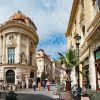
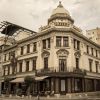
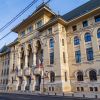
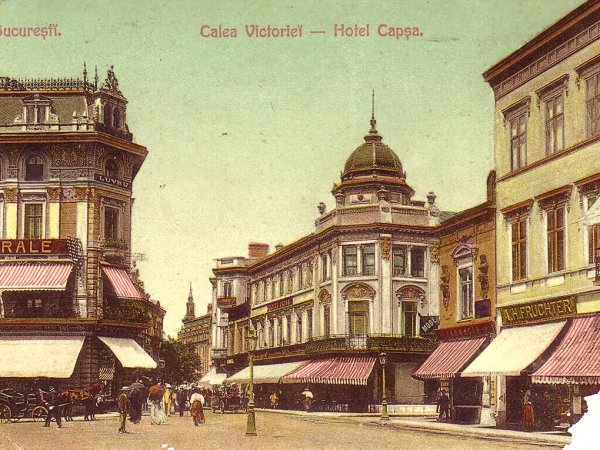
In the heart of Bucharest, on the famous Calea Victoriei, stands the imposing Casa Capșa, a place steeped in history, elegance, and stories that have endured through generations. Located opposite the National Military Circle, the building still preserves the refinement of a bygone era, when Bucharest was known as the "Little Paris" of Eastern Europe. Casa Capșa is far more than a confectionery, a restaurant, or a hotel—it is one of the greatest symbols of Romania's cultural and social life. It was here that the elite of the age gathered, ideas were born, friendships were forged, and history was written. The bohemian atmosphere, scented with exquisite pastries and animated by intellectual conversations, transformed the establishment into one of the Capital's most iconic landmarks. During the period when Bucharest was affectionately called the "Little Paris," Casa Capșa became almost an institution. For the intellectual elite of the time, a day without stopping at Capșa seemed incomplete. Political events were discussed here, manuscripts were analyzed, literary magazines were conceived, literary alliances were formed, and, quite often, the destinies of careers were decided. Around the café tables revolved a unique world in which refined humor, irony, intellectual debates, and critical thinking formed part of the daily ritual. The charm of Casa Capșa was not defined solely by its famous cakes or impeccable service, but above all by the remarkable people who crossed its threshold. Every celebrated visitor developed personal habits, many of which gradually became genuine urban legends. Some were documented in memoirs and eyewitness accounts, while others were passed down from one generation to another, enriching the mythology of one of the most famous establishments in the history of Bucharest.
Casa Capșa, the meeting place of Romania's cultural elite
Opened in Bucharest in the middle of the 19th century by the Capșa family, the confectionery quickly grew beyond the status of a simple elegant establishment. Thanks to its pastries inspired by refined French confectionery and its cosmopolitan atmosphere, Capșa became the preferred meeting place of aristocrats, diplomats, and Bucharest's intellectual elite.
By the end of the 19th century, and especially during the interwar period, the café and restaurant were known as "the café of writers and artists." It was here that personalities such as Liviu Rebreanu, Camil Petrescu, Ion Minulescu, Ion Barbu, Tudor Arghezi, Victor Eftimiu, Păstorel Teodoreanu, together with numerous journalists, actors, and politicians, gathered every day. Conversations often began over a cup of coffee or a famous pastry and continued for hours, turning Capșa's tables into genuine cultural forums.
Tudor Arghezi described Casa Capșa as "the only intellectual place on Calea Victoriei," emphasizing its unique role in the life of Bucharest. In the poet's view, nowhere else did literature, politics, art, and critical thinking blend together so naturally. Amid dense cigarette smoke, whispered conversations, and the aroma of chocolate pastries, ideas were born, friendships were formed, and debates took place that would later influence Romanian culture.
Poet Virgil Carianopol even spoke of the famous "Baptism of Capșa," an expression that became legendary in literary circles. For young writers, simply being accepted at the tables of the great authors was equivalent to public recognition of their talent. Many came day after day without daring to join the conversations, hoping only to be noticed by the established literary figures.
Casa Capșa thus functioned as a genuine cultural barometer. Literary reputations were established there, praise was offered, but devastating criticism was equally common. A compliment from one of the café's regulars could launch a literary career, while a cleverly delivered ironic remark could seriously damage an author's reputation. This is precisely why the atmosphere was constantly animated by artistic pride, brilliant repartee, and verbal duels that have remained part of Bucharest's cultural memory.
Ion Barbu's table and Tudor Arghezi's literary "tribunal"
Among Casa Capșa's legendary figures was the poet and mathematician Ion Barbu. Eccentric and extraordinarily disciplined, he followed the same daily ritual without exception. Every day, exactly at noon, he entered the café and headed straight to his favorite table, located in one corner of the establishment.
The waiters knew that the table belonged to him and made sure it remained vacant before his arrival. If an unsuspecting customer happened to sit there, the staff would politely explain that the seat was reserved. Around this custom grew one of Casa Capșa's most famous legends.
Seated at the same table every day, Ion Barbu alternated between solving mathematical problems and writing his difficult, hermetic poetry. Notebooks filled with equations lay beside manuscripts of poems, creating an image that fascinated everyone around him and reinforced his reputation as one of the most original minds in Romanian literature.
If Ion Barbu was known for his reserved table, Tudor Arghezi was regarded as the café's moral authority. A sharp observer of human nature and a master of irony, the poet devised a famous classification of Casa Capșa's regular clientele.
According to Arghezi, there were first the "Capșiști" ("Capsists"), the genuine cultural elite—writers, philosophers, and intellectuals whose presence gave prestige to the establishment. Next came the "Capșoizi" ("Capșoids"), politicians, journalists, and imitators who visited primarily to be seen in the company of the intellectual elite rather than because of any significant cultural contribution. Finally, there were the "Capșori" ("Little Capsists"), young aspiring writers and curious onlookers who watched the great literary conversations with admiration, hoping that one day they, too, would be invited to join the tables of the established masters.
This humorous and ironic classification became one of the best-known anecdotes associated with Casa Capșa and perfectly reflected the competitive yet vibrant atmosphere of Bucharest's interwar literary world.
Camil Petrescu, Păstorel Teodoreanu, and the Stories That Made Casa Capșa Famous
If Ion Barbu impressed everyone with his almost mathematical discipline, and Tudor Arghezi with his sharp critical spirit, Camil Petrescu was renowned for his fiery temperament. The author of Last Night of Love, First Night of War and The Bed of Procustes was a formidable conversationalist, firmly convinced that the truth had to be defended at all costs, regardless of the consequences.
At Casa Capșa's tables, he frequently became involved in heated debates with younger writers and journalists on philosophical, literary, and even military subjects. His experience during the First World War led him to reject any opinion he considered superficial or unfounded. Those who witnessed these discussions recalled that they usually began calmly but quickly turned into genuine verbal duels, with increasingly sharp and uncompromising exchanges.
More than once, Camil Petrescu would abruptly stand up, take his hat, and storm out of the café, slamming the door behind him, much to the amusement of those who remained. The most remarkable part, however, was that the following day he would return to exactly the same table and resume the conversations as though nothing had happened. These dramatic outbursts became part of Casa Capșa's bohemian and unpredictable reputation.
A completely different personality was Păstorel Teodoreanu—lawyer, writer, epigrammatist, and one of the finest gourmets of his generation. For him, Casa Capșa was the ideal place to enjoy exquisite cuisine and carefully selected vintage wines in the company of friends and fellow intellectuals. His witty humor and extraordinary talent for improvisation turned almost every gathering into a memorable performance.
His generosity and passion for fine dining often left him short of money. This gave rise to one of Casa Capșa's best-known legends. According to the story, whenever he was unable to pay his bill, Păstorel would settle the debt in a most unusual way: he would compose spontaneous satirical epigrams on the restaurant's paper napkins. The owners and waiters appreciated his literary talent so highly that they gladly accepted these verses as a form of payment. Some of his epigrams circulated for years throughout Bucharest's bohemian circles, strengthening the legend of a writer for whom inspiration was sometimes worth more than money itself.
Another famous regular at Casa Capșa was Ion Luca Caragiale, who turned every visit into a lesson in observing human nature. The great playwright was not necessarily the most talkative customer. Instead, he preferred to sit quietly and listen attentively to the conversations taking place at neighboring tables, where politicians, civil servants, and influential public figures spoke with a frankness they rarely displayed in public.
The pompous speeches, exaggerated promises, vanity, and contradictions he overheard provided him with an inexhaustible source of literary inspiration. Many literary historians believe that a number of the witty dialogues found in Caragiale's sketches and comedies were inspired by the people and conversations he observed at Casa Capșa. The café thus became not only a meeting place but also a genuine laboratory for the observation of human behavior.
A Living Legend That Preserves the Spirit of Old Bucharest
Over the decades, Bucharest has changed profoundly. Iconic buildings have disappeared, entire neighborhoods have been transformed, and the rhythm of urban life has become increasingly fast-paced. Even so, Casa Capșa continues to occupy a unique place in the city's memory, remaining one of the very few places that still preserve the elegance and refinement of the era when the Romanian capital was compared to the great cities of Europe.
Today, visitors do not come solely for its famous pastries or for the elegant atmosphere of its restaurant and hotel. They also come in search of the stories that made this place legendary. Ion Barbu's reserved table, Tudor Arghezi's witty classification of the clientele, Păstorel Teodoreanu's epigrams written in place of payment, Camil Petrescu's passionate disputes, and Caragiale's careful observations have all become part of Bucharest's cultural heritage and are recalled whenever the golden age of Casa Capșa is discussed.
Casa Capșa was far more than a café frequented by celebrated personalities. It was the place where ideas met, generations of writers were shaped, and literary works that enriched Romanian culture were conceived. Around its tables, friendships, rivalries, and cultural alliances were formed, while its atmosphere of intellectual freedom and critical debate transformed the establishment into an unofficial academy of Romania's literary elite.
Today, Casa Capșa remains one of the most valuable symbols of historic Bucharest, serving as a bridge between the past and the present. Every salon, every historic photograph, and every table seems to preserve the echo of unforgettable conversations once held within its walls. It is precisely these stories, passed down from generation to generation, that explain why the name Casa Capșa continues to be synonymous with elegance, culture, and the unmistakable charm of old Bucharest.
We also recommend: Symbols of Bucharest: Casa Capșa, “the only intellectual venue” of the interwar period, where writers had their “artistic baptism”