Symbols of Bucharest: Casa Capșa, “the only intellectual venue” of the interwar period, where writers had their “artistic baptism”
- Articles
- 26 MAR 26
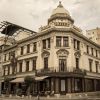
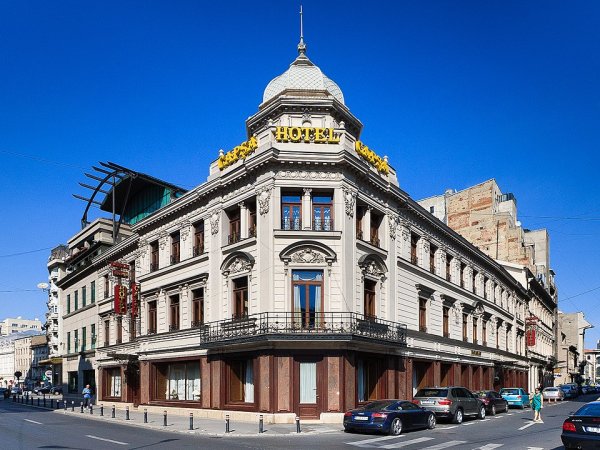
In the vibrant center of Bucharest, on the famous Calea Victoriei, stands imposingly Casa Capșa, a place full of history, refinement, and stories that have crossed generations. Opposite the National Military Circle, the building still preserves today the elegance of a bygone era, when Bucharest was nicknamed “Little Paris”. Casa Capșa is not just a confectionery or a hotel, but a symbol of the cultural and social life of the interwar period. Here, the elites of the time would meet, ideas were born, friendships were formed, and history was written. The bohemian atmosphere, scented with fine sweets and intellectual conversations, transformed this place into a true landmark of the capital.
The beginnings of a family business that became a legend
The story of Casa Capșa begins in the mid-19th century, when two brothers, Anton and Vasile Capșa, descendants of a modest furrier of Aromanian origin, had the courage to dream beyond their humble condition. In 1852, they opened a small shop called “La doi frați”, with limited capital and only a few employees.
Success came quickly, and the initial space became too small. In just a few years, the business moved several times, in search of a larger place for the growing number of customers. Even in the face of difficulties, including conflicts with property owners, the Capșa brothers did not give up.
An essential moment in the development of the business was sending their younger brother, Grigore, to study in Paris. There, he learned the refined art of confectionery and brought back sophisticated recipes and modern techniques that raised the standards of sweets in Bucharest.
From difficult trials to international success
The road to success was not without obstacles. During the Crimean War, Vasile Capșa attempted to expand the business by selling products to the allied armies in Sevastopol. Unfortunately, the climatic conditions spoiled the goods, and the financial losses were considerable.
Nevertheless, the entrepreneurial spirit did not disappear. Vasile found a new opportunity in Bulgaria, where he began producing jams appreciated by locals. This initiative contributed to the financial recovery of the family and to strengthening their reputation.
Back in Bucharest, the Capșa brothers continued to develop the business, turning it into a symbol of refinement. By 1870, the confectionery had already become a central point of social life, a place where the “high society” of the capital gathered.
Casa Capșa – the center of interwar intellectual life
During the interwar period, Casa Capșa became a true sanctuary of culture. Writers, poets, actors, and politicians came here daily to discuss ideas, debate current topics, or simply enjoy the unique atmosphere.
Among the loyal customers were personalities such as Liviu Rebreanu, Ion Barbu, Camil Petrescu, or Ion Minulescu. Each table became a meeting place for ideas, a space where literature took shape.
Tudor Arghezi described Capșa as “the café of writers and artists,” emphasizing its unique role in the intellectual life of the city. Likewise, the poet Virgil Carianopol spoke about the “baptism of Capșa,” a metaphor for the artistic validation that young writers received in this place.
Thus, Capșa was not just a confectionery, but a true “cultural hub,” where hierarchies were established and careers were shaped.
Culinary delights and tributes to great personalities
Another element that contributed to the fame of Casa Capșa was the refinement of its menu. Inspired by French cuisine, the sweets offered a unique experience: from sophisticated gateaux to fine ice creams and elegant pralines.
Among the famous specialties were the “Capșa cake,” chocolate parfait, and various assortments of candies and compotes. Each product was made with attention to detail, reflecting the high standards imposed by the Capșa family.
A special aspect was the habit of creating sweets dedicated to important personalities. The visit of Emperor Franz Joseph I was marked by the launch of products inspired by him. Likewise, the artist Elena Teodorini was honored with special bonbons.
Such gestures strengthened the relationship between Capșa and the elites of the time, turning every event into a memorable experience.
The Capșa Hotel and the backstage of a worldly life
In 1881, Casa Capșa expanded its activity by opening the hotel and restaurant. These spaces quickly became preferred places for discreet meetings, elegant banquets, and exclusive events.
Behind the closed doors of the hotel rooms unfolded a fascinating world, full of love stories, intrigues, and hidden passions. The atmosphere was sophisticated, but also mysterious, reflecting the complexity of social life of that period.
Over time, the hotel hosted numerous personalities, from artists to politicians and even members of royal families. This diversity contributed to strengthening Capșa’s reputation as a place of the elite.
The legacy of Casa Capșa in today’s Bucharest
Today, Casa Capșa remains a symbol of elegance and tradition. Although the city has changed radically, the building continues to preserve the spirit of an era in which culture and refinement were at home.
For both Bucharest residents and tourists, a visit to Capșa is a journey through time. It is the place where the past comes to life, where every corner tells a story, and where history can be felt in every detail.
Casa Capșa is not just a building, but a living legend of Bucharest. Through its contribution to the cultural and social life of the city, it has become an essential landmark, a bridge between past and present, between tradition and modernity.
We also recommend: Symbols of Bucharest: Cinema Dacia Marconi, Calea Griviței and the relic left from Interwar Capital