Famous Houses of Bucharest: The Grădișteanu-Ghica House, the Most Impressive Architectural Jewel on Calea Victoriei
- Articles
- 07 AUG 26
At the end of the 19th century, Bucharest was going through one of the most spectacular periods in its history. Romania's capital was beginning to acquire the appearance of a great European city, while Calea Victoriei was becoming the main boulevard of the aristocracy, diplomacy, and high society. During the same period in which, across the Atlantic, France was presenting the United States with the famous Statue of Liberty, construction began in Bucharest on a residence that would become one of the city's most elegant and representative noble mansions: the Grădișteanu-Ghica House.
An aristocratic residence built during a period of Bucharest's transformation
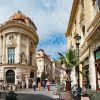
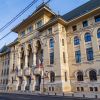
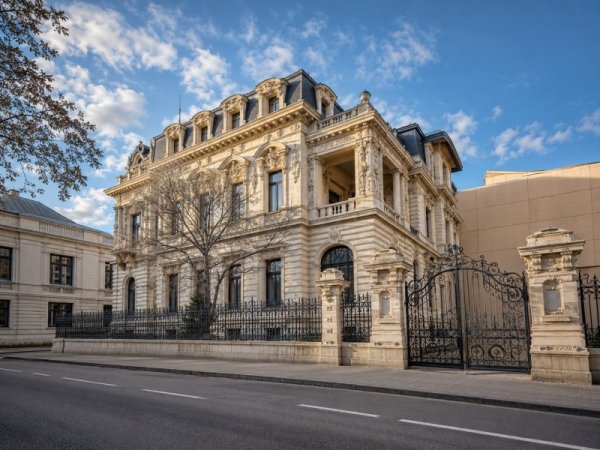
Located at the intersection of Calea Victoriei and today's Nicolae Iorga Street, the building continues to impress through the elegance of its façades and its architectural refinement, being considered one of the Capital's most beautiful historic monuments. Throughout its more than 140 years of existence, the property has witnessed aristocratic balls, dramatic political changes, communist nationalization, and later its rebirth as a representative monument of Bucharest's architectural heritage.
Beyond the beauty of the building itself, the Grădișteanu-Ghica House also tells the story of one of the most important noble families in Wallachia, a family whose kinship ties extended to almost the entire Romanian aristocracy.
The story of the Grădișteanu family and the beginnings of the construction
The house was built in 1884 at the request of the nobleman Constantin Ionaș Grădișteanu, a member of one of the oldest and most respected boyar families in the Romanian lands. Historian Neagu Djuvara, the last maternal descendant of the Grădișteanu family, described this family as being related to almost all the great noble families of Wallachia and Moldavia.
Originally from the Grădiștea area, in today's Giurgiu County, the family built its prestige over several generations. Many of its members held important positions in the country's administration and were actively involved in the political and economic life of the era. The family's wealth and influence made it possible to build a residence that reflected the owners' social status.
The project was entrusted to Jules Berthet, a French architect born in Switzerland, one of the most highly regarded professionals of his time. The construction work was carried out by the French architect Louis Blanc, the author of several important buildings in Bucharest. His creations include the Victor Babeș Institute of Bacteriology, the Ion Lahovary House, and the Nicolae Filipescu House, landmarks that still contribute to the architectural charm of the Romanian capital.
The collaboration between the two architects resulted in a monumental building in which the eclectic style blends harmoniously with Renaissance influences. The richly decorated façades, elegant proportions, and meticulous attention to every detail turned the house into a true symbol of aristocratic refinement.
From the Grădișteanu family to the Ghica family
The destiny of the building was shaped by the family circumstances of its owners. Constantin Ionaș Grădișteanu and his wife had no children, so they decided to leave the impressive residence to Maria Grădișteanu, Constantin's sister.
Maria was married to Scarlat Ghica, a representative of another illustrious family in Romanian history. The union of these two noble families gave rise to the name by which the building is still known today: the Grădișteanu-Ghica House.
The new generation continued to develop the property and enhance its prestige. Between 1895 and 1898, the residence underwent an extensive process of transformation and modernization. According to historical chronicles dedicated to Bucharest, the exterior designed by Jules Berthet was preserved almost entirely, while the interior was enriched with decorative elements of exceptional artistic value.
As a result of these works, coffered and hand-painted ceilings, finely carved wood paneling, a monumental interior staircase, and spectacular stained-glass windows filtering the light in an impressive manner were added. The entire ensemble reflected the tastes of the European aristocracy at the end of the 19th century.
One of the most elegant houses on Calea Victoriei
At the beginning of the 20th century, the Grădișteanu-Ghica House had become one of the most important centers of Bucharest's high society. Its elegant salons hosted receptions, balls, and diplomatic gatherings attended by members of the Romanian elite as well as guests from numerous European countries.
The atmosphere of these events reflected both the owners' social status and the position occupied by the Ghica family within Romanian society. Music, dancing, political discussions, and cultural conversations transformed the house into a genuine aristocratic salon, comparable to the great residences of Western Europe.
Its location on Calea Victoriei was no coincidence. The boulevard represented the center of elegant life in Bucharest, home to the city's most luxurious palaces, hotels, and noble residences. In this setting, the Grădișteanu-Ghica House quickly established itself as one of the area's most spectacular buildings.
The interior was decorated with refined furniture, works of art, and finishes crafted from the finest materials. Every room was designed to impress guests and reflect the prestige of the family.
The family's tragedy after the establishment of the communist regime
The political changes that followed the Second World War radically altered the destiny of both the house and its owners. In 1948, the communist regime decided to nationalize the property, whose last owner was Șerban Grigore Ghica, the son of Maria Grădișteanu and Scarlat Ghica.
Șerban Ghica was married to Aristița Stoenescu, and together they formed one of Bucharest's well-known aristocratic families. After the confiscation of the house, they were forced to leave the residence and were relocated to a modest apartment on Frumoasă Street.
The blow was devastating for the entire family. Shortly after losing the house, Șerban Ghica suffered a stroke that claimed his life. His wife, Aristița, described by historian Constantin Bălăceanu-Stolnici as an energetic, very talkative woman who paid great attention to aristocratic etiquette, later developed Parkinson's disease and spent her final years in increasingly fragile health.
Bălăceanu-Stolnici also recalled that the couple's three sons received an unusual education for the aristocracy of the time. Instead of being raised by governesses, as was customary among most noble families, they were educated by a Catholic priest.
One of the children, Ion-Grigore Ghica, died at an early age. The other two followed different paths. Constantin-Zamfir Ghica, known within the family as "Mimi Ghica," became a lawyer and led a discreet life. His brother, Șerban-Alexandru Ghica, nicknamed "Bani Ghica," became an engineer and a Romanian international rugby player. His political involvement with the National Peasants' Party and his close ties to Iuliu Maniu and Corneliu Coposu, however, brought him years of hardship in communist prisons, where he was incarcerated for six years.
From an administrative headquarters to the recovery of the property
After nationalization, the elegant aristocratic residence completely changed its purpose. The rooms that had once hosted luxurious receptions and diplomatic gatherings became the headquarters of the State Arbitration Office, and later the building was occupied by a foreign trade institution.
The years of communist rule altered the building's function, but fortunately many of its decorative elements survived. Although time and intensive use left their mark on the property, its structure and much of its original decoration were preserved.
Following the fall of the communist regime and the restitution of confiscated properties, the Ghica family succeeded in recovering the building. During the 1990s, extensive restoration works were carried out to restore the house to its former elegance.
For a period, the building served as the headquarters of the "Ion Ghica Foundation," thus continuing its association with one of Romania's most important historical families.
Casa Dunării, the new identity of a historic monument
At the beginning of the new millennium, the Grădișteanu-Ghica House entered a new chapter in its existence. In 2000, the property was put up for auction through the Authority for the Recovery of Banking Assets.
Today, the building is known as Casa Dunării (The House of the Danube) and hosts a concept dedicated to the history and importance of the Danube River in European civilization. This new identity was built around the idea that the Danube has represented, since Antiquity, one of the continent's most important corridors for economic, military, and cultural development.
The interior layout preserves the spectacular character of the building. In the basement is Emperor Trajan's Hall, a room inspired by the historical connection between the Roman Empire and the Danube. The ground floor houses the Royal Salons, while the upper floors are organized around themed salons, including the Viennese Salons and the Oriental Salon.
Today, the Grădișteanu-Ghica House remains one of Bucharest's most valuable historic residences and one of the most spectacular buildings on Calea Victoriei. Its story reflects the destiny of the Romanian aristocracy, its passage through the great political transformations of the 20th century, and the efforts to preserve Romania's architectural heritage after 1989.
The elegance of its architecture, the richness of its interior decorations, and the history of the Grădișteanu and Ghica families transform this monument into a genuine architectural jewel that continues to fascinate both historians and lovers of old Bucharest.
We also recommend: Ghica-Tei Palace, from the residence of the first native ruler of the Romanians to today's superb event venue