Ghica-Tei Palace, from the residence of the first native ruler of the Romanians to today's superb event venue
- Articles
- 03 AUG 26
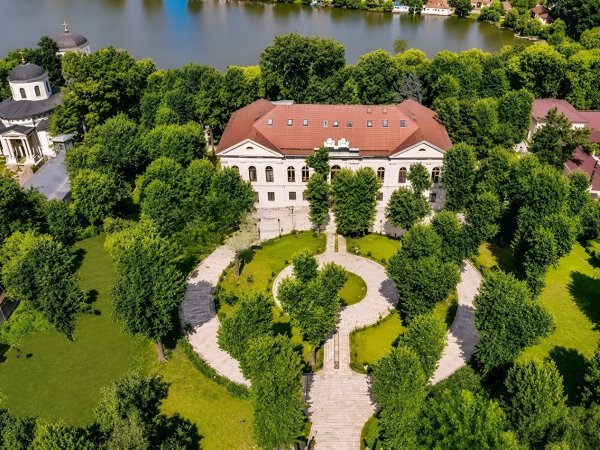
Few historical monuments in Bucharest manage to combine the city's aristocratic past with the cultural and social life of the present as harmoniously as Ghica-Tei Palace. Located at 3-5 Doamna Ghica Street, on the shore of Lake Tei, the building is one of the oldest preserved boyar and princely residences in the Capital and represents a valuable testimony to the transformations Bucharest has undergone over the past two centuries. Built at the beginning of the 19th century at the initiative of Prince Grigore IV Ghica, the first native ruler of Wallachia after the end of the Phanariot period, the palace was designed as an elegant summer residence set in an exceptional natural landscape. At that time, the Tei-Colentina area was far from the bustle of the city center and offered a landscape dominated by lakes, orchards and extensive gardens, where the aristocracy spent its leisure time away from the noise of Bucharest. Today, Ghica-Tei Palace is a historical monument and continues to impress through its neoclassical architecture, the beauty of its estate and the elegant events organized here. Its story, however, is far richer than the image of an event venue, being closely connected to Romania's modern history and to the personality of the ruler who wished to leave future generations a place dedicated to joy and recreation.
The residence built for the first native ruler of Wallachia
Ghica-Tei Palace has its origins in the period immediately following the end of the Phanariot reigns. After Tudor Vladimirescu's Revolution in 1821, the Ottoman Empire abandoned the practice of appointing Greek rulers, and in 1822 Grigore IV Ghica ascended the throne of Wallachia, becoming the first native ruler after more than a century.
The new ruler sought to modernize the administration and contribute to the country's development, and one of his wishes was to build a residence that reflected the new European orientation of the era. Construction of the palace began around 1822 and continued over several years, being completed, according to most historical sources, around 1828 or at the beginning of the 1830s.
The project is attributed by numerous historians to architect Xavier Villacrosse, one of the most important architects active in Bucharest during the first half of the 19th century. Although this attribution has not been definitively confirmed by documentary evidence, the style of the building and its architectural influences support this hypothesis.
At the time of its construction, the palace overlooked the shore of Lake Tei and was surrounded by a vast estate where horse-drawn carriages could travel along tree-lined avenues and guests enjoyed the tranquility of an area located on the outskirts of Bucharest as it existed at that time.
A remarkable example of neoclassical architecture
Ghica-Tei Palace is considered one of the finest examples of neoclassical architecture in Bucharest. Its façade impresses through its perfect symmetry, balanced proportions and the elegance specific to this architectural style, inspired by the models of Antiquity.
The monumental columns, discreet decorative elements and refined balconies give the building a majestic yet harmonious appearance. Unlike the exuberance of the Baroque style or the richness of ornaments characteristic of other European palaces, Ghica-Tei Palace impresses through its sobriety and refinement.
The entire historical ensemble includes not only the palace, but also the "Ascension of the Lord" Church, built nearby and integrated into the noble estate. Together, the two buildings form one of the best-preserved historical ensembles in Bucharest.
Its status as a historical monument reflects both the architectural value of the complex and its importance to the history of Bucharest and Romania.
The ruler's wish to leave a place for the people
Ghica-Tei Palace is not merely an aristocratic residence, but also the expression of a distinctive vision regarding the role such an estate should play in the life of the community.
In 1833, Grigore IV Ghica drew up the testament known as "His Highness Grigore Ghika Voivode's Legacy in Memory for the Colentina Estate", a document written in Greek. Through this act, the ruler instructed his heirs to preserve the estate so that it could continue, for generations to come, to serve the "innocent pleasure and pleasant recreation of the people."
This wording was remarkable for its time and demonstrated the ruler's concern that the estate should serve not only as a family property but also as a place intended for recreation and public enjoyment.
In a Bucharest undergoing rapid development, the idea of an elegant green space dedicated to relaxation was a modern one and, to a certain extent, anticipated the urban planning concerns that would emerge much later.
Elegant interiors and an estate that preserves the charm of the past
The interior of the palace reflects the refinement of the Romanian aristocracy during the first half of the 19th century. Over time, its halls have impressed visitors through their generous dimensions, high ceilings and decorations executed with meticulous attention to every detail.
The decorative frescoes, carved elements and period furniture contribute to the elegant atmosphere reminiscent of the balls and receptions once hosted by the Ghica family. Large windows allow natural light to enter the rooms, highlighting the ornamentation and harmonious proportions of the interior spaces.
Equally spectacular are the gardens surrounding the palace. The estate enjoys a privileged location on the shore of Lake Tei, while the mature vegetation, spacious lawns and centuries-old trees create a peaceful atmosphere that is difficult to imagine in such a busy Bucharest.
Although the city has expanded considerably around it, Ghica-Tei Palace still preserves the impression of a secluded residence where time seems to pass at a different pace.
A monument that has survived Bucharest's transformations
Throughout its almost two centuries of existence, Ghica-Tei Palace has witnessed numerous historical changes. Bucharest evolved from a city of unpaved streets and gardens into a modern European capital, and the Tei estate stood as a silent witness to all these transformations.
New neighborhoods, busy boulevards and modern buildings appeared around the palace, yet the monument retained its identity and original charm. Successive restoration works have sought to preserve the architectural character of the building and highlight its original details.
Today, visitors can easily notice the contrast between the tranquility of the estate and the urban dynamism surrounding it. This contrast contributes precisely to the charm of the place, transforming the palace into a true historical oasis in the heart of the Capital.
The palace remains one of the few Bucharest noble residences that still preserve both the main building and a significant part of the original historical estate.
From princely palace to one of the city's most elegant event venues
Today, Ghica-Tei Palace has found a new purpose without losing its historical identity. The estate is managed by the heir family and hosts numerous private and cultural events, becoming one of Bucharest's most appreciated elegant venues.
Its historic halls and generous gardens provide the ideal setting for civil wedding ceremonies, weddings, christenings, anniversary celebrations, graduation ceremonies, conferences, product launches, official receptions and fashion shows.
The organization of these events allows the monument to remain alive and to be admired by the public without its historical value being forgotten. On the contrary, every visitor has the opportunity to discover the atmosphere of a princely residence that has preserved its elegance through generations.
At the same time, the estate periodically hosts cultural and artistic events, continuing, in a way, the wish expressed by Grigore IV Ghica in his testament: that the place should remain one of joy and human gathering.
A symbol of Bucharest's heritage
Ghica-Tei Palace is much more than a spectacular building. It represents an important chapter in the history of Bucharest and one of the most valuable testimonies to the beginning of Wallachia's modernization after the Phanariot era.
Built for the first native ruler of the modern period, the building has survived political changes, urban transformations and the passage of time while preserving its elegance and architectural value. From the princely residence built on the shore of Lake Tei to today's exclusive event venue, the palace has changed its function, but never its prestige.
Visiting this monument means embarking on a journey through almost two hundred years of Bucharest's history. Whether admired for the beauty of its architecture, the tranquility of its gardens or the story of the ruler who wished the estate to be preserved for the "innocent pleasure and pleasant recreation of the people," Ghica-Tei Palace remains one of the Capital's most fascinating and best-preserved historical landmarks, a place where the past and the present coexist in a harmonious and elegant manner.
We also recommend: Famous Houses of Bucharest: The Șomănescu Palace, from the Residence of the President of the Agrarian Society to the Embassy of Vietnam in Romania