Famous Houses of Bucharest: The Șomănescu Palace, from the Residence of the President of the Agrarian Society to the Embassy of Vietnam in Romania

- Articles
- 28 JUL 26
Bucharest at the end of the 19th century and the beginning of the 20th century underwent a spectacular transformation. Romania's capital was redefining its urban identity, while economic development and the rise of a prosperous bourgeoisie led to the construction of impressive residences for major landowners, industrialists, bankers, and politicians. These houses were not merely luxurious homes but also symbols of social status, artistic taste, and an era in which architecture became a calling card for their owners. Historian Ion Bulei noted that, as early as the end of the 19th century, the houses of wealthy people had begun to shape the image of Bucharest. As trade, banking, and large-scale business expanded, the city became enriched not only with imposing buildings housing financial and commercial institutions but also with the residences of the people who owned or managed them. Many of these buildings were designed by the most renowned architects of the time and became landmarks of the urban landscape.
A residence built for one of the leading landowners of the time
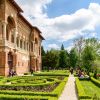
Among them is the Șomănescu Palace, an elegant residence located at 35 C.A. Rosetti Street. Built around 1900, the building has witnessed more than a century of history, changing owners and functions while never losing its architectural charm. Today, the property houses the Embassy of the Socialist Republic of Vietnam in Romania, remaining one of the historic buildings that continue to play an important role in the diplomatic life of the Romanian capital.
The Șomănescu Palace was built for Sava Șomănescu, one of Romania's most important landowners at the beginning of the 20th century and President of the Agrarian Society. His position and social standing fully justified the construction of a representative residence capable of reflecting the prestige of his family.
At the time the palace was built, Bucharest was undergoing an extensive process of modernization. New boulevards, monumental public buildings, and luxurious residences were transforming the capital into a city increasingly inspired by Western Europe. Wealthy property owners invested in spectacular homes, while architects sought to satisfy the demands of an elite eager for elegant and modern residences.
The design of the Șomănescu Palace is attributed to architect Dimitrie Maimarolu, one of the most respected professionals of his era. His name is associated with numerous representative buildings in Bucharest, and his architectural style successfully combined Western academic influences with the refinement that characterized early 20th-century architecture.
The residence designed for Sava Șomănescu impresses through its balanced proportions and the richness of its decorative details. The façades are carefully composed, the ornamentation is abundant yet elegant, and the entire building conveys the image of a residence intended to inspire prestige without becoming ostentatious.
The palace belongs to the category of aristocratic residences that helped define the image of Bucharest during the Belle Époque. In those years, property owners sought not only comfort but also buildings capable of withstanding the passage of time while reflecting the family's social status.
Architectural elegance and the refinement of its interior
One of the defining features of the Șomănescu Palace is the attention devoted to both its exterior appearance and its interior decoration. While the façade impresses through the richness of its ornamentation and its balanced composition, the interior reveals the same concern for detail and high-quality craftsmanship.
Historical records mention remarkable interior decorations throughout the residence. The bedroom ceiling and the walls of the central hall were decorated with paintings executed in the Secession style, an artistic movement that experienced extraordinary development throughout Europe at the end of the 19th century and the beginning of the 20th century.
These decorations give the residence a unique identity and demonstrate the owner's appreciation for the most modern artistic trends of the period. The Secession style was distinguished by floral motifs, elegant curved lines, and a sophisticated decorative approach, becoming a defining feature of numerous palaces and luxurious villas built in Europe's great capitals.
At the Șomănescu Palace, the murals and decorated ceilings complemented the exterior architecture, transforming the entire residence into a representative living space. Visitors were impressed not only by the size of the building but also by the refinement displayed in every room.
Such attention to interior design was characteristic of Bucharest's grand residences during that period. Property owners worked with artists and skilled craftsmen to create furniture, decorations, and finishes, every detail contributing to the overall character of the residence.
From a private residence to the home of a former Prime Minister
The history of the Șomănescu Palace did not end with the period during which it belonged to its original owner. At a later stage, the property was purchased by George G. Mironescu, one of the leading figures in Romanian political life during the first half of the 20th century.
Born in 1874, George G. Mironescu enjoyed a distinguished academic and political career, serving in several ministerial positions before becoming Prime Minister of Romania. Choosing such a residence was only natural for a man at the center of public life, and the palace continued to symbolize prestige and social standing.
George G. Mironescu's association with the building adds another important chapter to its history. The palace was no longer simply the residence of a wealthy landowner but also became the home of one of the politicians who helped shape Romania's destiny during the interwar period.
Over the decades, buildings such as this witnessed important meetings, social gatherings, political events, and the many transformations experienced by Bucharest. Although many of their stories have been lost over time, their architecture continues to preserve the memory of an era marked by prosperity and refinement.
The Șomănescu Palace, part of Bucharest's diplomatic heritage
Today, the Șomănescu Palace serves a different purpose from the one for which it was originally built. The building houses the Embassy of the Socialist Republic of Vietnam in Romania, becoming one of the many historic residences in Bucharest that have been incorporated into the city's diplomatic network.
Its new function has contributed to the preservation of the building and has helped maintain its architectural value. In many cases, converting former palaces into diplomatic headquarters has proven to be an effective solution for protecting Bucharest's built heritage.
The palace stands on C.A. Rosetti Street, one of Bucharest's central thoroughfares, where historic buildings, public institutions, and elegant residences coexist within a distinctive urban landscape. Although the area is now dominated by heavy traffic and the fast pace of city life, the presence of such buildings recalls the period when this part of the capital was home to members of the country's economic and political elite.
Viewed from the street, the building impresses through the quiet elegance it conveys. It is not a monumental palace in the traditional sense but rather a residence that expresses refinement through its proportions, balance, and rich ornamentation without ever becoming excessive.
Today, the Șomănescu Palace remains one of Bucharest's lesser-known architectural gems. Although many people pass by it every day without knowing its history, the building tells the story of a capital city experiencing rapid economic and cultural growth at the beginning of the last century.
Built for one of the most important landowners of its time, designed by a distinguished architect, later inhabited by a former Prime Minister, and today serving as a diplomatic headquarters, the Șomănescu Palace perfectly illustrates how Bucharest's great residences have survived successive historical eras without losing their identity. It is a building that speaks of the elegance of the Belle Époque, the modernization of Bucharest, and the enduring value of an architectural heritage that deserves to be discovered and preserved.
We also recommend: Famous houses in Bucharest: The Iacob Lahovary House, from the villa of the renowned general to the maternity ward of Cantacuzino Hospital