Symbols of Bucharest: Colțea Tower – History, Disappearance, and Legend
- Articles
- 04 AUG 26
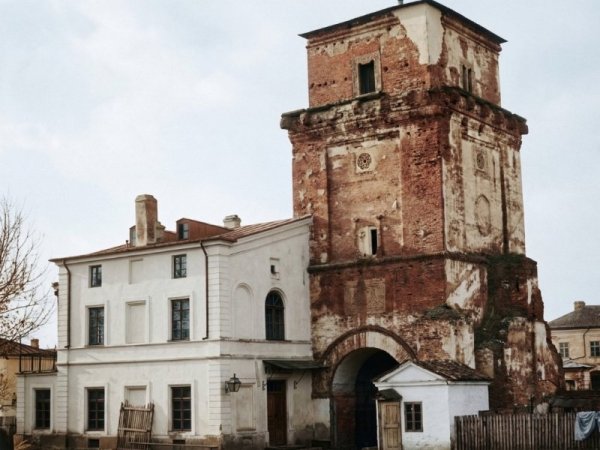
For nearly two centuries, Colțea Tower was the tallest structure in Bucharest and one of the city's most recognizable landmarks. Built during a period when the capital of Wallachia was beginning to acquire an urban appearance, the tower dominated the skyline with its imposing silhouette and could be seen from great distances by travelers and merchants approaching the city. For the people of Bucharest, it was much more than a bell tower: it was a landmark, an observation point, a symbol of authority and faith, and one of the most admired buildings of its time. Today, all that remains of this impressive monument are engravings, paintings, travelers' accounts, and a few archaeological fragments. Although it disappeared more than a century ago, Colțea Tower continues to be one of the great landmarks in Bucharest's history, and its story combines documented facts with legends that have been passed down from one generation to another.
The birth of Bucharest's tallest tower
The history of Colțea Tower is closely connected to that of Colțea Monastery, one of the most important religious and social complexes built in Bucharest at the beginning of the 18th century. Its founder was Grand Spatharios Mihail Cantacuzino, one of the most influential figures of the period, who wanted to provide the city with a modern complex consisting of a church, a hospital, a school, and a bell tower.
Construction of the tower began in 1709 and was completed around 1715. The monument was erected directly above the monastery's main gate and impressed everyone with its dimensions. With an estimated height of nearly 50 meters, it was the tallest building in Bucharest and one of the tallest structures in the entire Principality of Wallachia.
Over the years, a legend emerged claiming that Swedish soldiers of King Charles XII, who had arrived in the Romanian lands after their defeat at the Battle of Poltava, took part in the tower's construction. Although this story appears in numerous publications and local traditions, historians emphasize that there are no documents conclusively proving their involvement. Even so, the legend has remained one of the best-known stories associated with the monument and contributes to its historical charm.
The tower's architecture combined Brâncovenesc influences with Western elements, while its Baroque-inspired roof and the four small corner turrets gave it an elegant and imposing appearance. For the inhabitants of Bucharest at that time, Colțea Tower represented the image of a city that was beginning to look toward Europe and adopt modern architectural models.
A city landmark and an observation point
Colțea Tower did not serve only a religious purpose. Its bells marked the important moments of everyday life, but the structure also fulfilled administrative and highly practical functions for the city.
At a time when most houses were built of wood and fires broke out frequently, the tower became Bucharest's main observation point. From its height, fires could be spotted quickly, while the bells alerted the population and the authorities whenever danger arose.
The view from the top of Colțea Tower was breathtaking. Those who climbed to its summit could see the entire city of Bucharest, with its winding streets, churches, inns, and gardens stretching all the way to the outskirts. Numerous foreign travelers described the tower as the city's finest ornament and one of the very first landmarks they noticed before entering Bucharest.
Another remarkable feature was the public clock installed inside the tower. At a time when precise timekeeping was still a rarity in the Romanian lands, the mechanism represented a symbol of modernity and of the Western influences that were beginning to reach Bucharest.
On clear days, the tower's silhouette could be seen from miles away, serving as a point of reference for merchants, travelers, and caravans. For many of them, Colțea Tower was the first image of Bucharest and proof that they were approaching one of the region's most important cities.
Where history and legend meet
Colțea Tower witnessed important events in the city's history and quickly became surrounded by numerous stories.
One of the best-known legends says that Mihail Cantacuzino hid important documents and part of his family's archive inside the tower. In 1714, following the political changes that occurred after the execution of Prince Constantin Brâncoveanu and his sons, Ottoman envoys are said to have confiscated part of these documents. Although many details remain unclear, the story reinforced the image of the tower as a place where politics, religion, and the great interests of the age intersected.
Other legends also emerged around the monument. Some people in Bucharest claimed that from its summit one could see every road leading into the city, while others believed that the tower concealed secret chambers or underground passages connected to other important buildings in the city center. Although historical research has not confirmed such stories, they contributed to the monument's mysterious aura.
The fact that Colțea Tower dominated the city and could be seen from almost every part of Bucharest transformed it into a true symbol of the capital, appearing in engravings, drawings, and the accounts of foreign travelers who visited the city during the 18th and 19th centuries.
Earthquakes and the disappearance of a symbol
The fate of Colțea Tower was forever changed by the great earthquakes that struck Wallachia.
The devastating earthquake of 1802 caused significant damage, with the upper section of the tower being severely affected. Although the monument was repaired, it never regained its original appearance. Another powerful earthquake, which struck in 1838, further weakened the structure, and its deterioration continued over the following decades.
During the second half of the 19th century, Bucharest underwent an extensive modernization process. The authorities sought to widen the city's main thoroughfares and reorganize the center, while older buildings increasingly came to be viewed as obstacles rather than historical monuments.
In 1888, during the term of Mayor Pache Protopopescu, the decision was made to demolish Colțea Tower in order to facilitate the widening and redevelopment of Colțea Boulevard, today's Ion C. Brătianu Boulevard. The decision sparked dissatisfaction among many Bucharest residents, who believed that the city was losing one of its most important landmarks.
Although the authorities attempted to justify the demolition on the grounds of public safety and urban planning, the disappearance of the tower was regarded by many contemporaries as an irreparable loss to Bucharest's architectural heritage.
A few years later, the Fire Watch Tower (Foișorul de Foc) was built to take over the practical role that Colțea Tower had once fulfilled in monitoring fires. Nevertheless, the new structure never managed to replace the prestige and symbolic significance of the old monument.
Today, Colțea Tower continues to live on in the city's memory through illustrations, historical documents, and graphic reconstructions. It remains one of the strongest symbols of old Bucharest, a structure that watched over the capital for nearly two centuries and reflected the transformation of an Oriental market town into a city on the path to modernization.
Its story demonstrates that a city's identity is shaped not only by the buildings that have survived the passage of time, but also by the lost monuments that continue to live on through memories, legends, and the history of the community.
We also recommend: The Oldest Statue in Bucharest Is in the Courtyard of Colțea Hospital. Who Was Spătar Mihai Cantacuzino