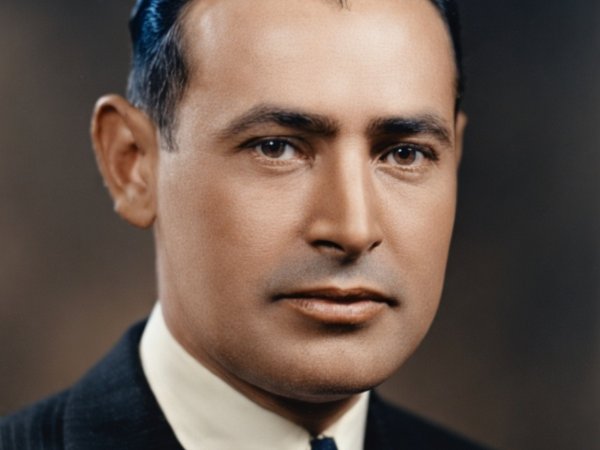
Ionel Fernic, brilliant composer, aviator decorated by King Carol II, has a street bearing his name in Bucharest
- Articles
- 19 MAY 26
Few Romanian artists had an existence as intense and as spectacular as that of Ionel Fernic. In only 37 years of life, he managed to assert himself in some of the most diverse fields: music, literature, journalism, and aviation. He composed more than 400 hit songs, wrote poems and children's books, practiced journalism and politics, and at the same time became a licensed pilot and one of the pioneers of Romanian parachuting. Today, his name is preserved not only in the history of Romanian music, but also on the map of the Capital, where a street in Bucharest bears his name. It is a natural tribute to an artist who lived with the same passion both on stage and among the clouds, and who remained in public memory as the "Troubadour of the Blue Horizons."
Childhood and the beginnings of an exceptional talent
Ionel Fernic was born on November 29, 1901, in Târgoviște. Shortly afterward, his family moved to Galați, the city where young Ionel discovered music. Here he met the teacher and composer Teodor Fuchs, who gave him his first lessons in piano and guitar.
Although from adolescence he was attracted both to art and to flying machines, his parents wished for him to pursue a technical career. Fernic, however, chose to attend the Conservatory in Bucharest, where he was admitted to the dramatic arts section with the highest grade.
During his studies, he had the opportunity to perform alongside famous actors of the time, such as Aristide Demetriade, Ion Manolescu, and Mișu Fotino. Nevertheless, theater was not to become his principal path. Music was his true vocation.
Ploiești, the city where the successful composer was born
After graduating from the Conservatory in 1924, Ionel Fernic completed his military service at the Reserve Officers' School in Ploiești. The city would play a decisive role in his artistic development.
Remaining there for several years, Fernic began composing intensively, discovering the musical formula that would make him famous: the romance song and the tango. During that period, Romanian light music was developing rapidly, and Fernic quickly understood the public's taste.
His first composition dated from his final year of high school, when he wrote the ballad "White Birch Cross" in 1919. His true success, however, came in 1931 with the tango "The Lie," also known by the first line of its refrain, "When the Moon Appears in the Sky."
The song, performed by the great artists of the time, brought him immediate notoriety. Fernic confessed that he composed the piece in approximately half an hour at the piano, during a moment of spontaneous inspiration. Although he considered commercial success to be often fleeting, he understood that music could ensure his livelihood and, at the same time, offer him the chance to create.
The author of immortal hit songs
"I Love Woman," "The Lie," "In the Shade of the Old Walnut Tree," "Why Did You Tell Me That You Love Me," and "Do You Still Remember, Madam" are only a few of the songs that have crossed the decades.
These melodies were performed by legendary names such as Cristian Vasile, Zavaidoc, Jean Moscopol, Ioana Radu, and Gică Petrescu.
In total, Ionel Fernic composed more than 400 songs. Many of them are still listened to and reinterpreted today, proof of his remarkable talent for transforming simple emotions into memorable melodies.
Poet, prose writer, and journalist with a bohemian spirit
Beyond music, Fernic was also a talented author. He published poems, literary sketches, and volumes for children. In his verses, the theme of the artist's poverty often appears, treated with self-irony and lucidity.
In poems such as "The Ballad of the Million" and "The Ballad of the Overcoat," he described with humor the creator's struggle with material hardships. Although he was aware of the charm and vulnerability of the artistic condition, he never lost his optimism and playful spirit.
Bohemian and eccentric, Ionel Fernic was an unmistakable presence. One of the best-known anecdotes about him recounts that he had himself photographed completely naked, wearing only a pocket watch attached to his waist, in order to illustrate literally the popular expression, "May I see you stark naked and with a watch at your waist."
Journalistic adventures and memorable incidents
Also involved in journalism, Fernic experienced episodes full of adrenaline. During an electoral mission in Vălenii de Munte, a town closely linked to Nicolae Iorga, he was threatened by political adversaries.
To avoid confrontation, he fled on foot to Ploiești, covering approximately 30 kilometers. When his colleagues found him resting in a meadow, Fernic joked that his enemies were standing so far away that "where I am and where they are" showed just how afraid they were of him.
This incident perfectly illustrates his way of turning any situation, even a dangerous one, into a reason for irony and good humor.
The fascination of flight
At the beginning of the 1930s, Fernic moved permanently to Bucharest, where he pursued another great passion: aviation. In the spring of 1935, he graduated from the Băneasa Flight School and obtained his pilot's license.
He used to fly with a guitar secured by straps in the front cockpit. He often said that the instrument was the "beloved" who accompanied him everywhere. This image of the composer ascending toward the sky with his guitar by his side contributed to his legend and earned him the nickname "The Troubadour of the Blue Horizons."
Fernic also distinguished himself in parachuting, carrying out one of the first public parachute jumps in Romania during an aviation meeting organized at Băneasa. An accident upon landing, which resulted in fractures to his left leg, forced him to give up this activity.
Decorated by King Carol II
His talent and discipline in aviation were officially recognized. Ionel Fernic was appointed director of the Flight School in Cernăuți, a position of great prestige at that time.
For his merits, he was decorated by King Carol II with the distinction "Aeronautical Virtue," one of the most important honors awarded to Romanian aviators.
This official recognition confirmed that Fernic was not only a gifted artist, but also a respected professional in the field of aviation.
The tragic death of a man who loved the sky
His destiny ended dramatically on July 22, 1938. Ionel Fernic was traveling as a passenger on the Warsaw-Bucharest-Salonica route, returning to the country to attend the funeral of Queen Marie.
The airplane crashed in the forest of Negrileasa, near the village of Stulpicani, in Suceava County. All those on board lost their lives, and the exact cause of the accident has never been fully clarified.
At his cremation, organized in Bucharest, numerous artists and aviators were present. His friends from the world of music performed his most beloved creations, and fellow pilots paid him a final tribute through an aerial demonstration above the Capital.
A street in Bucharest bears his name
Today, Bucharest keeps the memory of Ionel Fernic alive through a street that bears his name. It is a symbolic recognition of a personality who harmoniously united music, literature, and aviation.
Few Romanians have managed to leave such a complex legacy in such a short time. His tangos and romance songs continue to move listeners, and the story of his life remains fascinating to this day.
Ionel Fernic remains one of the brightest figures of interwar Romania: a prolific artist, a free spirit, and a courageous aviator who proved that talent can conquer both people's hearts and the heights of the sky.
We also recommend: How the Streets of Bucharest Were Paved in the 19th Century: Floating Roads Made of Planks and Beams