Great Romanian dynasties: Florescu, the bloodline of Vlad the Impaler, the house where the 1848 revolution was planned and the creator of the Romanian Army
- Articles
- 02 APR 26
The Florescu family is among the oldest and most influential boyar families in the Romanian space, with roots deeply embedded in the Middle Ages. Genealogical tradition links them to the great ruling dynasties, including the Basarabs and the emblematic figure of Vlad the Impaler, as well as to Mihai the Brave. This continuity of blood and political influence transformed the Florescu family into a discreet yet essential pillar of Romanian history.
Medieval origins and princely connections
The story begins toward the end of the 14th century, with a boyar named Florea, owner of lands in the strategic area of Severin. In a context marked by Ottoman pressure, he understood the importance of political alliances. Thus, his sister Ana married Radu I, a member of the Basarab dynasty. This marriage laid the foundations of a kinship that would be constantly renewed over the centuries.
From this period also dates the indirect connection to Tismana Monastery, built on lands given as dowry to Ana. After Radu I’s death, she withdrew to the monastery, in a gesture typical of the era. Meanwhile, the Florescu family was consolidating its social and political position, adapting to ever-changing contexts.
Political rise and closeness to Vlad the Impaler
Florea’s son, Vlăcsan, is considered the first member of the family actively involved in political life. Although initially he avoided participation in the council of Mircea the Elder, for pragmatic reasons related to relations with the Ottoman Empire, he later became an influential figure during the reign of Alexandru Aldea.
An important episode is the sending of his son Vintilă to the court of Sultan Murad II, as a guarantee of loyalty. There, Vintilă met the brothers Vlad and Radu, the future rulers known as Vlad the Impaler and Radu the Handsome. This direct contact strengthens the idea of close ties between the Florescu family and the great figures of the time.
Vlăcsan later became one of the main advisers of Vlad Dracul. At the same time, the family moved the center of its properties to the area of the Sabar River, where the village of Florești was founded. From this point on, the family clearly identified itself by the name Florescu, Vintilă being the first to adopt this form of signature.
Connections with Mihai the Brave and role in great battles
In the 16th century, the Florescu family continued to be involved in the political and military life of the country. A key figure is Radu Florescu, considered close to Mihai the Brave. He held the position of great comis, being responsible for the defense of the country.
Radu participated in all the important campaigns of the ruler, including the famous battle of Călugăreni. His devotion is highlighted by the final gesture: after the killing of Mihai the Brave at Câmpia Turzii, he was the one who recovered his head and took it to Dealu Monastery for a Christian burial.
The death of Radu Florescu, shortly after this episode, complicated once again the succession of the family. Nevertheless, through inspired marital alliances, the dynasty managed to survive and continue to play an important role in Romanian society.
The Florescu house and the 1848 revolution
The 19th century brings a new stage in the history of the family, marked by involvement in revolutionary movements. The Florescu house becomes a true conspiratorial center on the eve of the 1848 Revolution. Here, the leaders of the movement met to discuss plans for reform and modernization of the country.
A special episode is the relationship between Nicolae Bălcescu and Luxița Florescu. The two lived an intense love story, alongside revolutionary preparations. From this relationship a child was born out of wedlock, Bonifaciu Florescu, who would become an important intellectual.
The Florescu house was not only a space of love, but also of revolutionary ideas. Here were laid the foundations of a movement that would change the course of Romanian history, proving that the Florescu family was not just a relic of the past, but an active actor of modernity.
Ioan Emanoil Florescu and the creation of the Romanian Army
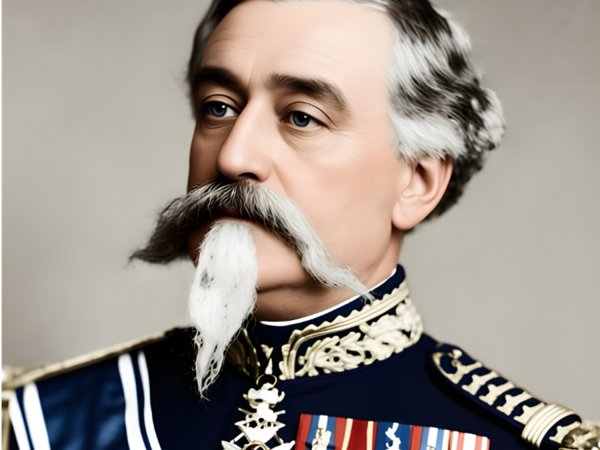
One of the most important figures of the family is Ioan Emanoil Florescu, considered the architect of the modern Romanian Army. Trained militarily from adolescence and educated in Paris, he had a complex career, marked by controversial decisions but also by remarkable achievements.
After the Union of the Principalities under Alexandru Ioan Cuza, Florescu became Minister of War and Chief of the General Staff. In this capacity, he managed to unify the armies of Moldavia and Wallachia and to create a modern military structure.
Under his leadership, essential institutions were established: the General Staff, unified military schools, artillery and engineering units, sanitary and logistical services. Practically, the entire military infrastructure of modern Romania bears his mark.
Modern destinies and European diplomacy
In the 20th century, the Florescu family continued to be present in public life through figures such as Radu Florescu, a diplomat active in the interwar period. He had missions in Central Europe and contributed to strengthening Romania’s relations with the states of the Little Entente.
He was a direct witness to the rise of Adolf Hitler and warned Romanian authorities about the Nazi danger. Later, he served in Washington and London, where he criticized the policy of appeasement toward Germany.
After the establishment of the Antonescu regime, he refused to continue representing Romania, choosing exile. His family remained in the West, where they continued to promote Romanian culture and history.
Cultural legacy and rediscovery of the past
An important descendant is Radu R. Florescu, professor at Boston College and author of fundamental works about the figure of Dracula. His book “In Search of Dracula” had an international impact, contributing to clarifying the historical identity of Vlad the Impaler.
Together with historian Matei Cazacu, he published an extensive genealogy of the family, demonstrating its continuity and influence over the centuries. His descendants also contributed to the cultural opening of post-communist Romania, facilitating important international events.
Mansions, churches and traces of the past
The estates of the Florescu family left visible traces in the Romanian landscape, including in the area of today’s Floreasca district in Bucharest. Here there were prosperous villages and boyar mansions, among which the Sfânta Sofia church has been preserved, restored in the 20th century.
Also, the Florescu-Știrbei villa in Sinaia, built in parallel with Peleș Castle, represents an example of aristocratic architecture. Today, the building hosts the Sinaia City Museum, preserving the memory of a family that crossed Romanian history from the Middle Ages to the contemporary period.
The story of the Florescu family is, in essence, a story about adaptation, continuity and influence. From medieval alliances and struggles for survival to revolutions, reforms and international diplomacy, this lineage has always been present in the key moments of Romanian history.
We also recommend: Great Romanian dynasties: Racoviță, from the lineage of boyars and rulers to the greatest Romanian biologist