Great Romanian dynasties: Racoviță, from the lineage of boyars and rulers to the greatest Romanian biologist
- Articles
- 27 MAR 26
The Racoviță family represents one of the oldest and most influential dynasties in the Romanian space, with deep roots in the medieval history of Moldavia. The first documentary attestations of the lineage date back to before the 16th century, when the family bore the name Cehan. Later, with the consolidation of social and political status, the name Racoviță became emblematic for a line of powerful boyars and high-ranking dignitaries.
The origins of the Racoviță family and the rise of a great boyar family
Over time, members of the family held important positions in the administration of the Romanian principalities, being great vornics, logofeți, or caimacams. Their rise was favored by the political context of the era, but also by the relationships consolidated within the local elite and, later, in the Phanariot network of the Ottoman Empire.
A peak moment for this family was the period when several members ascended the thrones of Moldavia and Wallachia. Among them are Mihai Racoviță, who ruled several times in both principalities, as well as Constantin Racoviță and Ștefan Racoviță. This repeated presence at the leadership of the state demonstrates the considerable influence of the family in the political life of the time.
Thus, from a boyar lineage with ancient roots, the Racoviță family became one of the most powerful in the region, having an active role in shaping the political and administrative history of the Romanian principalities.
Racoviță – between political power and noble tradition
Throughout the 17th and 18th centuries, the Racoviță family stood out through constant involvement in public life. The successive reigns of its members were marked by the complex context of Ottoman domination and Phanariot influence, a period in which alliances and external relations played an essential role.
Mihai Racoviță, one of the central figures of the family, ruled Moldavia several times and was also ruler of Wallachia. His son, Constantin Racoviță, continued the tradition, occupying in turn the thrones of both principalities. This continuity of power within the same family is a clear indication of the prestige and influence they enjoyed.
However, these reigns were not without challenges. The era was characterized by political instability, internal conflicts, and external pressures. For example, during the reign of Ștefan Racoviță, in 1765, a guild uprising took place in Bucharest, an episode that reflects the social tensions of the time.
Despite these difficulties, the Racoviță family managed to preserve its status and influence, becoming a symbol of the Romanian aristocracy. The noble tradition was passed down from generation to generation, contributing to the formation of a strong and lasting identity.
From boyars to intellectuals: the transformation of a dynasty
With the passage of time and the modernization of Romanian society, the role of boyar families changed. If in the past influence was manifested in the political and administrative sphere, in the modern era it increasingly shifted toward the cultural and intellectual sphere.
The Racoviță family was no exception to this transformation. The descendants of the old rulers became men of culture, jurists, professors, or active members of intellectual life. This evolution reflects the adaptation to the new social and political realities of the 19th and 20th centuries.
A relevant example is Gheorghe Racoviță, the father of the famous scientist Emil Racoviță. A magistrate by profession and involved in the cultural life of Iași, he was one of the founders of the “Junimea” society, an important intellectual nucleus of the time.
This continuity of values – from political power to education and culture – allowed the family to remain relevant in an ever-changing historical context.
Emil Racoviță – the scientist who brought the family name to the world
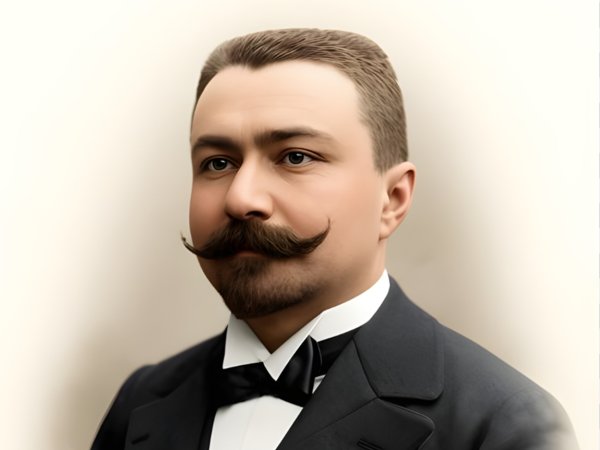
The modern peak of the Racoviță family is represented by the figure of Emil Racoviță, considered the greatest Romanian biologist and one of the most important scientists worldwide. Born in Iași in 1868, he came from this old boyar family, inheriting not only the name but also the tradition of excellence.
Initially, he pursued studies in law in Paris, at the wish of his family, but his passion for natural sciences determined him to change direction. He studied at the Sorbonne, where he obtained his doctorate and was influenced by great professors of the time.
His career was an impressive one. Emil Racoviță was the first Romanian to participate in a scientific expedition to Antarctica, within the Belgian expedition at the end of the 19th century. This experience strengthened his international reputation and opened the path to large-scale research.
Moreover, he is considered the founder of biospeleology – the science that studies life in the underground environment. He explored over 1,200 caves and discovered thousands of species of organisms adapted to these extreme conditions.
He also had an important role in the development of Romanian science, being a professor, researcher, and even president of the Romanian Academy. His activity contributed not only to the progress of knowledge, but also to the protection of nature and the development of scientific institutions in Romania.
The legacy of the Racoviță family in Romanian culture and science
The legacy of the Racoviță family is a complex and impressive one, stretching over several centuries. From boyars and rulers to intellectuals and scientists, this dynasty managed to preserve its relevance and to significantly contribute to the development of Romanian society.
On the political level, members of the family influenced the destiny of the Romanian principalities, holding leadership positions at key moments in history. On the cultural and scientific level, their descendants contributed to the modernization and Europeanization of Romania.
The figure of Emil Racoviță synthesizes this evolution: from noble tradition to scientific excellence. Through his achievements, the name Racoviță became known internationally, surpassing the boundaries of national history.
Today, the Racoviță family remains a symbol of continuity and adaptation, demonstrating that authentic values – education, curiosity, and the desire for progress – can cross centuries and can define the identity of a nation.
We also recommend: Great Romanian Dynasties. Caradja: rulers, nobles, princes, and “The Angel of Ploiești” who saved 3,000 orphans